officialsquarexsports

India tour of Bangladesh called off

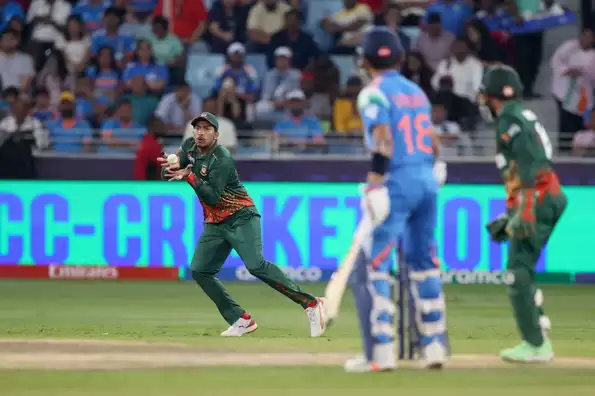
The India tour of Bangladesh has been called off, definitively and officially. The Board of Control for Cricket in India and the Bangladesh Cricket Board (BCCI) have confirmed this on Saturday (July 6). The BCCI and the BCB said the six-match white ball tour has been deferred by more than 12 months. “(We) have mutually agreed to defer the white-ball series, three ODIs and three Twenty20 Internationals, between Bangladesh and India in August 2025 to September 2026,” the two boards said in a joint statement. “This decision has been reached following discussions between the two Boards, taking into account the international cricketing commitments and scheduling convenience of both teams,” the statement said with the Bangladesh board stating it is hoping to welcome the Indian team next year. “The BCB looks forward to welcoming India in September 2026 for this eagerly anticipated series. Revised dates and fixtures for the tour will be announced in due course,” the Bangladesh board said. The tour was to be held from August 17 to 31. The postponement of the tour seemed inevitable, given the ongoing diplomatic standoff between the two countries. Relations have visibly and perceptibly got strained in recent times, with the Indian government adopting a tough stance toward its eastern neighbour. Security concerns also appear to be a factor, although the joint statement makes no mention of it. The first signs of tour’s postponement came when the BCB paused the sale process of its media rights for the next two years. Needless to say the India tour is an unfettered cash cow and the BCB was waiting for a formal nod from the BCCI to announce the resumption of the process. Asia Cup imbroglio The postponement of the tour has been taken by the BCCI after consultations with the Government of India. The BCCI though is still non-committal over the major fixture of the year, Asia Cup. The BCCI is consulting the government over that too, particularly on the issue of having any engagement with Pakistan, with whom the country was involved in a war in May. There is a prevailing impression that the government, which aspires to host the Olympics in 2036, is open to allowing the Indian teams to participate in multilateral competitions, but not necessarily in the bilateral matches. The recent approval for the Pakistan hockey team to compete in the Asia Cup in India next month is seen as an extension of this policy. The Asia Cup is scheduled to be held in the UAE from September 10 to 27, and stakeholders of the continental championship remain confident that the tournament will go ahead as planned. However, a top BCCI official, when contacted by Cricbuzz, refused to confirm either way.

Read More

Enter Akash Deep: Seam-tight, Shami-lite

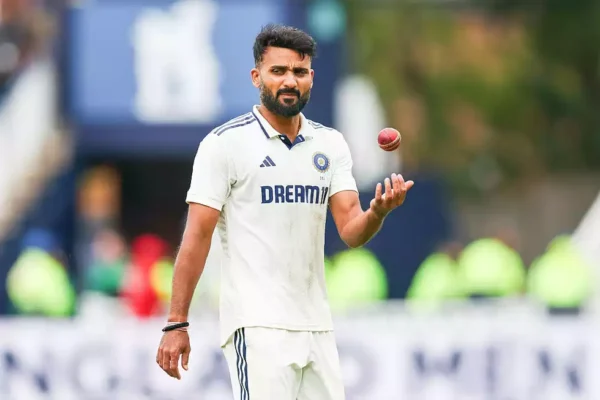
There’s a famous image of Mohammed Shami beaming at the camera, holding up two broken pieces of a stump like trophies. It was taken after the final day of the Visakhapatnam Test in 2019, a game India won on the back of a classic Shami fourth-innings burst. At Edgbaston, nearly five years on and thousands of miles away, Akash Deep struck a strikingly similar pose: a ball in one hand, a stump in the other. Only, he wasn’t quite sure how to be in the moment. He ran a hand through his hair, as if to style it for the photo, then pulled the India cap over it anyway. You could tell this was all new, the attention, the applause, the idea that the cameras were now trained on him. It was Akash’s first five-wicket haul in Test cricket. His first ten-for in a match. And the first time he was the centrepiece of a famous Indian victory. Like Shami in that Vizag game, Akash too knocked the stumps out four times in a stunning burst of seam bowling on the fourth and fifth days. But the parallels didn’t stop there. Speaking to the BBC after the match, England captain Ben Stokes said the surface had a subcontinental feel to it, a passing remark that only added another layer to the deja vu. Before Sunday, no Asian team had ever won a Test at Edgbaston, a stat that hints at a deeper mismatch in conditions. You could wager that the swing and seam and perhaps the bounce at this venue undid those other visiting teams. But in keeping with how Stokes likes his team to play, this was a flat deck. Flatter, perhaps, than even the home side anticipated. England’s four-man pace attack toiled on it and managed only 9 for 593 across both innings. Akash Deep, on debut in England, took 10 for 187, and looked utterly at home. After the third day, he spoke about what he’d always imagined Test cricket in England to be like and how the Bazball era had forced a rethink. The dream scenario for a fast bowler is perhaps obvious: a grassy deck, a stacked cordon, and a ball doing plenty. But for Akash, it is possible the choice may not be that straightforward. He’s just as at ease – perhaps even more effective – on a dry wicket like this, with two slips, a gully, and a pair of midwickets in play. A set-up that encourages him to attack the stumps, not just the outside edge. It’s what he’s known and done through much of his first-class career in India. It’s what he did in Birmingham, relentlessly attacking the stumps and outbowling every other seamer on display. The catching midwickets are useful even if they are not always in play. They allowed Akash to pitch the ball a few inches outside off stump and seam it back in to the right-hander, with the insurance of leg-side fielders in case of an error. And if the ball happened to kiss a fifth-day crack along the way – jagging low or spiking off the pitch – all the better. Like Shami, Akash gets a remarkable number of batters bowled in India. Seven of his ten Test wickets at home have crashed into the stumps. Before the start of the season in September, his domestic numbers told the story: 42 of his first 118 first-class wickets were bowled, a staggering 35%. Among Indian bowlers, only Shami comes close with 38% of bowled dismissals in home Tests. It’s a rate bettered globally since 2000 only by Shoaib Akhtar and Shannon Gabriel.

Read More

When the ace was absent, Siraj became it

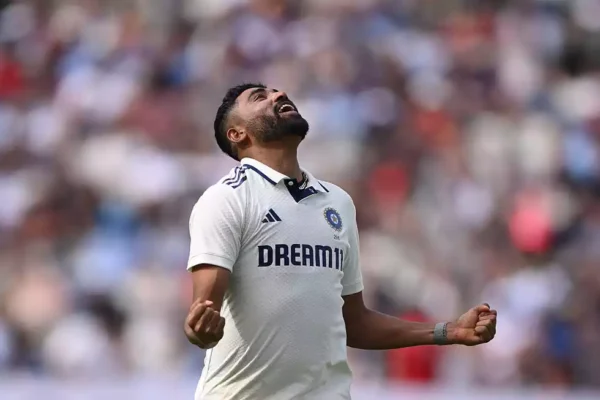
At Headingley, Mohammed Siraj drew 69 false shots in 41 overs, a 27.8% false shot percentage, and yet walked away with just two wickets. So when Joe Root feathered a harmless ball down the leg side in Siraj’s first over on the third morning at Edgbaston, the reprieve felt overdue. What followed, though, was anything but fortune. A short ball. Not wild, not expressive, just tight and climbing into Ben Stokes. The trick with a Siraj bouncer is that it comes off the pitch quicker and at a lower height than expected, and tends to cramp the batter for room. It’s not just the pace; it’s the bustle through the crease and that release from just past perpendicular – a lot like Stokes himself actually – all of which combine to make him harder to read when he hits his markers than bowlers with more classical gather and release. Stokes couldn’t pick it. The glove told the story. He was gone before Siraj could even begin the celebration. It was the dreamiest of beginnings for India, a day after they piled on the runs. But what followed wasn’t as seamless as the start. England were 84 for 5 and still trailing by over 500, yet the day’s work was far from done. For Siraj himself, it had been a jittery opening. Bowling from the City End, he aborted his first two run-ups, drawing impatient boos from the crowd before silencing them with those two quick wickets. Even then, the rhythm refused to settle. His stride lengths were erratic, and Rishabh Pant had to step in, urging him to re-mark his run-up between overs. It mirrored the stuttering start to his first spell in Leeds, when the slope up from the Football Stand End had unsettled him. But this time, there was no room for indulgence. The ball was already more than 20 overs old, lingering in that slim window of potency on what has been a new-ball or bust wicket in Birmingham. If India were to make it count, Siraj had to take charge. So he walked up to Shubman Gill and asked for a change of ends. It was the first glimpse of Siraj in command: assertive, aware, stepping into the space Bumrah had left behind, and owning the responsibility to lead India’s push. But it was already a little too late. He bowled two overs from the Pavilion End, this time drawing not a single false shot, as Jamie Smith and Harry Brook began to counterpunch. The momentum shifted, subtly at first, then with conviction. For a majority of the afternoon thereafter, Siraj was parked in front of the Hollies Stand, that roaring, rowdy corner of Edgbaston. They were in full voice, and Siraj, who loves a bit of theatre himself, became both target and performer. At one point, diving full-length in a bid to save a boundary, he found his trousers sliding halfway down his thigh, a moment the crowd seized with gleeful hilarity. But he didn’t recede into the background, as fast bowlers often do when posted at fine leg or third man. Siraj was always in the game. Between overs, he sprinted across the outfield, notably to check on Prasidh Krishna. India had fed Prasidh to the adventurer that was Smith with a short-ball plan because they were ok with the trade-off of conceding the extra runs with enough cushion in the bank. Siraj was there to offer Praisdh a pat, a presence, and maybe even some words of comfort. This was a man biding his time. He finally got the ball again a little before 3 PM, though only for a short defensive spell. He responded with three overs for six runs and drew three more false strokes, a quiet show of skill amid the noise. India had stopped the bleeding somewhat with their 6-3 fields and wide lines and Gill needed his premier bowler, not bowling with a ball that was more than 60 overs old and soft but for when the shine and hardness returned on a new ball. Even so, India were only ever going to get narrow windows to dislodge the two centurions and then run through the lower order. On a pitch like this, the rewards, however faint, lay in attacking the stumps, not crowding the cordon. It’s the kind of muscle memory Indian fast bowlers rely on in home Tests. And Siraj and the excellent Akash Deep were drawing from that same playbook. But still, it takes a high order of skill and intelligence to manufacture chances in those spurts, especially without the cushion of spin to follow as it is when India play at home. There’s a reason why Siraj, Bumrah, Shami, even Umesh Yadav, have all averaged under 25 in home Tests. Swap Bumrah for Akash Deep, and a common thread emerges – the ability to hit the stumps and a general skiddiness, which put simplistically is that low, skimming trajectory that makes the ball jag in or hold its line from shallow angles. It allows them to attack the stumps from across a wider range of lengths. Just as Deep did to Brook, seaming it back and carving the end open. That’s all Siraj needed. He nipped one back off the wobble seam to trap Brydon Carse. The appeal was turned down. Arms flung in disbelief, he nudged Pant into a review. Three reds. Gill charged in from the dressing room to wrap him in a hug. Next ball: full, swinging, into Josh Tongue’s pads. An easier LBW. Then came Shoaib Bashir. First, a sharp bouncer that rattled his helmet grill. Then a wobble seam ball Bashir tried to leave, but it zipped back and shattered off stump. Siraj had 6 for 70, six wickets from 24 false shots. It was redemption after the misses in Headingley and the tireless but rewardless toils in Australia. It was also his first five-for since Cape Town, 18 months ago. It’s easy to forget how much Test…

Read More

Franchise interest in Sanju Samson extends beyond CSK

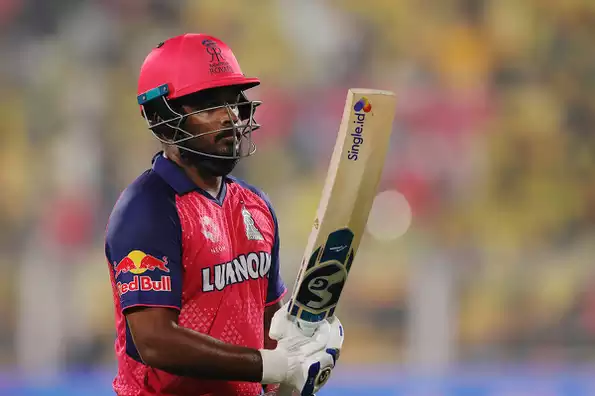
The growing chatter linking Sanju Samson with Chennai Super Kings appears to have substance beyond social media speculation. Cricbuzz can confirm that the CSK franchise is open to welcoming the batter-keeper in their fold. But so are a few other teams. While confirming interest in Samson, a senior CSK official told Cricbuzz that no formal communication has yet been initiated with the Rajasthan Royals’ management. “We are definitely looking at Sanju. He is an Indian batter, who is a keeper and an opener. So if he is available, we will certainly have a look at the option of having him in our fold. Who we will trade him with we have not taken that call because the matter has not gone that far. But yes, in principle, we are interested,” the CSK official, involved in the decision-making process, told this website on the condition of anonymity. The real million-dollar dilemma will be deciding which player to offer in return. Samson was the No 1 retention of Royals at a value of Rs 18 crore. A potential like-for-like trade-off could involve skipper Ruturaj Gaikwad himself, whose retention price also stands at Rs 18 crore. However, CSK head coach Stephen Fleming has publicly reiterated on multiple occasions that Gaikwad was appointed captain with a long-term vision in mind. In the history of the IPL, there are not too many instances of CSK invoking a trade. The notable trade that the franchise had was taking Robin Uthappa from Rajasthan Royals ahead of the 2021 season. It was a one-way all-cash trade. The trading window is currently open (see below) and it has to be seen if CSK will make a formal approach to the RR management but there are strong speculations that apart from CSK, a couple of other teams too have approached the Royals for Samson. The Royals management, meanwhile, completed a review meeting of the IPL 18 season last week in London, where head coach Rahul Dravid was also present. It is understood it took note of the requests from multiple franchises for multiple players, not just for Samson. An Indian keeper-batter who can bat in top-6 is a premium asset in an IPL setup and the Royals management is conscious of the fact that it sits on two such assets in their ranks – Dhruv Jurel besides Samson. It is unlikely a trade deal will be reached anytime soon and should that happen at all, it can only be for a player who can be deemed a worthy replacement. RR lead owner Manoj Badale will, apparently, take a call on the approaches. Text messages to top RR officials, including to Badale, remained unanswered. Player Trading Window Trading of players is only possible during the periods referred to in this paragraph (each a “Trading Window”). (a) In advance of the 2026 Season player trading will be possible: (i) from 9.00am (IST) on the day falling 7 days after the end of the 2025 Season until 5.00pm (IST) on the date falling 7 days prior to the first day of the 2026 Player Auction, and (ii) from 9.00am (IST) on the day following completion of the 2026 Player Auction until 5.00pm (IST) on the date falling 30 days prior to the start of the 2026 Season. Rules of the Trade Those Players who are taken in a Player Auction may not be traded in respect of the Season immediately following such Player Auction. If the Player being traded is an Overseas Player then the buying Franchisee will need to obtain an NOC from the relevant body. The trading negotiations between the selling and buying Franchisees should be only with regard to the League Fee payable. The other terms of the Player Contract may not be varied. No separate payment can be made to either the Player or the selling Franchisee. It is the responsibility of the buying Franchisee to ensure that the Player being traded is match fit at the time of the trade. It may require that the Player undergoes a medical examination in advance of the signing of the documents referred to above. There is no limit on the number of Players that a Franchisee may trade during any Trading Window but Franchisees should at all times remain in compliance with the relevant Salary Cap and the squad composition regulations. The League Fee that is contracted to be paid by a Franchisee for the Season to a Player that is traded into that Franchisee’s Registered Squad – assuming 100% availability – will be charged against that Franchisee’s Salary Cap for that Season. Any amounts paid by one Franchisee to another as a result of trading will not be charged against the Salary Cap. A player can be traded only once for that particular Season. If more than one Franchisee is interested in buying a Player and provided the Player has consented to being traded, the selling Franchisee may negotiate with all such interested Franchisees. The selling Franchisee and not the relevant Player shall have discretion as to which bid (if any) to accept. Trade with a Negotiated Increase If the two Franchisees agree to a Negotiated Increase, the Negotiated Increase will be shared between the Player and the selling Franchisee as recorded in the Consent Form. The Player will enter into a new Player Contract with the buying Franchisee in the same form as his previous Player Contract save for the new League Fee which will be the original League Fee plus the agreed Player Percentage of the Negotiated Increase. The buying Franchisee will pay one time fee of the agreed Franchisee Percentage of the Negotiated Increase to the selling Franchisee. Trade with a reduction in the League Fee If the Franchisees agree a reduction in the League Fee payable to a Player then the difference between the original League Fee and the new League Fee shall be the “Negotiated Decrease”. The buying Franchisee will receive the Negotiated Decrease from the selling Franchisee for one Season only and it shall not be subject…

Read More

Not baited, not beaten: Shubman Gill shows the way

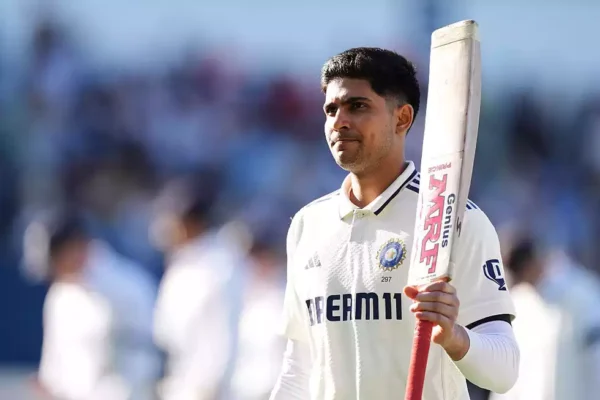
At one point during the post-Lunch stupor that was the second session of the opening day at Edgbaston, Ben Stokes dramatically ushered his off-side fielders to move into catching positions. While point stayed put, mid-off, cover and extra-cover all moved in. The passage of play just before had reduced the Hollies Stand to a mild hum, but even they now perked up to the possibilities of this novelty and created a crescendo of noise as the England captain sprinted up. It was a good length ball on off-stump honing into pads, just the kind England have been targeting Shubman Gill with continuously. India’s captain nimbly moved forward to defend under his eye. And as if to underscore his control over proceedings, he even held his pose for effect. It summed up the tone of the day. England tried theatre, Gill responded with stillness. They invited rashness, Gill offered restraint. They targeted the LBW, he was up to the task. The Indian captain had walked in just before Lunch, after two of the six specialist batters he’d picked were in the hut, and from that moment till stumps, refused to be baited or rushed. Gill’s seventh Test hundred, his second in two games of this series and as captain, was the kind of innings that may not pass the Bazball eye test. But in context, it was a necessary act of assertion, to show the way that there’s no one ‘natural style’ of playing. It took him 125 balls to even get to 50 with just five boundaries hit in that passage. The 100 came off the 199th ball, making it his slowest ton in the format. But it was also, statistically, his second-best hundred in terms of control percentages. In fact, as per Cricviz, no batter has ever recorded a lower false shot percentage than Gill’s 4% in a Test hundred in England since tracking data has been available. Yes, this was a benign pitch. The surface had even less to offer than Headingley. Gill walked out to bat at a reasonable platform of 95 for 2. But only a couple of hours before, he’d made a pair of interesting selection calls, prioritising batting depth over bowling potency that Jasprit Bumrah and Kuldeep Yadav provided. Two of the six specialist batters he picked were already dismissed and as Leeds had proved, even 471 wasn’t enough. The real challenge ahead of Gill wasn’t technical. It was to not be drawn in – not by England’s fields, not by the energy of the disapproving crowd, nor by the temptation to force the pace or fall to unforced errors as they’d done in Leeds. Here too, there were avoidable lapses. Yashasvi Jaiswal had his own second century of the series, seemingly tied up before feathering an edge while attempting a slash outside off-stump. Rishabh Pant, Gill’s deputy, was barely under pressure but fell on the wrong side of the risk-reward balance when his attempted takedown of Shoaib Bashir found long-on, curiously placed almost straight back behind a mid-on. An over later, the first of the two all-rounders Gill brought in – Nitish Reddy – shouldered arms and was bowled by Chris Woakes with India on 211 for 5, very far away from what might be a competitive first innings score here. Gill stayed and was determined not to rise to the bait. Stokes made life tricky with constant tactical changes, imaginative traps, and sharp fielding control. There was always something brewing. At one point he had a 7-2 off-side field to Gill that dried up all boundaries there. Then he switched it around to 3-6 and bowled short. Angles varied over and around the wicket, men dropped into odd catching positions, waiting for that one misjudgement. It never came. Gill even timed his counter perfectly but without ceding control. Right after England tried to push for another wicket following Nitish’s. The ball was now 62 overs old. The next 32 balls brought 27 runs and another partnership was underway. It was a lifting of pressure – on Jadeja, on the scoreboard, and on himself. Then, again, the tempo dropped. Between 75 and 90, he went back into run-milking mode, until Joe Root was brought on to quickly go through the formality of rushing through the 80th over at the end of which the second new ball would be made available with 20 mins to go in the day’s play. Gill picked his moment. With a packed leg-side field, he swept Root twice, both times clean, both times splitting the wall. It brought him to his hundred. The helmet came off and from underneath emerged a roar. It wasn’t performative, it was raw, a release, the first visible crack in his composure all day after following through on all that he had preached the day before. While there had been several batting mis-steps, Gill singled out his own dismissal for 147 attempting to slog Bashir in the first innings at Headingley for opening the door for England’s comeback. He had demanded greater accountability and concentration from his teammates and proceeded to show the way too. Gill is a modern batter, adept at all three formats. It isn’t easy to contain bowling one side to him but at no point did he lose his focus despite England’s attempts to unsettle him. It was a lesson he learnt previously in Vizag last year, the only other hundred of his with greater control. There he faced a similar web with Stokes getting his spinners to bowl round the stumps to him with six fielders on the leg. Gill forced a release by playing a reverse sweep and fell for 103. It was a dismissal that brought England back into the contest in the third innings and provoked a lot of conversation and soul searching in Gill. Here, straight after the landmark he hunkered down once more as the second new ball brought with it its own challenges late in the evening. But Gill and Jadeja, firm…

Read More

Stats: Mandhana magic hands England Women their heaviest T20I defeat

Powered by a blistering Smriti Mandhana hundred and Shree Charani’s debut heroics, India Women defeated England Women in the first of five T20Is, at Trent Bridge on Saturday (June 28). Here are all the key numbers from the game: 2 – Smriti Mandhana became just the second India batter to register a hundred in Women’s T20Is, after Harmanpreet Kaur (103) did that against New Zealand at Providence during the Women’s T20 World Cup 2018. Mandhana’s 112 is now the highest individual score for India in the format, and the second-best against England after Meg Lanning’s 133* at Chelmsford in 2019. 18 boundaries hit by Mandhana on Saturday (15 fours and three sixes) is the most for India in a single innings, surpassing 15 (seven fours and eight sixes) by Harmanpreet during her aforementioned 103. 5 – Mandhana became the fifth female cricketer to register a hundred in each of the three formats in international cricket, joining Heather Knight, Tammy Beaumont, Laura Wolvaardt and Beth Mooney in an elite list. 8 – Mandhana now has eight fifty-plus scores against England, the joint second-most for a player against an opponent in Women’s T20Is alongside as many for Sophie Devine against South Africa and Beth Mooney against England. Mooney leads this record with nine 50-plus scores against India. 21 – Mandhana and Shafali Verma now have 21 50-plus stands between them, the most for any pair for any wicket in Women’s T20Is, surpassing 20 between Alyssa Healy and Mooney. Mandhana and Verma are just seven runs shy of going ahead of the Healy-Mooney pair’s overall aggregate of 2720. 5 – Mandhana was involved in two 50-plus stands: 71 for the first wicket with Shafali and 94 for the second with Harleen Deol. It was the fifth time that India had 50-plus stands for the first two wickets in a Women’s T20I, and the first such instance for any team against England. 97 runs– The defeat margin for England is their highest in a Women’s T20I by runs, four more than the 93-run defeat against Australia at Chelmsford in 2019. It was also the fourth highest victory margin for India Women in the format. Their previous biggest win against England was by 30 runs at the Bandra Kurla Complex, Mumbai in 2010. Biggest win-margins for India (by runs) Margin Opponent Venue, Year 142 runs Malaysia-W Kuala Lumpur, 2018 104 runs UAE-W Sylhet, 2022 100 runs Barbados-W Edgbaston, 2022 97 runs England-W Trent Bridge, 2025 84 runs West Indies-W Gros Islet, 2019 1 – India became the first full-member team to register back-to-back 200-plus totals in Women’s T20Is, having amassed 217/4 in their previous outing against the West Indies Women at the DY Patil in December 2024. That remains their highest T20I total, followed by 210/5 on Saturday and 201/5 against UAE-Women in the Asia Cup last year. It was also the third 200-plus total against England, after Australia’s 226/3 (Chelmsford, 2019) and 209/4 (Brabourne, 2018) respectively. 113/1 – India scored 113/1 at 12.55 in Overs 7-15 of their innings, the second-most for any team in that phase in a Women’s T20I featuring a full-member side, after West Indies’ 115/0 against Australia at the North Sydney Oval in 2023 (where data is available). India’s 111/1 against Malaysia Women at Hangzhou 2023 is third on this list. 178 – Mandhana (112) and Nat Sciver-Brunt (66) totalled 178 runs between them, making it the the second-highest aggregate for the two captains in a Women’s T20I featuring at least one full-member side, after 182 (Suzie Bates – 124*, Dane van Niekerk – 58) in the NZ-W vs SA-W contest at Taunton in 2018. 13.12 – England spinners returned 1/105 in eight overs at an economy rate of 13.12, the worst ever in an innings featuring at least six overs of spin. On the contrary, India spinners bagged 8/72 in 10.5 overs between them at an economy of 6.64. 4/12 – Shree Charani became the second Indian bowler to bag a four-fer on Women’s T20I debut, after Sravanthi Naidu had done so (4/9 in three overs) against Bangladesh Women at Cox’s Bazar in 2014.

Read More

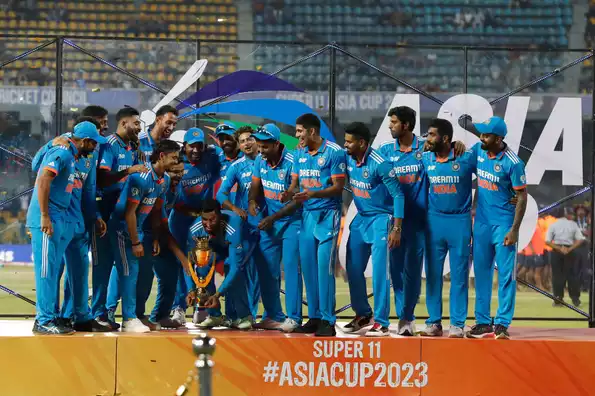
Amid rising optimism, ACC aims to start Asia Cup in second week of September

Is there a breakthrough in the Asia Cup imbroglio? It may still be a little premature to draw any definitive conclusions about the continental championship, but there is now a greater sense of optimism surrounding the tournament. This is a marked change from the uncertainty that had loomed over it due to the tensions between India and Pakistan. While nothing concrete has been finalised as yet, indications are that a formal decision could be taken next week. What’s more, the Asian Cricket Council (ACC) is hopeful of releasing the schedule for the six-team tournament in the first week of July, when it is expected to convene. If all goes according to plan, the ACC is believed to be targeting a start in the second week of September. More specifically, the tournament – to be played in the T20 format – is likely to begin on September 10. Along with India and Pakistan, the participating teams will include Afghanistan, Sri Lanka, Bangladesh, and the UAE. Some sort of promotional activities for the tournament have already begun, in fact. The UAE continues to remain the frontrunner to host the tournament, although there is also some discussion around staging it in a hybrid format. While India is the designated host this time, the ACC had earlier decided that when it is India or Pakistan’s turn to host the Asia Cup, the tournament would be held in a neutral venue – for understandable reasons. The tournament was plunged into uncertainty following the terror attack in Pahalgam in April. Matters escalated further after India launched Operation Sindoor against Pakistan in May, casting serious doubts over the tournament’s future. There were also growing calls in India to boycott Pakistan in multilateral events. India, in any case, does not engage with Pakistan in bilateral cricket. There was even chatter that India’s boycott of Pakistan in global events will be discussed in the next ICC meeting. However, the recent turn of events in world cricket is suggestive of the situation heading into a different direction. In quick succession, the International Cricket Council (ICC) released the schedules for two global events – the Women’s ODI World Cup in India and Sri Lanka, and the Women’s T20 World Cup in England. India and Pakistan are scheduled to face each other in both the tournaments – first on October 5 in Colombo, and then on June 14 at Edgbaston. Although officials from the BCCI, ACC, or ICC have not commented publicly on the matter, it appears that cricketing ties between the arch-rivals will continue – at least in the global events. These matches remain the biggest revenue generators for world cricket – and it’s important to note that this applies to global cricket, not necessarily to Indian cricket. India and the Board of Control for Cricket in India (BCCI) are not exactly reliant on the revenue from these high-profile encounters, but governing bodies like the ICC, the ACC, and their member boards heavily are.

Read More

ICC tweaks PowerPlay rules for shortened T20Is

The International Cricket Council (ICC) has introduced changes to the Playing Conditions in Twenty20 Internationals and the key point of alternation is in the PowerPlay calculations. To be more specific, the length of the powerplay will now be rounded to the nearest ball, instead of to the nearest over. As per the existing regulations, the first six overs are PowerPlay overs and they broadly constitute the 30 per cent of the permitted 20 overs. If the length of the innings is shortened, rounding to the nearest over can make a big difference. In circumstances when the number of overs of the batting team is reduced, the number of Powerplay overs shall be reduced in accordance with the table below. For the sake of clarity, it should be noted that the table shall apply to both the 1st and 2nd innings of the match. Match reduced (overs) Powerplay overs 5 1.3 6 1.5 7 2.1 8 2.2 9 2.4 10 3 11 3.2 12 3.4 13 3.5 14 4.1 15 4.3 16 4.5 17 5.1 18 5.2 19 5.4 Previously, an 8-over innings would contain two powerplay overs and a 9-over innings would have 3 powerplay overs. Now, as seen in the table above, the powerplay will instead end after 2.2 and 2.4 overs respectively. This keeps the proportion much closer to 30%. “This table has been used in the T20 Blast in England for many years, where ending a powerplay midway through an over has caused no difficulty for players or officials. It has now been accepted by the ICC Men’s Cricket Committee as the preferred method moving forward,” the ICC told the members. “In the 8 over example above, the umpire will make the signal after 2 balls of the 3rd over, at which point three further fielders are able to drop back from within the circle.” Concussion Replacements The ICC had previously advised the members that concussion replacements in Men’s T20I matches must be identified and named before the match has started. This has been introduced to make it an even playing field between the participating teams by removing the home team advantage of a larger pool of players available. The preferred requirement is to nominate and name the following concussion replacements before the match to the match referee: One wicketkeeper, One batter, One seam bowler, One spin bowler, One all-rounder The ICC said, “It is understood that Associate Member teams playing T20I matches may find it difficult to identify a minimum of five specific concussion replacement players for every match. This will particularly apply to the team playing overseas who will be restricted by the number of players available outside of the play; the system we have adopted for Associate Member T20Is will cater for this.” It went on to clarify, “Teams may nominate a batter as the replacement wicketkeeper. In these circumstances, however, the referee (or their replacement) may determine that the nominated batter must keep wicket if he is used as the replacement wicketkeeper. Alternatively, the referee (or their replacement) may allow another player in the starting XI to keep wicket instead of the nominated replacement, which is the current Law, but that is entirely at the (referees) discretion and will not be guaranteed. The purpose is a like-for-like replacement, not to try to gain an advantage with another batter.” Teams can nominate the same player for more than one category. “For example, the ICC says, “If an all-rounder is nominated for more than one position, and replaces a batter, the referee will likely restrict him from bowling as he is a batter replacement. There has never been a requirement for the concussion replacement to be restricted to the playing squad and that still applies. Teams can nominate anyone who is eligible/qualified to play for them. “The over-riding principle of a like-for-like concussion replacement still applies, and the (referee) responsible for it will deal with replacements based on the circumstances at the time. The (referee) will always have the discretion to determine if a replacement player is a near enough like-for-like to the injured player.” There are examples: For the home team: It will be easier for the home team to nominate 5 specific replacement players as they can nominate from outside of the squad selected for the match. It means that every home player in the country who is eligible to play can be nominated as a concussion replacement. If this proves difficult at any time, remember that the same player can be nominated more than once. For the away team: There are normally 14 players in a touring squad, and it is unlikely that there are any other players outside of the touring squad that are eligible and available for nomination where the team is playing. Under these circumstances the team should nominate the 3 players not in the playing XI on the form, with two of them nominated twice. If a replacement is required, it will be dealt with at the time based on the principle of a like-for-like replacement from the nominations. If there are eligible players outside of the squad who are available in the country where the team is playing, they can be considered as nominations. “Under exceptional circumstances the match referee (or their replacement) may consider a replacement player who is outside of the nominated replacements submitted by the team for the match. This is covered in the nomination form. Saliva on the Ball The ICC says, “If any substance, including saliva, is used to change the condition of the ball, it is mandatory for the ball to be replaced. Circumstances could arise whereby a team wants to change the ball and deliberately applies saliva to get it replaced. This new clause can prevent the ball from being automatically changed under these circumstances.” These changes apply only to the Men’s playing conditions. Women’s playing conditions will be updated in October, the ICC said. The new playing conditions will come into effect from July 10, 2025.

Read More

Archer included in England squad for second Test

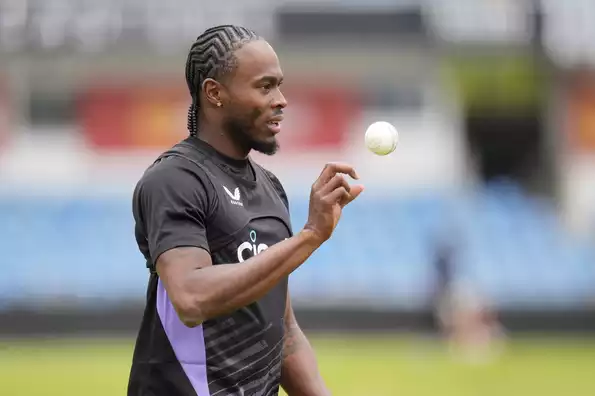
England have added Jofra Archer to their Test squad for the second of the five-game ongoing series against India. Archer, 30, will return to the Test fold for the first time since February 2021 and will be in line to add to his 13 Test caps when the second match gets underway at Edgbaston in Birmingham on July 2. The pacer returned to red-ball cricket in the last round of County Championship for Sussex against Durham. His last Test appearance for England also came against India in 2021, post which he battled a series of injuries, including a back stress fracture, that kept him out of action intermittently until 2024 before he made his white-ball return in May last year. The remainder of the England squad is the same as the one that was named ahead of the series opener in Leeds, which the hosts won by five wickets. The last three Tests in the newly-rechristened Anderson-Tendulkar Trophy 2025 will be played at the Lord’s (July 10-14), Old Trafford in Manchester (July 23-27) and The Oval (July 31- August 4). England squad for 2nd Test: Ben Stokes (C), Jofra Archer, Shoaib Bashir, Jacob Bethell, Harry Brook, Brydon Carse, Sam Cook, Zak Crawley, Ben Duckett, Jamie Overton, Ollie Pope, Joe Root, Jamie Smith, Josh Tongue, Chris Woakes.

Read More

Najmul Hossain likely to reconsider Test captaincy position

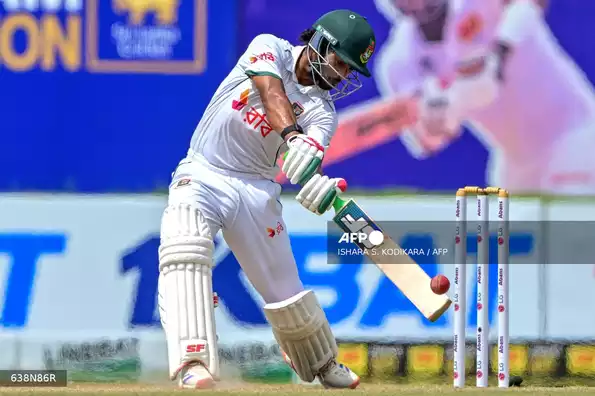
Bangladesh Test skipper Najmul Hossain is unlikely to continue as captain in the format following the two-match series against Sri Lanka. The southpaw is expected to convey the decision to the board soon while whether he will announce it officially after the end of second Test at Colombo or later depends on the outcome of the discussion that is expected to take place with him and the board after he officially sent the letter to the board to inform about his desire to step down. A close source, knowing the development, confirmed it to Cricbuzz on Saturday, adding that the southpaw is quite adamant about his decision after all that happened with him in the recent past. “I think he will not continue as Test captain after the Test series against Sri Lanka,” said the source who knows Najmul from close quarters. “I have known him for a long time, and as far as I understand he is not happy with everything that is going around with him,” he added on condition of anonymity. It is understood that Najmul, who was handed Test captaincy for one year, spoke at length with those close to him and informed them about his decision. BCB in the recent past hadsnatched away the ODI captaincy from Najmul, who earlier quit for T20I captaincy to concentrate on his batting, while also informing the board that he wants to continue as Test and ODI captain. Najmul’s removal from ODI captaincy had raised quite a few eyebrows for the manner in which it played out. Initially, Najmul decided to quit as captaincy across formats but the then BCB president Faruque Ahmed managed to convince him to continue as Test and ODI captain and opt out as T20I captain in order to concentrate on his batting. In that context, it came as a surprise to see BCB calling an emergency Zoom meeting on June 12 and later announced that Mehidy will replace Najmul as their 50-over format captain for the next one year. Previously, any discussions on captaincy was placed in the board meeting agenda, and later decisions were made regarding captaincy issues. However, it was not the case as far as Najmul’s removal was concerned and he was informed about the matter when he was planning to sit with the national head coach Phil Simmons regarding the formation of the ODI squad for the three-match ODI series against Sri Lanka, which is scheduled after the ongoing Test series. It was quite embarrassing for Najmul as he left without sitting with Simmons who was waiting for him to make plans for ODIs after BCB cricket operation chairman Nazmul Abedin called him to inform him about their decision to replace him with Mehidy. If insiders are to be believed, it came as a shock for the southpaw as he was expecting to lead the ODI side in the coming days and even spoke about his plans with certain players regarding the Sri Lanka tour, and in the process providing them with a picture of their roles in the ODI set-up. BCB president Aminul Islam, however, denied that Najmul was upset with the entire affair in public in the recent past and insisted that Najmul took everything very cordially after being informed about getting axed as ODI captain. “Coming to Shanto’s point, his captaincy was not taken away, rather the decision was taken with everyone’s consent in the board. We decided to have a new and different plan. As we are currently playing lots of matches of all formats, we wanted to go with three different captains. As Litton and Shanto are captaining the T20 and Test side respectively, and Shanto is performing well in Tests, we thought that if Miraz leads the ODI side, Shanto will concentrate better in other formats. It was the board’s policy decision. It was our plan that one of us would talk to Shanto. That person later reported that he did his job and Shanto received the decision quite cordially. Maybe the situation went differently because of some false news and misunderstanding. To conclude, there are two sides of this situation: the decision was taken with the consent of everyone in the board and Shanto took it sportingly,” Aminul was quoted as saying in Bangla Daily Kaler Kantho during a video interview that was uploaded on June 21.

Read More