No Gill, Jitesh for T20 World Cup; Ishan Kishan returns to India T20I squad

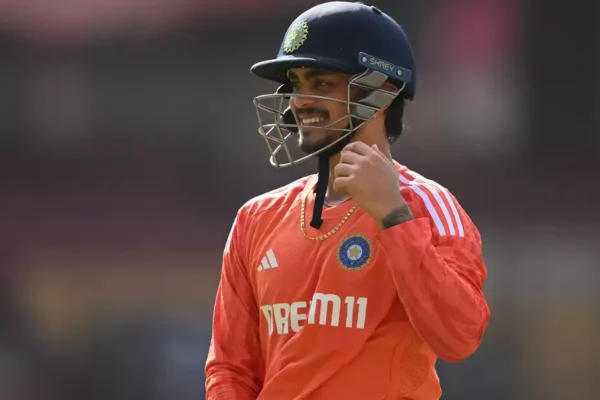
Ishan Kishan and Rinku Singh have been included in India’s 15-man squad for the Men’s T20 World Cup 2026 and the five-match T20I series against New Zealand in the lead-up to the global event next year. Suryakumar Yadav will lead the side while Axar Patel has been named as the vice-captain. As a result, Shubman Gill, who was vice-captain of the squad until the recently concluded T20I series against South Africa, and Jitesh Sharma, have missed the cut. BCCI Secretary Devajit Saikia, captain Suryakumar Yadav and chief selector Ajit Agarkar announced the 15-man squad for the mega-event from the BCCI headquarters in Mumbai on Saturday (December 20). India Squad: Suryakumar Yadav (c), Axar Patel (vc), Sanju Samson, Abhishek Sharma, Tilak Varma, Hardik Pandya, Ishan Kishan, Shivam Dube, Washington Sundar, Harshit Rana, Jasprit Bumrah, Varun Chakaravarthy, Kuldeep Yadav, Arshdeep Singh, Rinku Singh Axar was vice-captain of the Indian T20I squad until the conclusion of the five-match T20I series against England in January and February before Gill took over the role in India’s next T20I assignment at the Asia Cup in September, this year. Gill remained the deputy for Suryakumar in the subsequent Australia and South Africa series as well but Axar will now take over. Gill had missed the last two T20Is due to a foot injury which he suffered in the nets ahead of the abandoned T20I in Lucknow. But, it wasn’t a fruitful year for Gill in T20Is scoring just 291 runs in 15 innings at an average of 24.25 and striking at 137.26 with no fifties or hundreds to show for his efforts. Kishan, meanwhile, had a breakout season in the recently concluded Syed Mushtaq Ali Trophy as he captained Jharkhand to the crown. He scored 517 runs in just 10 innings at 57.32 and struck at a whopping 197.32 in the tournament. He scored two fifties and two hundreds, including a century in the final against Haryana (101 off 49). The batters include a power-packed lineup of Abhishek Sharma, Suryakumar, Sanju Samson, Tilak Varma, Rinku and Kishan. Hardik Pandya who blitzed 63 off 25 balls in the final T20I in Ahmedabad is one among four all-rounders with Axar, Shivam Dube and Washington Sundar the other three. The bowling composition includes three frontline pacers and two frontline spinners. Jasprit Bumrah will lead the pace attack while Arshdeep Singh and Harshit Rana are the other two fast-bowlers. The spinners include Varun Chakaravarthy and Kuldeep Yadav. Ahead of India attempting to defend their T20 World Cup, India will face New Zealand for three ODIs and five T20Is. The T20I series will be played from January 21 to January 31 in preparation for the marquee event. The squad for the three ODIs, which will be played from January 11 to January 18, will be announced at a later date.

Read More

Jemimah Rodrigues: Adaptable, responsible, fighter

Jemimah Rodrigues can be anything you want her to be. Her seven-something rollercoaster years in international cricket are proof. She can fill in for a veteran, as most careers begin. She can replace another, as most careers progress. And she can adapt to bat out of position, as most careers evolve in a national set-up. She can be forgotten, dropped and drafted back in just as easily when a World Cup cycle resets. She’ll front up as the stand-in captain when the seniors deserve rest. She will also shoulder the responsibility of completing the over when a teammate goes down injured. She can even be made the scapegoat, and still not flinch. She can be because, above all, she is a fighter. When India’s self-sabotaging ways cost them two tight games at a home World Cup in Vizag, Rodrigues ended up as the collateral damage in their batting vs bowling depth tradeoff. Eventually, another close game was conceded in Indore, making it a total loss of six crucial points and forcing a re-think of strategies. For the New Zealand game, with the last available semifinal spot at stake, India decided to shelve their reactive tactics and turn on proactive decision-making. One of which – perhaps the most important call of all – was promoting the returning Rodrigues at one-drop when they had an opening platform of 212 at more than run-a-ball. Coming in at the fall of the aggressor in that partnership, Rodrigues knew she had to keep the tempo going. It was no small challenge coming off two ducks and a stint running drinks in her maiden World Cup, but the local star rose to the occasion. She took six balls, and three singles off them, to get her eye in, and once the boundaries started flowing there was no looking back. The drives were her most-productive, and aesthetic, shot, fetching 29 in 12 balls including half a dozen boundaries. But, Rodrigues manoeuvred the field against spin with her trademark sweeps and reverse-sweeps just as expertly. She welcomed back New Zealand’s most economical bowler, Jess Kerr, with back-to-back boundaries, and then laid into the opposition’s most successful bowler on the night, Suzie Bates, with a couple more to register India’s fastest fifty of the tournament in 38 balls. Her full range of shots was on display in the 46th over when Rodrigues reverse-swept, cut, and hit a pristine drive through the vacant covers off Eden Carson despite some discomfort from a possible cramp. India had one over to play on the other side of a nearly 100-minute rain break, and she remained committed to the character, lofting Rosemary Mair down the ground to keep the boundaries trickling in till the last. As many as 51 runs came off the 37 deliveries she faced from spinners, at 137.83 while the remaining 25 were off pacers, in 18 deliveries, at 138.88. This was surprisingly just the fourth innings at no. 3 for Rodrigues, who was once touted a natural heir to Mithali Raj’s spot in the ODIs for a very similar drop-and-run busy style of play suited to middle-overs passage. From a fledgling opening career domestically, the Mumbai batter adapted her game to the demands of the no. 5 position phenomenally well in this ICC Women’s ODI Championship. Since the start of 2024, her death-overs strike-rate of 155.39 is bettered only by three other batters worldwide among the 36 who’ve faced at least 15 overs in the phase. Her aggregate of 331 in 14 innings is second only to Richa Ghosh (350, SR 163.55) in this period, underscoring the fact that she’s been just as important for India as their designated finisher in closing stages. On Thursday, she arrived slightly earlier than the onset of slog-overs and at a time when India were going at 6.36 RPO. Rodrigues scored 76 off the 128 India collected since, and by the end of their innings, the team had upped the run-rate to 6.94. During her stay at the crease, India went at 8.2 – just the kind of intent that had gone missing in the last two outings, since the Ghosh blinder against South Africa. Against Australia, a similarly solid 150-plus opening stand was followed by brisk cameos. However, the lack of a sustained assault in the latter stages kept them to a below-par 330 for the conditions in Vizag. While chasing with a batter short in Indore, under near-identical conditions, the lower-order impetus never came despite the team cruising at 234 for 3 after 41 overs in pursuit of England’s 288. Rodrigues then marked her comeback on another batting paradise on a familiar ground, determined to right a few wrongs – not just India’s but to undo her own missteps as well. She had then made a rapid 33 off 21 balls against the defending champions but fallen to a clever back-of-the-hand slower ball from Annabel Sutherland in a collapse of 6 for 36 in the final seven overs. In Navi Mumbai, she batted New Zealand out of the contest with a 55-ball 76 not out that was no less impactful than the centuries that came earlier in the innings. In between the two outings, nobody explained why the axed batter to accommodate a sixth bowler had to be Rodrigues. So, the educated guess is that quantity won over quality in a “tough call”. But Rodrigues showed in Navi Mumbai what happens when quality – intent-filled scoring in this case – is prioritised. In his pre-match media address, Amol Muzumdar had admitted that the team was aware “there have been no hundreds yet” and emphasised on the importance of “starting well but finishing better”. In Smriti Mandhana and Pratika Rawal’s contrasting but complimentary centuries half the ask was met but most pleasing to the head coach would be that last box ticked. In an earlier chat, he’d had stressed the “settled” top-five wasn’t to be tinkered with, but flexibility rewarded him richly. That it came via the batter who, a game…

Read More

IPL 2026 auction likely around December 15, retention deadline on November 15

The IPL 2026 auction is likely to be held in the second or third week of December, with December 13-15 emerging as the probable window. Franchise officials, who have spoken to the BCCI authorities, have disclosed to Cricbuzz that discussions are centred on those dates, although the Governing Council of the league is yet to firm up the schedule. Additionally, there is no indication, at this stage, of the auction being taken overseas, as was the case in the last two editions – first in Dubai (2023) and then in Jeddah, Saudi Arabia (2024). Franchise sources suggest that it would not be a surprise if the BCCI decides to hold the mini-auction in India itself. Again, that decision is yet to be concretised. What, however, can be said with a fair degree of certainty is that the retention deadline is November 15. By then, franchises will have to submit the names of the players they plan to release ahead of the auction. There are, though, no indications of a large-scale churn, except perhaps from Chennai Super Kings and Rajasthan Royals, who finished at the bottom last season. Among the players reportedly on the release list are Deepak Hooda, Vijay Shankar, Rahul Tripathi, Sam Curran, and even Devon Conway from Chennai Super Kings (CSK). The five-time champions already have INR 9.75 crore added to their purse following R Ashwin’s retirement from the IPL. At the top of the Royals’ list will be Sanju Samson, unless the franchise manages to pull off a trade for the skipper. There had also been some talk of the Royals’ plans to release their two Sri Lankan spinners – Wanindu Hasaranga and Maheesh Theekshana – but with Kumar Sangakkara set for return as head coach, that thinking may well change. Players such as T Natarajan, Mitchell Starc, Akash Deep, Mayank Yadav and David Miller among others, may have to look for new franchises, although there is no confirmation as yet – just as in the case of Venkatesh Iyer, the third most expensive buy at the last auction, picked up by Kolkata Knight Riders for INR 23.75 crore. Going by the buzz among franchises, Cameron Green is expected to be one of the hottest names at the auction. The Australian all-rounder, who missed the previous auction due to injury, has already attracted interest from several teams and he is sure to be hotly pursued.

Read More

Ashwin signs up for entire BBL season after ILT20 miss

R Ashwin has committed to a full season in the Big Bash League (BBL) and will feature in all matches for the Sydney Thunder. He had initially signed up for a shorter stint, covering only a few league fixtures and the playoffs, but has now extended his contract to remain available throughout the tournament. The BBL 2025 will run from December 14 to January 25. Ashwin’s extended participation in the BBL comes for an obvious reason. His planned stint in the ILT20 did not materialise after he went unsold in the first round of the auction on Wednesday. He promptly withdrew his name from the remaining rounds, unwilling to feature in the league at a meagre pay. Ashwin had entered the ILT20 auction with a base price of $120,000, the highest among the registered players, but was left disappointed with the turn of events. “That’s the price I wanted as a bare minimum, and I’m happy not to play at this stage of my career if my value isn’t met,” Ashwin told Cricbuzz. There was always a chance of being picked in the following round but he decided not to continue. “I was about to pull out a few days before the auction because of the Thunder deal, but since I had already committed to the ILT20 that I would enter the auction, I honoured my word. However, I did not agree to lowering my base price,” he said. He also confirmed to this website on Thursday that he has given commitment to Sydney Thunder for the full season. “I have signed up with Sydney Thunder for the entire season,” he said. Since he had already verbally committed to ILT20, Thunder and BBL agreed to give him an exemption. But the price had to be higher. Coached by Trevor Baylis, Thunder finished third last season.

Read More

Trophy fiasco: 5 ACC Test nations to meet after India’s strong protest

The much-awaited decision on the status of the Asia Cup trophy and medallions, which were not presented to the victorious Indian team after the final on Sunday, has been deferred after some drama and a brief walkout, rather, a logout. The members of the Asian Cricket Council (ACC), who met in Dubai on Tuesday (September 30) afternoon, have left it to the five Test playing nations of the ACC but that decision was arrived at after an exchange among the members, primarily between the Indian and Pakistan sides who debated over the trophy. Ashish Shelar and Rajeev Shukla, the Indian representatives to the ACC meeting, confronted the Pakistan Cricket Board chairman Mohsin Naqvi, who was presiding over the meeting. Shelar and Shukla insisted that a resolution be made over the trophy, which the PCB chief had taken away after the Indian players refused to accept it from his hands at Dubai International Stadium on Sunday night. The meeting then decided that the five Test playing members of the ACC – India, Pakistan, Afghanistan, Sri Lanka and Bangladesh – will meet offline and break the deadlock. The conclave was, in fact, an extension of the July 24 Dhaka AGM which was postponed on India’s protest. The two Indian representatives attended the meeting virtually. The members of the Board of Control for Cricket in India (BCCI), Bangladesh Cricket Board (BCB), Sri Lanka Cricket (SLC) and Afghanistan Cricket Board (ACB) besides PCB will convene a formal meeting among them to find a solution on the issue of trophy about which the BCCI has already vowed to escalate at the ICC level. The meeting started with an inaugural address by Naqvi who then congratulated Mongolia (for getting membership) and Nepal (on their series win over West Indies). At that juncture Shelar intervened and asked why India also not be congratulated. After he strongly insisted on the formal congratulations for the Indian team on winning the Asia Cup, Naqvi relented and greeted the Indian team. On the issue of the trophy, the Indian representatives reminded that they will escalate the issue to the ICC, as has already been declared by the BCCI recently. The discussion then went to a point when Shelar logged out in protest. He later rejoined the meeting online after which it was decided that the matter be resolved by the five full members. There were two other items on the agenda — election of the vice-president and finalisation of schedule for other ACC events like emerging players, under-19 tournaments. Neither of them was taken up during the meeting.

Read More

Imperfect India still too good for Pakistan

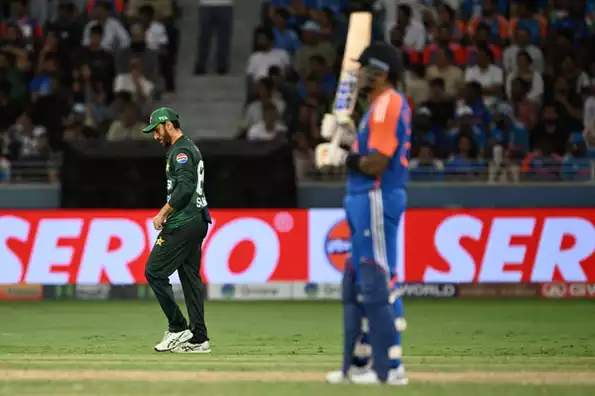
Perhaps nothing summed up the night better than Sahibzada Farhan’s dismissal. He was well set, past his half-century and had already taken on Jasprit Bumrah with rare success; only two batters have ever scored more against him in T20Is. At 90/2 at the halfway mark, Pakistan were flying. And then came the moment. Shivam Dube, hitting the deck with the slower ball he has been working on with Morne Morkel, and making Farhan reach out with his wide line. The shot was miscued, the bat flew out of his hands, and he was caught at cover. The dismissal told two stories. One, of Pakistan’s intent. They had been bruised by their 127/9 in the previous meeting and this was their answer: swing hard, play brave, push India. Fakhar Zaman swung hard too before a close call for caught-behind went in India’s favour. Saim Ayub broke out of his rut of zeroes with 21 off 17. Hussain Talat was promoted to keep the left-right combination intact. And Salman Ali Agha, who had averaged four against spin in this Asia Cup, demoted. Pakistan were hell bent on attacking, and for ten overs, it worked. The other story was how India recovered. Dube’s two wickets in 11 balls after the drinks break changed the rhythm. India bowled it slower, bowled it wider, kept Pakistan reaching and reaching until the mistakes came. It wasn’t a perfect night for India. Nowhere close. They dropped four catches, their most in a T20I in three years. Abhishek Sharma shelled two, both straightforward, while Kuldeep Yadav and Shubman Gill put down one each. Bumrah finished wicketless, leaking 45 off his four overs. Varun Chakaravarthy, so often the chokehold, also went wicketless for the first time in 12 T20Is, not helped by the drops off his bowling. And yet, Pakistan’s 171 felt about par, not beyond. That is the gap. Even when India’s best were blunted, others filled the spaces. Axar Patel, who turned up with a neck patch after hurting himself while fielding in Abu Dhabi, and barely bowled in warm-ups, ended up delivering just one over. Hardik Pandya didn’t even need to bowl four overs. And Dube, who has bowled out his full quota of overs only three times in 39 T20Is, stepped up on a much flatter pitch than last time and returned figures of 2 for 33, most of his deliveries banged on back-of-length. “According to me, Shivam Dube’s spell was a turning point for the game,” Suryakumar Yadav said. “I think he has been working really hard on his bowling in all the practice sessions. And this was the perfect game where he got an opportunity. He always wanted to bowl a minimum two overs and today he got to bowl his quota of all the overs. So he was very happy. And the way he delivered, I think he had very clear plans. And that’s what I want from the boys and that makes my job easier.” The gulf looked even wider in the chase. Shubman Gill and Abhishek Sharma, friends since under-12s, opened with a stand worth 105. It wasn’t their first hundred together, and won’t be their last, but it was a partnership that turned the match into a canter. Gill threaded cover-drives and even reverse-swept. Abhishek smashed the first ball out for a six again. Shaheen Afridi and Haris Rauf had words; Gill and Abhishek had words and plenty of shots. By the time the stand was broken, the writing was on the wall for Pakistan. “Both of them batted beautifully,” Suryakumar said of Abhishek and Gill. “It was required today to have a very good start and they gave it. “The way both of them bat… it’s like a fire and ice combination. They complement each other really well and that’s what I want to see. If someone is batting brilliantly, the other one can take a little backseat and just rotate the strike. “I think it’s really important to be very, very good friends off the field. If you are batting together, opening together, that really helps to get your bond a little stronger. Sometimes you don’t have to say anything on the field. You look in the eye and take that cheeky single… I think that friendship comes into picture when they both bat together.” For Pakistan, this was their best batting day of the tournament. For India, it was their worst fielding and worst bowling day of the tournament. And yet, the contest didn’t stretch. An imperfect India were still too good for Pakistan.

Read More

For Kuldeep Yadav, it’s all about making the overs count

Mid-June in Beckenham, Kuldeep Yadav stood on the sidelines of India’s intra-squad practice game and squinted at the playing surface. He thought it looked good for spinners: dry, with just enough bite and some bounce to work with too. He said as much in an informal press meet. A five-Test series against England was about to begin, and with no Ravichandran Ashwin in the squad, Kuldeep seemed to have allowed himself a little hope. The pitches, when the series began, were exactly that: dry, flat, crying out for something wild. India had the wild thing, but he never got a game. It was not for lack of skill. Kuldeep had already reworked his bowling, straightened his run-up, made his rhythm more aggressive and stopped his hand from falling away. That journey of making himself a technically better, more sustainable bowler at the highest level was behind him. He had even won Tests at home with those changes, flipped series, showed the ability to deliver on demand even with Ashwin and Jadeja in the XI. But none of that was enough. Not when the question was balance. Balance, that old cricketing black box of selection. When injuries didn’t keep him out, Kuldeep lost his spot to someone who could bat. India now like their allrounders, their finger spinners who could defend the red ball better and hit the white ball longer, even if their ceiling with the ball was lower. Flat tracks may demand magic, but team sheets rarely do. That irony followed him to the Asia Cup. Few expected him to play here either. It was the start of the season, the pitches were fresh, unlike the tired track from the Champions Trophy earlier this year, and Shivam Dube was putting in the hours in the net session. To go with that, this Gautam Gambhir-coached side loves its allrounders. Kuldeep isn’t one. But they also love their spinners in limited-overs cricket, so in came Kuldeep at the cost of Arshdeep Singh. Two matches into this Asia Cup, he has six wickets in 24 balls. Player of the Match against UAE. Player of the Match against Pakistan. His last T20I before this? The World Cup final in Barbados. From the bench in England to the honours board in Dubai, this distance wasn’t covered in overs by Kuldeep. But time. And some of it must have been really frustrating. “It’s challenging when you’re not playing,” Kuldeep has said during this Asia Cup. “Rhythm is very important when you are playing your first game after a while. If you play regular games, your rhythm is set. You have an idea of bowling, how you are spending time in the field, how you are reacting on the field.” In the match against UAE though, Kuldeep’s first for India since the Champions Trophy final in March, the rhythm was a non-issue. He started with a tight over before unleashing hell in his next. Rahul Chopra chanced his arms at a flighted delivery and was caught in the deep. Muhammad Waseem, the captain, then swept and missed. Lbw. Harshit Kaushik, younger and overeager, lunged at a wider googly and was bowled. Three wickets in the space of an over, three different dismissals, and the full range of wrist spin at play. Against Pakistan, the field at one point of time told you the story. Slip, leg slip, silly mid-on, with Kuldeep on a hat-trick. Hasan Nawaz slogged and top-edged into Axar’s hands, and then, off the very next ball, Mohammad Nawaz trapped first ball by the googly. The ball had turned in too sharply, too quickly. He reviewed; three reds on the screen. Out. “I know Kuldeep was with the Test team,” his T20I captain Suryakumar Yadav said after the Pakistan match. “He couldn’t get an opportunity to play but he was working really hard on his fitness, on his bowling and you can see it. Two games in a row, he has won it for us.” Just like that, Kuldeep has six wickets already in the tournament. In fact, India have been so well-rounded, so much better that those around them that they have barely looked like needing his full quota of overs. Kuldeep, while picking his second PoTM award in this Asia Cup, insisted that he is still not bowling his best and that he’s been using “too many variations”. But the numbers are what they are. While his pace has been under 90kph more often than not, the variations of pace, the line of his googly and the energy on the ball has done the trick. Like Mike Hesson, the Pakistan coach, pointed out: India’s spin, well most of it, was not mystery, not magic, just pressure sustained until the mistake came. And the mistakes have come against Kuldeep plenty. That’s the thing with wrist spin. It is a wild art. It can go wrong. But then again, it can also go very right. Flat pitches demand it. India resisted it in England but they couldn’t in Dubai. And given the chance to be back in India colours, Kuldeep has made every over count, just as he thought he might back in Beckenham, staring at a pitch, waiting for his chance.

Read More

Pakistan lodge protest, call India ‘unsporting’ for not shaking hands

After India beat Pakistan by seven wickets in their Asia Cup fixture in Dubai, the post-match presentation was held up for several minutes. When it did take place after a short delay, Salman Ali Agha didn’t show up for it. India captain Suryakumar Yadav as well as Player-of-the-Match Kuldeep Yadav were in attendance though. “Team manager Naveed Cheema lodged a strong protest against Indian players’ behaviour of not shaking hands,” PCB said in a statement. “It was deemed as unsporting and against the spirit of the game. As a protest we did not send our captain to the post-match ceremony.” Earlier, in the press conference, Pakistan head coach Mike Hesson had called Agha’s absence a “flow-on” effect of India’s decision to not shake hands, both at the toss and after the match was completed. Cricbuzz understands that match referee Andy Pycroft reached out to Salman Agha at the toss, requesting him not to shake hands with his Indian counterpart Suryakumar. PCB is understood to be miffed with Pycroft’s approach but later changed tune, choosing not to name him in their press release. Sources from the Indian camp suggest that Suryakumar also did not shake hands with UAE captain Muhammad Waseem at the toss but both the teams did exchange handshakes after the match was done. Speaking about India’s stance at the post-match press conference, Suryakumar had said that “a few things in life are ahead of sportsman spirit” and that his team “gave a proper reply” to Pakistan.

Read More

Oval Invincibles seal third straight Hundred title

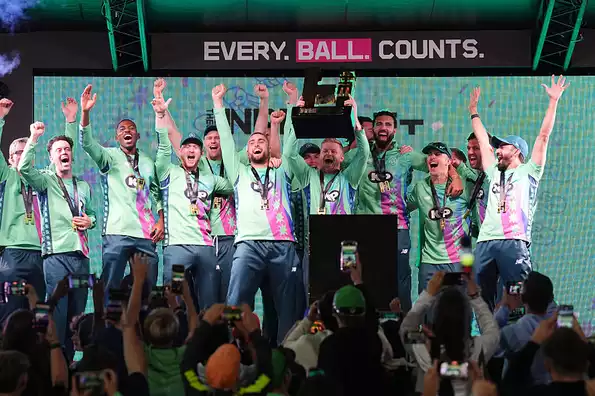
Oval Invincibles have done the Hundred three-peat. On Sunday night, they wrapped up a hat-trick of Hundred titles with a 26-run victory over Trent Rockets, riding on Will Jacks’s blistering 72 and Nathan Sowter’s game-breaking spell (3-25). Having looked set to get close to 180, they stumbled at the death to finish on 168/5 and looked set to finish runners-up for the first time, but the bowlers stepped up to avoid that. Asked to bat, Invincibles got exactly the start they wanted. Jacks was off the blocks quickly, smashing seven fours and four sixes in a 41-ball stay that kept Rockets’ bowlers under constant pressure. Jordan Cox was breezy at the other end, with 40 off 28. The pair pushed their side forward after the early exit of Tawanda Muyeye. When Rehan Ahmed broke the partnership, it had been worth 87 runs, that came off 55 deliveries. Jacks was determined not to let that dismissal affect how the Invincibles finished, and he combined with Sam Curran to propel them further by taking 16 off a set from David Willey. However, they struggled to keep up against some effective death bowling as only 25 runs came off the last 20 deliveries, despite one set of five in that from Stoinis going for 15. In his previous set, Stoinis gave away just five runs, while Dillon Pennington and Ben Sanderson conceded just 1 and 4 respectively. Rockets went into the break perhaps as the happier side for the way their bowlers finished, hoping to ride that momentum in chase. Tom Banton started off by taking boundaries off Jason Beherendorff but Saqib Mahmood and Sam Curran bowled tight to keep Rockets to just 32/0 in the PowerPlay. The Invincibles went for spin from both ends in the middle and reaped dividends when Joe Root attempted to up the scoring against Sowter. The England batter found Jacks at long-on with his big hit which ended his scratchy stay of 10 from 13. Sowter bowled 10 deliveries in this set and struck two more times – cleaning up Rehan Ahmed and having Banton too caught at long-on to reduce the Rockets to 37/3. The urgent repair work from there came through an alliance between Willey and Stoinis. The Rockets had just 51/3 at the halfway stage but were starting to make quick progress through this new batting pair. Stoinis crunched two fours of Sowter and Willey went after Adam Zampa, only to fall after hitting a six. Much to the frustration of Stoinis, who still harboured hopes of pulling off the unthinkable, the lower order couldn’t quite stand tall with him in what remained of the chase. Ross Whiteley offered the most resistance while Stoinis counter-attacked during their 38-run partnership. The chase was in an unlikely territory for the Rockets with 78 needed off 25, but the pair attempted it. They took 10 off a set from Sam Curran and then hit three sixes off his brother Tom to narrow the equation down to 48 off 15. But Mahmood came back and ran Whiteley out, leaving Stoinis with the all to do. Sam Curran bowled three good deliveries in the penultimate set of the match, giving just three runs but Stoinis capped that off with a six and a four. Even with that, the ask was 33 off the last five, which was beyond the grasp of even Stoinis. Mahmood gave away no width and tied down the batters in the last set, completing the title win with Stoinis’s wicket on the last delivery for a valiant 64 off 38. Brief Scores: Oval Invincibles 168/5 in 100 balls (Will Jacks 72, Jordan Cox 40; Matt Carter 2/24) beat Trent Rockets 142/8 in 100 balls (Marcus Stoinis 64; Nathan Sowter 3/25, Saqib Mahmood 2/22) by 26 runs © Cricbuzz

Read More