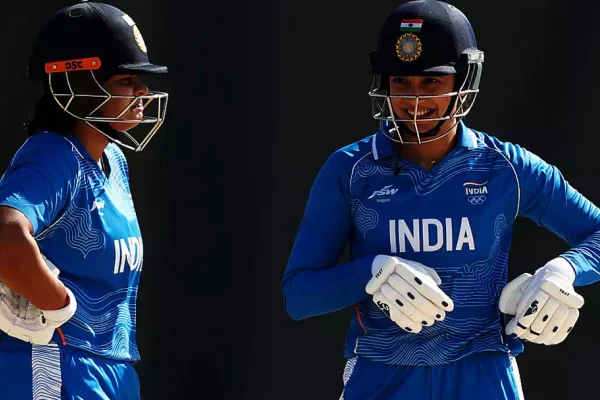
Smriti Mandhana named India’s new captain

Smriti Mandhana has been appointed as the new captain of the Indian women’s cricket team, the BCCI announced on Tuesday (October 6), hours after Harmanpreet Kaur stepped down from the role earlier in the day. Mandhana, who has been part of the Indian team since 2013, has previously led India in 22 white-ball matches. She has also captained Royal Challengers Bengaluru to Women’s Premier League titles in 2024 and 2026, adding to her leadership credentials across formats. She has led India in 18 T20Is, winning 11 and losing six, with one match ending without a result. She has a perfect record in ODIs, having won all four games she captained. In the WPL, she has led RCB in 35 matches, with 18 wins and 17 defeats. Mandhana acknowledged Harmanpreet’s contribution as captain while speaking about her new role. “I would also like to acknowledge Harmanpreet and the contribution she has made as captain over the years. She has led the team with great commitment and has been an important part of our journey,” she said. “To be given the responsibility of leading India is a very special honour. Representing India has always meant a great deal to me, and to now have the opportunity to lead the team is something I will value deeply. I understand the responsibility that comes with this role and look forward to working with the team, learning along the way and giving my best to take Indian Cricket forward.” Niki Prasad receives maiden call-up T20I call-up Meanwhile, Harmanpreet remains part of both squads for India’s series against Zimbabwe. Shafali Verma has been named vice-captain for the three-match T20I series, while Deepti Sharma will serve as Mandhana’s deputy in the ODIs. The Women’s Selection Committee has retained a strong core for the the series, with the three T20Is to be played in Raipur on October 16, 18 and 20, followed by three ODIs in Vadodara on October 23, 25 and 28. The T20I squad includes a new-comer in the form of Niki Prasad. The 20-year-old right-handed batter from Karnataka, who bats in the middle order, has played seven innings for Delhi Capitals in the WPL, scoring 153 runs. She recently featured in the series against Australia A, scoring half-centuries in all three formats: 91 in the one-off three-day game, 76 in the third one-day match, along with an unbeaten 54 not out off 31 balls in the second T20 earlier in the series. The T20I squad also sees the return of Anushka Sharma, who has represented India in the 20-over format in three matches – against South Africa earlier in the year. Anushka, who plays for Gujarat Giants in the WPL, has 177 runs in seven innings. She recently played the series against Australia A, scoring three successive fifties in the one-day matches. Jemimah Rodrigues, who is recovering from a hamstring injury sustained during The Hundred, continues her recovery. Shreyanka Patil, Renuka Singh Thakur, Radha Yadav and Bharti Fulmali, who featured in the squad in India’s gold-medal-winning Asian Games campaign, miss out from the T20I squad for the Zimbabwe series. Niki, Anushka, Prema Rawat, Jintimani Kalita and Minnu Mani are the inclusions. Renuka has been included for the 50-over games while Tejal Hasabnis, who scored two fifties in the one-day series against Australia A, returns to the ODI squad. The 29-year-old middle order batter, who has six ODI appearances, last featured for India in the ODI against Ireland in January 2025. Yastika Bhatia, Nandni Sharma and Sayali Satghare are the other additions to the ODI squad, while Uma Chetry, Kashvee Gautam, Sneh Rana and Amanjot Kaur, who were part of India’s squad for the ODI series against Australia at the start of the year, are the exclusions along with Rodrigues. India’s T20I squad: Smriti Mandhana (C), Shafali Verma (VC), Niki Prasad, Harmanpreet Kaur, Anushka Sharma, Richa Ghosh (WK), G Kamalini (WK), Deepti Sharma, Prema Rawat, Sree Charani, Nandni Sharma, Kranti Gaud, Arundhati Reddy, Jintimani Kalita, Minnu Mani. India’s ODI squad: Smriti Mandhana (C), Shafali Verma, Pratika Rawal, Harmanpreet Kaur, Harleen Deol, Tejal Hasabnis, Deepti Sharma (VC), Richa Ghosh (WK), Yastika Bhatia (WK), Vaishnavi Sharma, Nandni Sharma, Sree Charani, Kranti Gaud, Sayali Satghare, Renuka Thakur.

Read More

Holders Desert Vipers face MI Emirates in ILT20 2026 opener

Defending champions Desert Vipers will take on last year’s finalists and Season 2 champions MI Emirates in a repeat of last year’s final in the opening match of ILT20 Season 5 at the Dubai International Stadium on November 21. The evening matches of the season will start at 6.30 pm, marking the prime-time slot in India. The season’s second fixture will be a clash between the Sharjah Warriorz and Season 1 champions Gulf Giants at 2 pm at the Sharjah Cricket Stadium. Season 3 champions Dubai Capitals will launch their campaign against the Abu Dhabi Knight Riders at their home venue – the Dubai International Stadium – in the second match of the Super Sunday double-header. Abu Dhabi will host its first match on Thursday, November 26, when Abu Dhabi Knight Riders take on MI Emirates at the Zayed Cricket Stadium. The league will celebrate UAE National Day (Eid Al Etihad) on December 2 amid the traditional festivities, with a double-header involving Abu Dhabi Knight Riders and the Desert Vipers at the Zayed Cricket Stadium in the afternoon clash, with Dubai Capitals hosting MI Emirates at the Dubai International Stadium in the evening clash. Each team will play 10 matches in the double round-robin 34-match tournament. At the end of the 30-match group stage, the top four teams in the points table will progress to the four-match playoffs, which will culminate in the Season 5 final at the Dubai International Stadium on December 20. The 30-day competition will feature six days of double-header action. Season 5 schedule (All timings IST) Saturday, 21 November – Desert Vipers vs MI Emirates – 8 pm, Dubai Sunday, 22 November – Sharjah Warriorz vs Gulf Giants – 3.30 pm, Sharjah Sunday, 22 November – Dubai Capitals vs Abu Dhabi Knight Riders – 8 pm, Dubai Monday, 23 November – Sharjah Warriorz vs Desert Vipers – 8 pm, Sharjah Tuesday, 24 November – Gulf Giants vs MI Emirates – 8 pm, Dubai Wednesday, 25 November – Dubai Capitals vs Desert Vipers – 8 pm, Dubai Thursday, 26 November – Abu Dhabi Knight Riders vs MI Emirates – 8 pm, Abu Dhabi Friday, 27 November – Sharjah Warriorz vs Dubai Capitals – 8 pm, Sharjah Saturday, 28 November – MI Emirates vs Desert Vipers – 3.30 pm, Abu Dhabi Saturday, 28 November – Gulf Giants vs Dubai Capitals – 8 pm, Dubai Sunday, 29 November – Abu Dhabi Knight Riders vs Sharjah Warriorz – 3.30 pm, Abu Dhabi Sunday, 29 November – Desert Vipers vs Gulf Giants – 8 pm, Dubai Monday, 30 November – MI Emirates vs Abu Dhabi Knight Riders – 8 pm, Abu Dhabi Tuesday, 1 December – Gulf Giants vs Sharjah Warriorz – 8 pm, Sharjah Wednesday, 2 December – Abu Dhabi Knight Riders vs Desert Vipers – 3.30 pm, Abu Dhabi Wednesday, 2 December – Dubai Capitals vs MI Emirates – 8 pm, Dubai Thursday, 3 December – Gulf Giants vs Abu Dhabi Knight Riders – 8 pm, Dubai Friday, 4 December – Desert Vipers vs Sharjah Warriorz – 8 pm, Sharjah Saturday, 5 December – Abu Dhabi Knight Riders vs Gulf Giants – 8 pm, Abu Dhabi Sunday, 6 December – MI Emirates vs Sharjah Warriorz – 3.30 pm, Abu Dhabi Sunday, 6 December – Desert Vipers vs Dubai Capitals – 6:30pm, Dubai Monday, 7 December – MI Emirates vs Gulf Giants – 8 pm, Abu Dhabi Tuesday, 8 December – Dubai Capitals vs Sharjah Warriorz – 8 pm, Dubai Wednesday, 9 December – Sharjah Warriorz vs Abu Dhabi Knight Riders – 8 pm, Sharjah Thursday, 10 December – Dubai Capitals vs Gulf Giants – 8 pm, Dubai Friday, 11 December – Sharjah Warriorz vs MI Emirates – 8 pm, Sharjah Saturday, 12 December – Desert Vipers vs Abu Dhabi Knight Riders – 8 m, Dubai Sunday, 13 December – MI Emirates vs Dubai Capitals – 3.30 pm, Abu Dhabi Sunday, 13 December – Gulf Giants vs Desert Vipers – 8 pm, Dubai Monday, 14 December – Abu Dhabi Knight Riders vs Dubai Capitals – 8 pm, Abu Dhabi Wednesday, 16 December – Qualifier 1: Seed 1 vs Seed 2 – 8 pm, Abu Dhabi Thursday, 17 December – Eliminator: Seed 3 vs Seed 4 – 8 pm, Dubai Friday, 18 December – Qualifier 2: Loser of Q1 vs Winner of Eliminator – 8 pm, Sharjah Sunday, 20 December – Final: Winner of Q1 vs Winner of Q2 – 8 pm, Dubai

Read More

Ratnayake, bowlers secure bronze medal for Sri Lanka

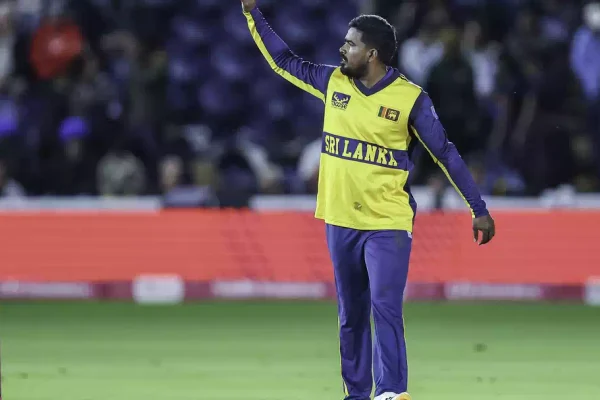
In a game dictated by bowlers, Tharindu Ratnayake’s counter-attacking 65 became a big difference as Sri Lanka downed Bangladesh to secure the bronze medal at the Asian Games 2026. Sri Lanka were in dire straits at 54 for 5 in the 11th over when Ratnayake and Sahan Arachchige combined forces for a blazing 93-run stand. It powered Sri Lanka to 165/9 after which Bangladesh were bundled out for 102, with Ratnayake among four bowlers to pick two wickets each. Sri Lanka had the winds knocked out of their sails early after Arachchige chose to bat in the medal fixture. Mahedi and Aliss Al Islam wiped out the top four inside the Powerplay, leaving them at 21/4 in the fourth over. Ashen Bandara and Arachchige arrested the slide briefly to take the team past 50 and the Powerplay. But Rishad Hossain dismissed Bandara to reduce Sri Lanka to 54/5 in the 11th over. Then came the whirlwind partnership – 93 off 44 – between Ratnayake and Arachchige, with the former smashing 65 of it. The Sri Lankan captain enjoyed the best seat in the house as Ratnayake’s essay came off just 35 balls and included seven fours and five sixes. The stand flew off the blocks with a 25-run over off Mustafizur Rahman and followed that up by picking 16 off Rishad. Sri Lanka took 61 off the last five overs, which included a 21-run over from Rishad to complete Sri Lanka’s recovery. As it turned out, their total was well beyond Bangladesh’s reach as they too suffered a batting implosion. Bangladesh’s top-three – Saif Hasan, Tanzid Hasan and Litton Das, all fell for ducks as Bangladesh were down to 4/3 in the third over. Towhid Hridoy became Ratnayake’s second wicket in the Powerplay as Bangladesh fell to 18/4 in the fourth over. Parvez Hossain and Yasir Ali dragged the team past the Powerplay but they couldn’t consolidate in the middle overs. Vijayakanth Viyaskanth broke the stand with Parvez’s wicket and triggered another collapse. Bangladesh went from 50/5 to 72/8 in the space of 18 deliveries, the chase now well beyond their reach. Sri Lanka’s bowling quartet of Ratnayake (2-18), Nuwan Thushara (2-18), Vijayakanth Viyaskanth (2-26), Wanuja Sahan (2-17) did all of the damage as Bangladesh were bowled out for 102 – 63 short of their target. Brief Scores: Sri Lanka 165/9 in 20 overs (Tharindu Ratnayake 65; Mahedi Hasan 2-19, Saif Hasan 2-28) beat Bangladesh 102 in 17.3 overs (Nasum Ahmed 26; Nuwan Thushara 2-18, Tharindu Ratnayake 2-18, Vijayakanth Viyaskanth 2-26, Wanuja Sahan 2-17) by 63 runs

Read More

Drift and devastation: How England’s Ashes dream faded in Adelaide

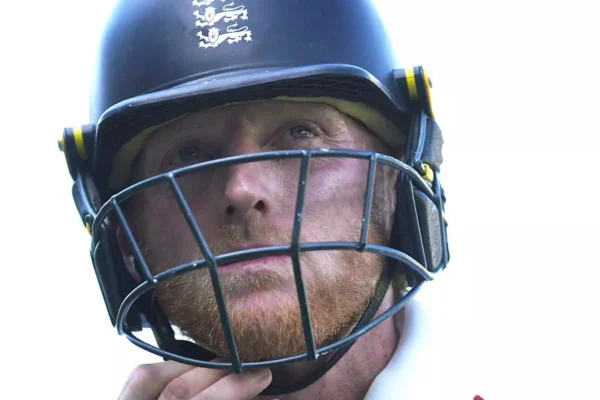
Ben Stokes’ facial reactions are generally a good reflection of the quality of delivery that’s just bowled him. On Friday morning, he’d reacted like a kid who’s throwing a tantrum for having dropped his barely eaten ice cream after he was cleaned up by Mitchell Starc for the umpteenth time. Stokes looked a lot more awe-struck on Saturday evening as he stood totally bamboozled by Lyon’s delivery that had knocked his off stump back. In his defence, it really was that special. One of the best Lyon has ever produced in his rich catalogue of great deliveries over his staggering Test career. Drift, drop, grip, guile and turn. It had it all. In spades. Not much Stokes could have done. Not much any left-hander could have done. From around the wicket, Lyon had got the ball to drift towards Stokes’ pads, and land on a length where the England captain couldn’t smother it. From there he’d got it to turn past his outside-edge and strike the off bail. There was also the beauty in the subtlety to how the world’s best finger spinner had got the ball to hang ominously in the air as compared to his previous deliveries in the over, having released it at 5kph slower. While Stokes held his pose, cussing away at himself and remonstrating to nobody in particular, Lyon was off on a celebratory run towards the western stands at the Adelaide Oval. Punching the air first before being surrounded by his equally ecstatic teammates. Not too dissimilar to the fashion in which he was 11 years earlier when he spun Australia to an emotional Test win against India at this iconic venue. And it’s an image of Lyon from that famous evening in what was one of Australian cricket’s most tragic hour-in the wake of Phil Hughes’ passing-that now hangs right behind the Member’s Pavilion. As part of the 38-year-old’s official induction into the Avenue of Honour at the Adelaide Oval, which took place two days before the start of this Test. So, it had already been a special week for Lyon at what he always refers to as his favourite venue, where he’s also taken more Test wickets than anyone else. It only got better, and even more sensational, as he fired the final few arrows into England’s high hopes of Ashes glory on this tour on a dramatic evening late on Day 4. All it took was 20 deliveries as he got rid of a well-set Harry Brook and a century-bound Zak Crawley on either side of the dream dismissal of Stokes. If the Avenue of Honour ever needed an image of one of Lyon’s best wickets, they could simply use this one. The English camp had hoped for some “magic” over the last two days of this Adelaide Test to keep their Ashes hope alive. The magic instead came from Lyon has he more or less ensured that Australia will retain the Ashes by going 3-0 ahead in front of what will be another packed crowd on Sunday at the Adelaide Oval. If it was Lyon the genius who stole the show to bring the fourth day to a close, it was Pat Cummins the “freak” who rocked the English early as they set about on their improbable run-chase. “Freak” as his fellow bowling colleague Mitchell Starc called him anyway after the Australian captain had run in for an hour and bowled like he’d never left in the Perth nets last month. “Doesn’t train for three months and he comes and bowls like that? Freak,” is what Starc had actually said within earshot of his captain. And freak is a great way of describing how Cummins has returned to the Test arena after a four-month layoff with a back injury and nonchalantly settled back into being the most destructive fast bowler in the world. He’d shown glimpses of it in the first innings as he finished with three wickets, but Cummins took it to another level on Saturday. He might have Ben Duckett to thank for his generosity for his first wicket as the opener happily guided Cummins’ second delivery to Marnus Labuschagne at second slip. But it was his spell after the lunch break where he really showed how incredibly difficult it is to survive against his onslaught with ball in hand. There’s the accuracy. There’s the singular ability to get the ball to do tricks off even the most benign of surfaces. There’s the constant change in grips and angles of delivery. And then there’s the kick that he gets off every pitch he bowls on. As Ollie Pope found out first, as he got snared by a diving Labuschagne low to his left. After the struggling No 3’s technique had been shown up over and over again, as he continued to play Russian roulette with his outside edge. Then came the setup to Joe Root. He’d got the better of the English champion in the first innings, after having teased and tempted the right-hander repeatedly outside off-stump. So much so that Root barely looked like the batter who’d finally brought his century drought to an end on Australian soil only 10 days earlier.

Read More

Sanju Samson’s brief spark amidst India’s unfinished T20I puzzle

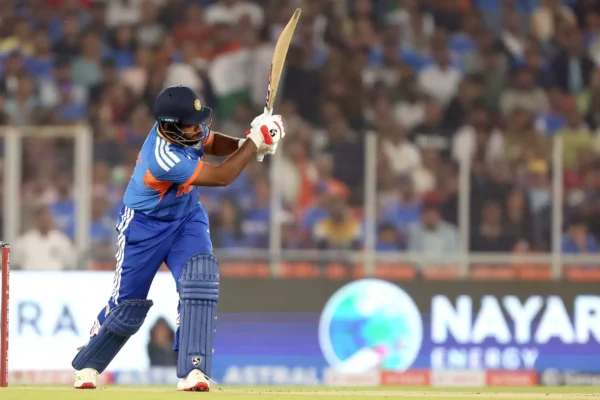
Before turning up for the Ahmedabad T20I, Sanju Samson had faced South Africa four times in the shortest format. Every time he didn’t get out on a duck, he had notched up a century against them. The narrative arc of a romantic story of redemption promised a repeat. But the story of live sports can be more unpredictable than the most loved twisted tale. Signs of a promising knock was loading on Friday as early as the fourth over itself when Samson lofted Ottneil Baartman through the line on the up for a boundary. The third boundary of his innings had moved him to 16 off 8 balls. A scratchy start was making way for something special. Samson had found a place in the side on Friday at the expense of Shubman Gill, the very player who was slotted into the opening role where Samson seemed to have done enough to justify his position. Gill had injured his foot while batting in the nets ahead of the previous game and was ruled out of the series. However, fog ensured no play was possible, and as a result, Samson got no opportunity to bat in Lucknow. Heading to Ahmedabad, his first and last opportunity of the series, it was obvious that he had to make this solitary opportunity count. But he wasn’t treading the unknown. In an international career that has spanned more than a decade, Samson’s opportunities have largely come in such brief openings. To make that one opportunity count without any assurance of the next coming has been too familiar a space in international cricket for the wicketkeeper-batter. His most consistent run has come since Suryakumar Yadav has taken over as the captain, playing 27 of his 52 T20Is since July 2024. Despite scoring three centuries and finding his groove in international cricket during that period, he had to make way for Gill at the top of the order, and in this series to Jitesh Sharma in the finisher’s role. The break in this series for Samson couldn’t have come at a more opportune time. Not only has Gill been short of runs, but the out of -form Suryakumar Yadav has added to India’s concerns at the top of the order, where he promises to offer an alternative. The red-hot form that Abhishek has been carrying has ensured India’s eventual result have not been impacted by lean patch of its skipper and vice-captain. However, given that there are very few weak links to this side, the microscope is trained to that one big concern – where Samson promises to provide a solution and support to the in-form southpaw, who has been shouldering the bulk of the run-scoring responsibility in the PowerPlay. On Friday, despite being beaten and getting leading edges early on in his innings, Samson didn’t hold back. He resumed from where he had left. He got going by playing a casual pick up shot for a six over long-on in the second over. Crisp boundaries, thereafter, started flowing at ease. He crunched a boundary down the ground and then pumped a six over mid-wicket. He was comfortable taking the risks, keeping no safety nets. When the ball came in his slot, he was happy to take on the fielders stationed in the deep. A leading edge even threatened to have him caught. But his gears didn’t alter. Through the course of his innings, he not only outscored Abhishek but also outpaced India’s current best T20 batter; a rare sight. Just when it seemed like he was in complete control, a delivery from George Linde pitched on the middle and held its line to knock over the stumps and end Samson’s stay abruptly; at a point when he seemed well set for a big knock. Samson’s enterprising innings came to an end at an awkward time for him. An early dismissal of Samson in Ahmedabad would’ve ended the Samson-Gill conundrum for the team management. A big innings, on the other hand, would’ve added to the headache, making Samson’s case of being undroppable stronger. But what does a 22-ball 37 leave them with? Samson’s innings may have not done him any harm, but it probably hasn’t done enough to make his case any stronger either. It’s the kind of contribution he has made far too often in the IPL; one that has possibly hindered his progression to the national level. To his luck, Gill hasn’t hit the kind of form that would vindicate the team management’s decision to play him in favour of Samson just as yet. Moreover, Jitesh did not get adequate opportunities to stand out in his role either. At a time when India’s top order is too burdened with two non-performing players, how tempting is the option to bring back Samson? With his innings on Friday, Samson has given the Indian selectors a bit of a headache – but has he done enough to place a solution right in front of them? Or did he squander that opportunity? Despite another disappointing outing for Surya – this time on a flat track – while the cogs are working just fine at this point to ensure the wheel is moving smoothly, one concern stands out at this moment: for how long can the Indian team resist from fixing it? With only five more T20Is left before India head into the World Cup, the answers may come soon. Samson has provided a reminder – if anyone needed – of being that possible fix to what seems like India cricket team’s biggest concern heading into the mega-tournament.

Read More

No Gill, Jitesh for T20 World Cup; Ishan Kishan returns to India T20I squad

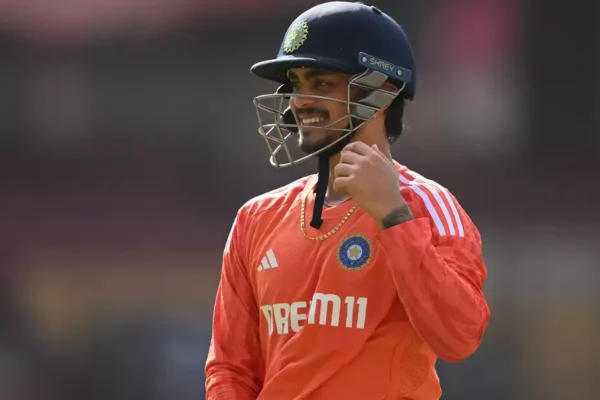
Ishan Kishan and Rinku Singh have been included in India’s 15-man squad for the Men’s T20 World Cup 2026 and the five-match T20I series against New Zealand in the lead-up to the global event next year. Suryakumar Yadav will lead the side while Axar Patel has been named as the vice-captain. As a result, Shubman Gill, who was vice-captain of the squad until the recently concluded T20I series against South Africa, and Jitesh Sharma, have missed the cut. BCCI Secretary Devajit Saikia, captain Suryakumar Yadav and chief selector Ajit Agarkar announced the 15-man squad for the mega-event from the BCCI headquarters in Mumbai on Saturday (December 20). India Squad: Suryakumar Yadav (c), Axar Patel (vc), Sanju Samson, Abhishek Sharma, Tilak Varma, Hardik Pandya, Ishan Kishan, Shivam Dube, Washington Sundar, Harshit Rana, Jasprit Bumrah, Varun Chakaravarthy, Kuldeep Yadav, Arshdeep Singh, Rinku Singh Axar was vice-captain of the Indian T20I squad until the conclusion of the five-match T20I series against England in January and February before Gill took over the role in India’s next T20I assignment at the Asia Cup in September, this year. Gill remained the deputy for Suryakumar in the subsequent Australia and South Africa series as well but Axar will now take over. Gill had missed the last two T20Is due to a foot injury which he suffered in the nets ahead of the abandoned T20I in Lucknow. But, it wasn’t a fruitful year for Gill in T20Is scoring just 291 runs in 15 innings at an average of 24.25 and striking at 137.26 with no fifties or hundreds to show for his efforts. Kishan, meanwhile, had a breakout season in the recently concluded Syed Mushtaq Ali Trophy as he captained Jharkhand to the crown. He scored 517 runs in just 10 innings at 57.32 and struck at a whopping 197.32 in the tournament. He scored two fifties and two hundreds, including a century in the final against Haryana (101 off 49). The batters include a power-packed lineup of Abhishek Sharma, Suryakumar, Sanju Samson, Tilak Varma, Rinku and Kishan. Hardik Pandya who blitzed 63 off 25 balls in the final T20I in Ahmedabad is one among four all-rounders with Axar, Shivam Dube and Washington Sundar the other three. The bowling composition includes three frontline pacers and two frontline spinners. Jasprit Bumrah will lead the pace attack while Arshdeep Singh and Harshit Rana are the other two fast-bowlers. The spinners include Varun Chakaravarthy and Kuldeep Yadav. Ahead of India attempting to defend their T20 World Cup, India will face New Zealand for three ODIs and five T20Is. The T20I series will be played from January 21 to January 31 in preparation for the marquee event. The squad for the three ODIs, which will be played from January 11 to January 18, will be announced at a later date.

Read More

India’s fortress falters: Inside their home slump

India’s 0-2 whitewash at the hands of South Africa has triggered intense scrutiny from fans, pundits, and former players. The defeat comes on the heels of a 0-3 drubbing at home by New Zealand last year and a 1-3 collapse Down Under that cost India a spot in the World Test Championship final for the first time. For a team that once strung together an unprecedented 18 consecutive home series wins, the sudden slide into repeated home failures has raised deep questions about selections, tactics, coaching philosophy, and India’s readiness against increasingly well-prepared touring sides. Putting the decline in perspective India have now lost five of their last seven home Tests, with only a 2-0 win over an injury raven West Indies breaking the sequence. The last time India endured a similar stretch – losing five Tests in a seven-match home span – was in the late 1950s. Back then, a 0-3 defeat to West Indies in 1958-59 was flanked by Test losses to Australia in 1956-57 and again in 1959-60. India’s poor run at home in late 1950s Season Against Venue Result 1956/57 Australia Chennai Lost by innings & five runs 1956/57 Australia Mumbai BS Draw 1956/57 Australia Kolkata Lost by 94 runs 1958/59 West Indies Mumbai BS Draw 1958/59 West Indies Kanpur Lost by 203 runs 1958/59 West Indies Kolkata Lost by innings & 336 runs 1958/59 West Indies Chennai Lost by 295 runs 1958/59 West Indies Delhi Draw 1959/60 Australia Delhi Lost by innings & 127 runs 1959/60 Australia Kanpur Won by 119 runs 1959/60 Australia Mumbai BS Draw 1959/60 Australia Chennai Lost by innings 55 runs 1959/60 Australia Kolkata Draw India have also lost rubbers in back-to-back home seasons for the first time since the mid-1980s, when an all-time great West Indies team vying for revenge for the World Cup defeat at Lord’s, crushed them 0-3 in 1983/84, before England scripted a come-from-behind 2-1 victory in 1984/85. The two recent whitewashes sting particularly sharply because India had previously suffered this indignity only once at home – against South Africa in 2000. The low point came in Guwahati, where India suffered their first-ever defeat by a margin exceeding 400 runs, a straw that eventually broke the camel’s back. Selection volatility under Gambhir In the 19 Tests India have played under Gautam Gambhir since September 2024, the team has looked anything but a settled Test side. 24 players have been used in this period, and India have managed to field an unchanged XI in consecutive Tests just twice – in the series against low ranked Bangladesh and West Indies at home. Across these 19 Tests, the management has made a staggering 45 changes to the playing XI. Part of this instability stems from injuries and retirements, but Gambhir’s tenure has been marked by a preference to multi-skilled cricketers over specialists. The bias toward players who can dabble in multiple formats or roles has shaped most of the debuts in the period overseen by Gambhir. Harshit Rana, picked for his attributes, was jettisoned after two Tests and hasn’t been sighted in whites since. Nitish Reddy, a seam-bowling all-rounder with a modest domestic track record, was fast-tracked into the side for his rare skillset but ended up bowling fewer than nine overs per Test, effectively burdening the frontline quicks. That extra workload fed directly into Jasprit Bumrah’s breakdown at the end of the Australia tour, rationing his involvement in England later in the year. If selection churn wasn’t enough, India under Gambhir have also stumbled into a long-term structural problem for the No.3 vacancy – a slot that was safeguarded by Rahul Dravid and then Cheteshwar Pujara for the best part of 25 years. Gambhir entrusted the role to Sai Sudharsan, a player with a sub-40 first-class average at the time of his debut in England, in July. India haven’t picked such a specialist batter, who doesn’t offer anything in other discipline, for a Test debut since Navjot Sidhu in 1983/84. Sudharsan ended his debut year averaging 27.45 from 11 innings with just two fifties while in contrast, the rest of India’s top seven averaged 54 with 14 hundreds in the six Tests he featured in. Out-spun and out-bounced: South Africa Expose India in their backyard The two most recent series wins against South Africa at home underlined India’s dominance on both pace and spin fronts during their 18-series winning run between 2013 and 2024. In 2015, it was the Ashwin-Jadeja axis that dismantled South Africa. In 2019, it was the triple-threat of Ishant Sharma, Mohammed Shami, and Umesh Yadavthat broke their back. In the recently concluded series, South Africa out-bowled India in India, something that has virtually never happened in India’s Test history. Their seamers averaged an absurd 15.53, nearly half of India’s 26.50. Their spinners were even more dominant, operating at 15.48, while India’s more experienced and varied spin attack languished at 30.57. The one domain where India once dictated terms without compromise has now become an arena where visiting teams are not just surviving, they are thriving. Bowlers in India – South Africa series (2025) Bowler type Overs Wkts Avg SR ER Ind (pace) 121 14 26.50 51.8 3.06 SA (pace) 88.5 13 15.53 41.0 2.27 Ind (spin) 217.4 21 30.57 62.1 2.94 SA (spin) 156.1 25 15.48 37.4 2.57 Pace vs spin: India vs visitors in series defeats at home Against Season Pace (H) Spin (H) Pace (A) Spin (A) Pace diff Spin diff SA 2025/26 26.50 30.57 15.53 15.48 10.97 15.09 NZ 2024/25 45.14 24.25 18.80 23.48 26.34 0.77 Eng 2012/13 38.83 40.44 48.87 28.61 -10.04 11.83 Aus 2004/05 54.23 24.18 21.72 23.36 32.51 0.82 SA 1999/00 43.00 28.14 19.03 22.42 23.97 5.72 Pak 1986/87 32.47 34.58 40.04 36.85 -7.57 -2.27 Eng 1984/85 48.17 38.28 41.40 46.37 6.77 -8.09 WI 1983/84 29.39 42.51 24.65 103.33 4.74 -60.82 Eng 1976/77 35.33 24.92 17.82 21.67 17.51 3.25 WI 1974/75 36.16 38.05 20.83 30.07 15.33 7.98 Aus 1969/70 53.90 24.35 23.08 24.34 30.82 0.01 WI 1966/67 40.20 42.26 33.85 24.24 6.35 18.03 Aus 1959/60…

Read More

India’s masterpiece: A starry night in Mumbai

Just after midnight, as the winning catch nestled in Harmanpreet Kaur’s palms, she took off for a euphoric run with the chasing pack, led by Smriti Mandhana, right behind. The joy on her face said everything. The baggage of two decades, and two previous finals, had finally given way. Harmanpreet didn’t fling the ball away in triumph. She instead clutched it through the night of celebration, for it wasn’t just a piece of leather anymore, but history now. The support staff sneaked in the national flags, sprinting on to the field to join the raw outpouring of emotion while ensuring the team walked back in the backdrop of the tricolour they had done proud. Once the handshakes were over, the hugs quickly followed. Radha Yadav took one of the flags and wrapped it around Harmanpreet and Mandhana, sealing their longest hug of the night yet – one that seemed to last the length of their shared journey this past decade. From the torchbearers, and leaders of this generation to now immortal icons. Maybe it was a symbolic closure – the baton formally passed. But the drama was still unfolding. It had barely been a few minutes, and none of this had sunk in yet, but the team did not forget to wheel in young Pratika Rawal. Proudly flaunting her India jersey, Rawal teared up too. She didn’t get her own winners’ medal – for she was withdrawn following a hairline fracture ahead of the knockouts – but Mandhana quietly slipped her own over Rawal’s neck. Mandhana’s gesture was a silent acknowledgement that even though Rawal’s name didn’t appear on the team-sheet for the final, her effort was stitched into the history they had just scripted. Rawal gently protested but Mandhana only wheeled her forward onto the podium for trophy handover, ensuring her fellow opener’s contribution too found its place in the frame. Slightly to their right, Harmanpreet and Shafali Verma were huddled together, rehearsing the trophy celebration. The Indian skipper had said on the eve of the game that nothing about a win of such magnitude could ever be scripted to perfection, yet maybe for this they decided to give a little poetic nod to the past – to the trailblazers who couldn’t make the podium. Bringing over the trophy from the ICC chairman, Harmanpreet Kaur teased her team, hoisting it halfway once, and then again, before finally lifting it into the confetti rain on the third attempt. Two final heartbreaks behind them, third time’ Jemiamah Rodrigues kicked off the victory lap around the stadium to give the 70% of the 39,555 fans that had stayed back for more than an hour after the game, a close-up view of the latest World Cup in India’s cabinet, and the team that broke the jinx. The stadium put on loud the choicest patriotic songs to enhance the vibes as thousands sang, cheered and waved. Then, in a gesture rooted in gratitude, the team’s victory procession enveloped former stars Anjum Chopra, Jhulan Goswami, Reema Malhotra and Mithali Raj – all broadcasters now but once teammates in the two previously failed quests. The tears, hugs and trophy hoists were more than just mere emotion. It was closure for them too. For the remainder of the lap, these past legends walked shoulder to shoulder with the latest world champions in a reminder that their sacrifices and struggles also contributed to this win. The post-match presentation was an amalgamation of colour and sound. The roar of the crowd, mixed with the unending fireworks, meant Harmanpreet had to really strain her ears to get Mel Jones’s drift. So, she decided to raise a toast to them first. Words of praise were also reserved for the losing finalists, who gave them a run for their money for as long as their skipper Laura Wolvaardt stayed in the middle. Just moments before, in a gesture that transcended rivalry and showcased newly-forged camaraderie, the trio of Jemimah Rodrigues, Arundhati Reddy and Radha Yadav had engulfed their deeply emotional Delhi Capitals teammate, Marizanne Kapp in the biggest bear-hug. Harleen Deol checked in on Wolvaardt, who remained stoic as ever on the outside. Mandhana and Deepti Sharma, too, came over for quick chats and pats. South Africa’s trophy cabinet remains empty despite a third straight final across formats; their captain’s record-breaking run reduced to a mere footnote. For Amol Muzumdar, though, the victory might have helped close an old chapter. A prolific batter himself with over 11000 first-class runs, he never played for India. Today, as the World Cup head coach on his home soil, he stepped out of the shadows to complete a redemption arc that seems written for a movie script. There was another powerful full-circle moment. A legend who had once unknowingly inspired a nine-year-old girl in a small-town stadium now watched her earn the team sport’s greatest prize, with a nearly 40,000-strong crowd chanting her name in unison. A late injury replacement, Shafali Verma had declared that “if God has brought me here now, it must be for something good”. Destiny ensured if not her father, her inspiration – Sachin Tendulkar – was in attendance to witness Verma write her own chapter of history in the most dramatic way. Verma posed for a photo with the Rodrigues family; the Bhullars and the Deols waited patiently by the inner ring, as did some other partners and friends when the team strode out once again for a mid-pitch celebration after a quick meeting. The flooodlights came on in a jiffy, and the huddle broke into a sing-along, tapping water bottles against their palms to keep the beat going. The cameras came out soon enough for family photos as the celebrations stretched late into the night. As did the content capture. Harmanpreet and Harleen Deol couldn’t resist some very tired bhangra as a dhol procession greeted them once the team slowly started to cross over to their hotel on ground. Long after the lights had dimmed for the final time…

Read More

Jemimah Rodrigues: Adaptable, responsible, fighter

Jemimah Rodrigues can be anything you want her to be. Her seven-something rollercoaster years in international cricket are proof. She can fill in for a veteran, as most careers begin. She can replace another, as most careers progress. And she can adapt to bat out of position, as most careers evolve in a national set-up. She can be forgotten, dropped and drafted back in just as easily when a World Cup cycle resets. She’ll front up as the stand-in captain when the seniors deserve rest. She will also shoulder the responsibility of completing the over when a teammate goes down injured. She can even be made the scapegoat, and still not flinch. She can be because, above all, she is a fighter. When India’s self-sabotaging ways cost them two tight games at a home World Cup in Vizag, Rodrigues ended up as the collateral damage in their batting vs bowling depth tradeoff. Eventually, another close game was conceded in Indore, making it a total loss of six crucial points and forcing a re-think of strategies. For the New Zealand game, with the last available semifinal spot at stake, India decided to shelve their reactive tactics and turn on proactive decision-making. One of which – perhaps the most important call of all – was promoting the returning Rodrigues at one-drop when they had an opening platform of 212 at more than run-a-ball. Coming in at the fall of the aggressor in that partnership, Rodrigues knew she had to keep the tempo going. It was no small challenge coming off two ducks and a stint running drinks in her maiden World Cup, but the local star rose to the occasion. She took six balls, and three singles off them, to get her eye in, and once the boundaries started flowing there was no looking back. The drives were her most-productive, and aesthetic, shot, fetching 29 in 12 balls including half a dozen boundaries. But, Rodrigues manoeuvred the field against spin with her trademark sweeps and reverse-sweeps just as expertly. She welcomed back New Zealand’s most economical bowler, Jess Kerr, with back-to-back boundaries, and then laid into the opposition’s most successful bowler on the night, Suzie Bates, with a couple more to register India’s fastest fifty of the tournament in 38 balls. Her full range of shots was on display in the 46th over when Rodrigues reverse-swept, cut, and hit a pristine drive through the vacant covers off Eden Carson despite some discomfort from a possible cramp. India had one over to play on the other side of a nearly 100-minute rain break, and she remained committed to the character, lofting Rosemary Mair down the ground to keep the boundaries trickling in till the last. As many as 51 runs came off the 37 deliveries she faced from spinners, at 137.83 while the remaining 25 were off pacers, in 18 deliveries, at 138.88. This was surprisingly just the fourth innings at no. 3 for Rodrigues, who was once touted a natural heir to Mithali Raj’s spot in the ODIs for a very similar drop-and-run busy style of play suited to middle-overs passage. From a fledgling opening career domestically, the Mumbai batter adapted her game to the demands of the no. 5 position phenomenally well in this ICC Women’s ODI Championship. Since the start of 2024, her death-overs strike-rate of 155.39 is bettered only by three other batters worldwide among the 36 who’ve faced at least 15 overs in the phase. Her aggregate of 331 in 14 innings is second only to Richa Ghosh (350, SR 163.55) in this period, underscoring the fact that she’s been just as important for India as their designated finisher in closing stages. On Thursday, she arrived slightly earlier than the onset of slog-overs and at a time when India were going at 6.36 RPO. Rodrigues scored 76 off the 128 India collected since, and by the end of their innings, the team had upped the run-rate to 6.94. During her stay at the crease, India went at 8.2 – just the kind of intent that had gone missing in the last two outings, since the Ghosh blinder against South Africa. Against Australia, a similarly solid 150-plus opening stand was followed by brisk cameos. However, the lack of a sustained assault in the latter stages kept them to a below-par 330 for the conditions in Vizag. While chasing with a batter short in Indore, under near-identical conditions, the lower-order impetus never came despite the team cruising at 234 for 3 after 41 overs in pursuit of England’s 288. Rodrigues then marked her comeback on another batting paradise on a familiar ground, determined to right a few wrongs – not just India’s but to undo her own missteps as well. She had then made a rapid 33 off 21 balls against the defending champions but fallen to a clever back-of-the-hand slower ball from Annabel Sutherland in a collapse of 6 for 36 in the final seven overs. In Navi Mumbai, she batted New Zealand out of the contest with a 55-ball 76 not out that was no less impactful than the centuries that came earlier in the innings. In between the two outings, nobody explained why the axed batter to accommodate a sixth bowler had to be Rodrigues. So, the educated guess is that quantity won over quality in a “tough call”. But Rodrigues showed in Navi Mumbai what happens when quality – intent-filled scoring in this case – is prioritised. In his pre-match media address, Amol Muzumdar had admitted that the team was aware “there have been no hundreds yet” and emphasised on the importance of “starting well but finishing better”. In Smriti Mandhana and Pratika Rawal’s contrasting but complimentary centuries half the ask was met but most pleasing to the head coach would be that last box ticked. In an earlier chat, he’d had stressed the “settled” top-five wasn’t to be tinkered with, but flexibility rewarded him richly. That it came via the batter who, a game…

Read More

Does Test cricket need a two-tier system?

To start off, the empty stands in Ahmedabad should give an answer. It was on expected lines though, for West Indies have been incredibly underwhelming for quite some time now and have been no match for India for the last two decades. They have now lost all six away Tests to India since 2013 – four by an innings and one by 10 wickets with five of these six games finished within three days. Even after a generous first innings declaration and a sub-optimal decision to enforce the follow-on, West Indies were no match to India’s might in Delhi. As for Test cricket followers, especially in India, this series was a major downgrade from what they witnessed last when the team played in whites. A gripping five-match Test series in England fittingly ended in a draw, with nail-biting finishes at Lord’s and The Oval alongside a hard-fought draw in Manchester. That was after England gunned down 371 in the series opener at Headingly, and even the only one-sided contest in the series – a 336-run defeat for the hosts at Edgbaston – featured a thrill-a-minute counterattack from Harry Brook and Jamie Smith. However, such contests have largely been limited to featuring select teams, while the matches elsewhere have been largely one-sided. The World Test Championship was conceptualized to add relevance to Test cricket, the format suffering a fading interest across the globe with the rise of T20 leagues in the last decade. With the WTC inception, Tests have become more result oriented than ever, and the first three editions have had three different winners. As teams went a step ahead to try and ensure maximum home advantage, the tactic in fact narrowed down the gulf between hosts and the visiting teams,none as spectacularly in 2024. And yet, all of that hasn’t quite been enough, and the idea of a two-tier system has been floating around, with two divisions of six teams each and a promotion and relegation for one or two of them after every cycle. What prompts the idea of a two-tier system? It is no secret that England, Australia and India have been the driving forces in Tests, with any series featuring two of them gaining maximum interest. The 2024 Boxing Day Test between hosts Australia and India in Melbourne recorded a whopping 373,691 five-day attendance. It’s a rather unfair comparison, but in contrast, Ahmedabad witnessed a meagre attendance earlier this month. The England vs India Test series earlier this year was recorded as the most watched Test series across digital platforms. The matches were well attended too, with the tickets for the second Test in Birmingham sold out well in advance. “We’re very lucky in England, and we musn’t take it for granted, that every Test match here is nearly sold out,” Nasser Hussain said in conversation alongside Michael Atherton, Ravi Shastri and Dinesh Karthik on Sky Sports, adding that Test cricket in the country doesn’t necessarily need a WTC context to add to its appeal. Moreover, there’s been a clear gap between the top teams and the rest since the WTC was first introduced in 2019. If a two-tier system were to be placed as per the current ICC Test Rankings today, Australia, South Africa, England, India, New Zealand and Sri Lanka would make the top-tier. These teams combined have had an extremely one-sided record against the other six. Top 6 vs bottom six in Tests since WTC inception in 2019 Matches Won Lost Draw W/L 98 68 13 17 5.23 *includes 11 Tests which didn’t have WTC status. Top six: Australia, South Africa, England, India, New Zealand and Sri Lanka Bottom six: Pakistan, West Indies, Bangladesh, Ireland, Afghanistan and Zimbabwe Among those 13 wins for the lower-tier teams, eight have been to Pakistan – either in Sri Lanka where they’ve historically had a good record – or at home, at times on tailored pitches, as was the case against England last year. Of the 68 wins for the top six teams, 20 came by an innings margin (29.41%). Of the 17 successful run-chases, 13 were completed with more than seven wickets to spare, featuring seven 10-wicket wins, and the average winning margin in other 32 matches was 202 runs, 30 of them had a 70-plus margin, 15 in excess of 200. In these 97 head-to-head Tests, the bowling average for the top tier teams is 25.44, while it’s 41.03 for the bottom six. The number of individual hundreds reads 119 vs 68. Pakistan and West Indies’ decline Pakistan, West Indies and Bangladesh were the bottom three in the last two WTC cycles; Pakistan finished fifth in the inaugural one, the other two again languishing at the bottom. Pakistan, West Indies and Bangladesh in WTC (overall, across four cycles) Team Matches Won Lost Draw W/L ratio Pakistan 40 13 20 7 0.65 West Indies 44 10 28 6 0.35 Bangladesh 33 5 25 3 0.20 vs top six teams Team Mat Won Lost Draw W/L Pakistan 31 8 16 7 0.50 West Indies 34 3 25 6 0.12 Bangladesh 22 2 17 3 0.12 If the same six-team grouping (refer previous section) is taken and pinned against each other between January 2011 and June 2019, the win-loss ratio is nearly halved at 2.67 (80 wins, 29 defeats and 29 draws). While five of the bottom six teams haven’t really been a match of the top ones (Afghanistan and Ireland only getting a Test status in 2017), Pakistan have had a steep decline since they shortly achieved a No.1 ranking post the 2-2 drawn series in England in 2016. Post that they have won 23, lost 35 and drawn eight Tests. Against SENA teams, they won seven, lost 26 and drew four, not to forget the 0-2 defeat to Bangladesh at home last year. Pakistan have not won a Test in SENA countries since the inception of WTC in 2019, losing ten of the 12. As for West Indies, it’s been a struggle across formats. They…

Read More