officialsquarexsports

India’s old balance bugbear now has a workload twist

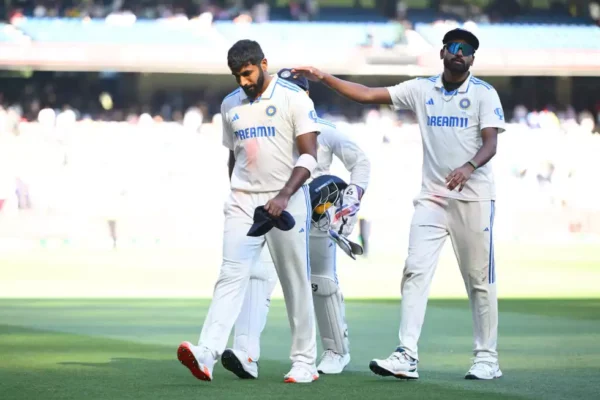
Seven minutes before the scheduled Tea interval on Day 3 at Headingley, with England’s tail trying to wag its team into the lead, Shardul Thakur handed over his hat and jumper to the umpire and began a couple of mock run-ups before starting what was to be his seventh over of the innings. His captain Shubman Gill, who was adjusting his fielders, then had a second thought. From deep at fine leg, Jasprit Bumrah was summoned once more, as he had been at every time of need over the last two days, but especially at the end of a session. While a surprised Thakur trudged away from the scene, Bumrah stepped up at the top of his mark after one quick stretch and a limber-up. It didn’t take him long to knock over Chris Woakes and Josh Tongue to complete his 14th five-wicket haul in Test cricket. It was another performance worthy of his top billing, but it also concealed a more pressing truth: this was a largely solo effort, forced into being because the rest of the attack couldn’t come close to his high water mark on a track that offered little even on the third day. India had made 471. England responded with 465 despite Bumrah’s brilliance. And a match that had offered India several windows to shut the door on England was now reduced to a second-innings shootout. The visitors seemed on the cusp of righting the wrongs of Day 2 when Ben Stokes fell, leaving England at 276 for 5, still 195 in arrears. But the lower-order difference, an old nemesis on away tours, surfaced again. Where India lost their last five wickets for 24, England’s last five added 189 in 35.5 overs. Among those final five wickets was Thakur himself, dismissed for 1 in the last over before lunch on Day 2. He went for a wild, premeditated swipe and nicked behind, a shot that drew a glare from head coach Gautam Gambhir, quickly picked up by the cameras. But India’s collapse of 7 for 41 was not on one batter. It was collective. What Thakur’s dismissal symbolised, however, was the fragility India have long tried to patch over. Since 2018, India’s Nos. 8 to 11 average just 11.96 in SENA countries, only Sri Lanka and Bangladesh fare worse. With the addition of Harshit Rana, India have seven frontline quicks on this tour to pick from. Thakur may not be the fourth-best bowler among them, but he is the only one who can currently be trusted to bat at No.8, and that alone keeps him in the mix. The fear of fielding four No.11s has often dictated India’s hand. Thakur, who has shown at the Gabba and The Oval that he can bat a bit, offers a sliver of resistance as the batting ability falls off a cliff behind Ravindra Jadeja at No.7. It’s a compromise India have grown used to. On these tours, they are also boxed in by conditions that historically nullify spin. There was a time, not long ago, when they had to agonise over choosing between Ashwin or Jadeja. Now Kuldeep Yadav is the one warming the bench, not because he lacks quality, but because a second spinner is a luxury on these surfaces without the knowledge of the toss outcome. In that context, Thakur’s selection is understandable. In his first pre-match press conference, Gill had spoken boldly about being unafraid to pick four seamers if that was the best route to taking 20 wickets. And he followed through by picking Thakur over a batting allrounder in Nitish Reddy. But what unfolded at Headingley in India’s first bowling innings will leave Gill and Gambhir with some thinking to do. Thakur was used for just six overs out of the 100.4 that India sent down. In a five-man attack, one bowler is likely to be under-bowled, but India’s split of 25, 27, 20, 23 and 6 overs respectively stacks up unfavourably compared to England’s more even spread of 24, 22, 20, 20 and 27. The trouble for Gill is that Thakur operates in a narrow band where he is most effective. He is a bowler who can strike, if he can swing the ball. Introduced into the attack in the 40th over, on an unresponsive surface, he became the kind of medium-pace bowler this England lineup actively targets for a release. Thakur ended up conceding 38 runs at an economy of over six. Here’s where it gets complex for India. With Thakur used sparingly and Prasidh Krishna not providing a defensive edge, the burden fell, as it so often does, on Bumrah and Mohammed Siraj. Together, they bowled 52 overs. That’s more than half the load between just two bowlers in a five-man attack. In a five-match series, the skewed distribution of overs can become a massive factor. There’s a lot of talk about Bumrah potentially playing only three Tests. But India will need to monitor Siraj just as closely, because he will be asked to lead the attack in Bumrah’s absence. He sent down 27 overs across long, unrewarding spells here, and at the end of his penultimate spell, simply finished on his haunches. Beyond the issue of workload, overworked bowlers are more prone to mistakes. It is perhaps what cost a fatigued Bumrah those three no-balls last night. It could also be a small factor in why India couldn’t close out England’s innings faster. If there is any solace, Gill will be grateful that he had Jadeja to send down 23 tight overs for just 68 runs, offering control and breathing room when it was most needed. And so we arrive at India’s expanding conundrum. They’ve picked right, but by not using right, they risk compounding old travel troubles with fresh complications. A brittle tail. A lopsided attack. A top-heavy burden on those who can do both the lifting and the magic. In this case, the magic came from Bumrah, as it so often does, but that’s not the…

Read More

Monank, Bracewell help MI New York open account

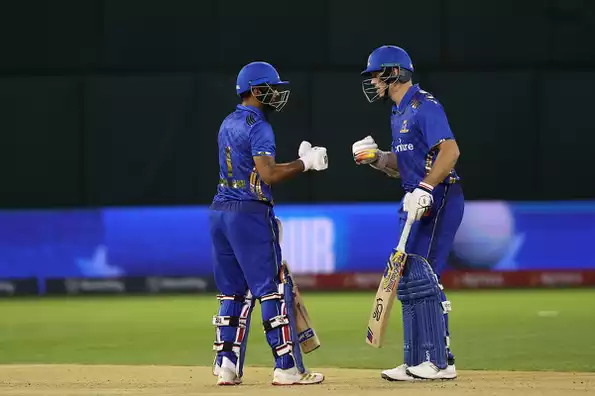
MINY didn’t get off to the greatest of starts with Monank struggling in the powerplay. Only 25 runs came in the first overs of a tall chase and to make matters worse, Sikandar Raza came into the attack and struck immediately to get rid of Quinton de Kock. Monank, batting on 4 off 12 at that point, finally broke free with a four and a six to round off the powerplay and those boundaries certainly flicked a switch. The wicketkeeper-batter then kept dealing in boundaries in the middle overs to make up for his slow start as Bracewell played second fiddle. Monank hit two sixes and a four off Harmeet Singh who endured a torrid outing. Boundaries galored as Monank now toyed with the Orcas bowling attack, scooping Mayers for a six and then following it up with three fours in an over bowled by Raza. While he went into the 90s with another scoop that went over the ropes, a lot of work was still left to be done due to Bracewell’s scratchy innings at the other end. Orcas suddenly found an opening when Monank’s blistering innings came to an end when he was on 93. With 55 needed off 24, Nicholas Pooran was castled by Raza to further dent MINY. Kieron Pollard then calmed the nerves with a couple of boundaries to bring the equation down to 40 off 18 before Bracewell finally took charge with consecutive sixes. Harmeet’s blemishes on the field of successive deliveries aided the batting side further as Bracewell and Pollard took full toll to make a mockery of the chase in the end. Earlier in the evening, Orcas got off to a poor start as well with Bracewell making an impact with the ball in the powerplay, including a wicket-maiden. David Warner’s early departure saw them reeling at 9/1 after 3 overs and Naveen-ul-Haq struck in the final over of the powerplay to dent them further. At that point, a six each was hit in the next five overs to give the run rate a much-needed boost. A massive second half was still needed though in order to make up for that poor start. Mayers gave them just that as he absolutely laid into the MINY bowling attack. If the first six overs saw them score only 31 runs, the final six saw them score three times more as Mayers ruined Naveen’s figures with four sixes in an over. Even after his six-fest came to an end, Orcas’ push towards 200 was aided by Klaasen and Hetmyer who combined to score 48 off just 20 for that powerful finish. Yet, that powerplay came back to haunt them in the end. Brief scores: Seattle Orcas 200/5 in 20 overs (Kyle Mayers 88, Shayan Jahangir 43) lost to MI New York 203/3 in 19 overs (Monank Patel 93, Michael Bracewell 50*; Sikandar Raza 2/37) by 7 wickets

Read More

Silence before the charge: India, England and the wait that hangs

It is Monday afternoon, four days out from the start of a marquee five-Test series, but Headingley feels like it’s enjoying a siesta. Far from the guttural energy of recent Tests played here, the stadium dozes in the soft Yorkshire light, which also happens to bring out the surprising lack of natural flow to this iconic venue. There’s no grand design tying it all together. Just fragments from different eras, sitting shoulder to shoulder like distant cousins at a family reunion. From the Western Terrace to the family stand, it’s all a bit improvised. Take the distinctive Carnegie Pavilion, that one sudden burst of ambition on this patchwork quilt. It juts out in glass and green triangles, like a science faculty building that wandered over from one of Leeds’ nearby universities and decided to stay. A couple of workers are up on a scaffolding, giving it a once-over, perhaps preparing for the television close-ups. “You here for the cricket? England-India, eh?” a guard outside St. Michael’s lane asks. It’s not dismissive, just matter-of-fact. They say Yorkshiremen know their cricket, after all. They don’t need noise to tell them a contest is coming. But there is no noise. Not until you walk a mile away towards Brudenell Road and to the popular new joint ‘Indian feast’ that attracts a lot of the city’s South Asian students. “265 pounds for two tickets. When there’s no Virat Kohli. This is still Headingley, not Lord’s…” The former India captain’s absence remains as loud as his presence, from when he chased fire in foreign conditions, carried grudges and took on crowds. His sudden retirement echoes in the ticket discussions, in the softened promo videos, in billboards that no longer carry his glare. It all makes for a weird vibe in the build-up to a marquee five-match series between two of cricket’s ‘Big Three’. This is, after all, the centrepiece of this English summer, the one Test series that isn’t the Ashes but still matters, still sells. Especially for England cricket, who had a somewhat underwhelming season last year, hosting Sri Lanka and West Indies, after hosting Australia in a thrilling series the year before. But London is still awash in green. South Africa’s crowning moment from three evenings ago continues to echo through the city’s sporting pubs. The mood is celebratory, but it’s not for this series. Even the English, who had no stake in that final, have indulged in schadenfreude, revelling in Australia’s defeat. There’s a quiet thrill in asking if Marnus Labuschagne will still open this December – this season’s gaze held in that single question. Because the away Ashes later this year marks the final exam for Bazball. The entire McCullum-Stokes project, now three years old, has been building toward that moment in Australia. Every selection, everytime the England captain bowls or doesn’t, every fourth-innings charge, it’s all been part of a longer arc aimed at beating Australia in their own backyard. So much so that this India series, as grand and storied as it is, feels almost incidental. A crucial chapter, yes, but not the climax. Interestingly, India, too, are looking ahead, but in a different way. What happens in this series matters, of course. A Test win in England is still a prize, a series win here after 18 years would be a statement. But for India, what happens beyond may matter even more. This is a team stepping into a new era, trying to forge its identity for the next WTC cycle after missing out on the final for the first time. The batting unit, once built around enduring pillars, is now a sketch in pencil. They have elevated a young captain in Shubman Gill, have a generation of cricketers auditioning not just for places, but for roles. Who bats at four? Who anchors? Who bowls at first and second change after a Bumrah spell is done? These aren’t just questions for this week in Leeds, they’re questions for the next few years. They’ve been in England for a while now, longer than most realise. A chunk of the squad featured in the ‘A’ series that preceded this tour. Then came an intrasquad game in Beckenham, shut out from the buzz and bluster that usually accompany an Indian Test team abroad. But the quiet is unlikely to last long. After a day’s break, they’ll be on the road to Leeds on Tuesday, stepping into the spotlight. As the first ball draws near, and finally flies from the bowler’s hand, Headingley’s patchwork corners and muted spaces may find their rhythm again. By the time Friday comes along, the stillness should have yielded to the familiar stir of a big Test series underway.

Read More

The Secret Sauce In ‘Bazball’

Test cricket, with its rich and varied history, has often seen individuals spark disruptions that transform not just their teams but the entire cricketing discourse. Don Bradman’s almost flawless technique, for instance, drove an obsessed Douglas Jardine to resort to ‘Bodyline.’ Four and a half decades later, bruised by the formidable duo of Lillee and Thommo, Clive Lloyd countered by unleashing an unrelenting, four-pronged pace attack. And then, another four and a half decades after Lloyd’s pace battery, the stage was set for yet another significant disruption. Despite the backing of the world’s second most resourced cricket board, the England team had plummeted by the end of the 2021/22 winter, winning just one of their last 17 Tests. However, a new era under skipper Ben Stokes and coach Brendon McCullum fundamentally transformed the team’s outlook and fortunes. The world took notice, and the ‘Bazball’ revolution was born, built on an uninhibited, aggressive approach from their batting lineup. Between 2018 and 2021, England’s top seven batters averaged 32.25 in 25 home Tests-the second-lowest average for a home team (among those with 10+ Tests). This underscored the challenging batting conditions at home, with seaming pitches and the Dukes ball consistently keeping bowlers in the game. During this period, England won 12 of their 25 home Tests, a win percentage of 48%, which was sixth-best among the top nine teams, well behind fifth-placed South Africa’s 57.89%. Since the start of 2022, England’s home win percentage has dramatically improved to 75%, making it the second-best among major teams, behind South Africa’s 91.67%. In terms of batting conditions, England’s top seven now average 43.86 in home Tests, only marginally behind leaders Sri Lanka, while their strike rate of 73.90 is comfortably ahead of second-placed India’s 61.98. Batting average in home Tests (top 7) Host Country Avg (2018-21) Avg (Since 2022) New Zealand 55.28 38.91 Pakistan 45.00 37.87 India 50.52 37.45 Australia 44.01 40.25 Sri Lanka 35.51 44.39 South Africa 32.98 35.74 Bangladesh 32.89 31.42 England 32.25 43.86 West Indies 25.68 29.22 Note: The 2018-21 has UAE Tests adjusted as home games for Pakistan. Conquering the Good-Length Delivery The bedrock of England’s home batting success lies in their enhanced ability to handle good-length balls from seamers better than their opponents. While England’s batters have shown overall improvement across all lengths since 2018-21, their performance against good-length balls, in particular, has seen a marked improvement. This is crucial given good-length deliveries are the “high traffic area” for seam bowlers, accounting for over 40% of balls bowled. Since 2022, England’s batters have averaged 30.73 against good-length balls in home Tests. In contrast, corresponding numbers for home teams in other seam-friendly countries outside the subcontinent read: New Zealand 24.82, Australia 24.39, South Africa 18.59, and West Indies 14.83. To provide even more perspective, visiting batters in England during this period have averaged a mere 13.39 off good-length deliveries. . ©Cricbuzz . ©Cricbuzz Two external factors have also contributed to England’s batters overcoming the good-length ball threat: flatter wickets and a more benign Dukes ball. Between 2018 and 2021, the average movement across ten-over blocks in Tests in England consistently remained over 1.5 degrees, which is on the higher side. Since 2022, this average movement has significantly decreased across each ten-over block, underlining a general trend. However, the third and most important factor enabling their high-risk, high-reward batting approach is their increased efficiency in attacking good-length balls. While England’s batters have attacked more across the entire length spectrum, the rise in aggression specifically in the good-length zone has been the backbone of Bazball’s success. From attacking one in every 12 good-length balls in the 2018-21 period, England’s batters are now attacking one in every four in home Tests since 2022. England’s attack % across lengths . ©Cricbuzz This aggressive approach has also served them well in their away tours to New Zealand. In five Tests across two series there, England batters averaged 45.33 and scored at a strike rate of 56.94 off good-length balls. The home team, by contrast, struggled, averaging just 14.89-less than a third of England’s average-and striking at exactly half the rate (28.21). Joe Root has remained England’s champion batter in home games even in the Bazball era, averaging an exceptional 75.33 against good-length balls from seamers. Surprisingly, the second name on that list is Zak Crawley. The tall right-handed opener averages 67.33 and scores at almost 65 runs per 100 balls off good-length deliveries, getting out only once every 104 deliveries. Despite his occasional low scores, this could well be one of the reasons England’s think-tank backs him so consistently. Crawley’s opening partner, Ben Duckett, is another who has performed well against good-length deliveries, averaging 43.57 with a strike rate of 67. Newcomer Jamie Smith has also impressed, scoring 106 runs off 195 balls while getting out only once to good-length deliveries from seamers. England batters clearly possess some tactical nous behind their seemingly cavalier approach. In the first 30 overs with the new ball, when lateral movement is at its highest, they attack 22.5% of good-length balls and average 29.60-not far from their overall average against good-length deliveries. In the next 50 overs, they increase their attack rate to 30.2% of good-length balls, and their average rises significantly to 40.24 against the older ball. This strategic shift is something important for India to consider ahead of their impending five-Test series. India’s Challenge Against Bazball India experienced a taste of Bazball in their one-off Test in Birmingham in 2022, where they failed to defend 378 in the fourth innings. This failure was largely due to their change bowlers, who couldn’t maintain control on wickets offering little assistance. Mohammed Siraj and Shardul Thakur combined for 26 wicketless overs, conceding 163 runs at well over a run a ball. Since the start of 2022 in SENA countries (South Africa, England, New Zealand, Australia), India’s change seamers have averaged 38 and conceded just under four runs an over, compared to 23.93 by their opening seamers. India holds a…

Read More

The duality of being Kagiso Rabada, home and away

Kagiso Rabada walks into a bar. It’s heaving with teenyboppers celebrating finally having escaped the turgid tedium of their high school careers. The boys are in tight t-shirts, shorts and flip-flops. They’re trying too hard not to look enthusiastic about anything, even Rabada. And not even about the girls, who have painted their faces and done their hair in a manner that makes them look at least five years older. They have dressed accordingly. Only 18? Me? How dare you? Who do you think you are to sit there and say something like that to me? Not that anyone is sitting. Instead, everyone who is not Rabada – or his handful of fellow travelling teammates – is dancing and singing to songs that were first sung and danced to years before they were conceived, nevermind born. “Living next door to Alice…” The bar is aptly named: Sunsets and Mermaids. Well, sort of. We’re in Umhlanga, Durban’s version of California, on South Africa’s east coast. The sun sets on the other side of town. But reasonable facsimiles of mermaids and mermen abound. Rabada is as comfortable in his anonymity, real or imagined, as he is in the spotlight. You know who he is? Great. You don’t know who he is? Great. You do know who he is but you’re trying to play it cool? Great. He sidles over to two familiar faces standing in the outside section of the bar. “So,” he says in a near whisper that evokes the sound of leather soles on gravel, “what’s up?” As he speaks, he lights a cigarette that lays waiting elegantly between his fingers. He’s come not only to shoot the breeze, but the breeze is duly shot for several minutes while he stands and smokes. His leonine eyes gleam through the grey haze with a precise intelligence. Earlier in the day, South Africa had completed a 233-run hammering of Sri Lanka at Kingsmead. It was not a particularly successful Test for Rabada: 1/10 and 2/65. But he is content. He has nothing to prove to anyone. Besides, there wasn’t much bowling to be done in the first innings after Marco Jansen started sniping for his 7/13. Also, other opportunities were and will be available. At Newlands in January, for instance, when Rabada took six wickets in a 10-wicket win over Pakistan. That was his last Test before the WTC final against Australia started at Lord’s on Wednesday, which doesn’t mean Rabada has had a quiet six months. He played only two games for Gujarat Titans in the IPL before returning home for the now-infamous “personal reasons” that turned out to be a month-long ban after testing positive for cocaine. After going back to India, he featured in just two more matches. He finished the tournament in 88th place on the list of economy rates and 100th in strike rate terms. He was what Rabada most certainly is not: ordinary. What followed was extraordinary. Rabada issued what could kindly be called an incomplete explanation. He apologised, but he neither revealed what the substance was nor how many times he had used the drug. It would, after all, be the worst luck to be nabbed at your only experiment with cocaine. Two of the journalists – established cricket writers, not newshounds or tabloid hacks – among those who had reported the story were not invited to a media engagement with Rabada. An unease rippled through cricketminded South Africans. Rabada is a giant in his country, the only established bona fide star, with the possible exception of Keshav Maharaj, among South Africa’s current Test players. But Maharaj is an uncle in waiting. Rabada is a rock star. If what he had used was marijuana, this would be no big deal. Cocaine is a different order of magnitude. So there might have been a heavier weight than usual on Rabada’s shoulders at Lord’s on Wednesday, especially after Temba Bavuma won the toss and declined to bat. Or chose to take the game to Australia by inserting them. Choose your preferred narrative. Whichever, Rabada delivered in the best possible way by dismissing Usman Khawaja, Cameron Green, Pat Cummins, Beau Webster and Nathan Lyon for 51 runs in 15.4 overs. That, folks, is what a five-for looks like. “It [the cocaine bust] wasn’t my best moment, as I’ve alluded to,” a smiling Rabada told a press conference. “Now life moves on. Every game I play for South Africa, I try to do my best. So I didn’t try to give any more or any less effort than I usually do.” Rabada’s haul put him on 332 Test wickets, which took him past Allan Donald and into fourth place on South Africa’s all-time list. Only Dale Steyn, Shaun Pollock and Makhaya Ntini remain ahead of him. How did surpassing Donald make him feel? “Yeah… I mean… geez… Sometimes I ask myself if I’m giving you guys enough. You want to write a very interesting piece. But it’s honestly very simple. I sound like a stuck record, because all that you do is try to improve and win games for South Africa. “I guess to be named in that list of bowlers is special. As a player growing up and representing South Africa, I’ve been inspired by those who’ve come before and seen what they’ve done on the big stage. As a kid, I was inspired to want to do the same thing.” But, you heard the man, keeping it uncomplicated is what matters. “The bottom line is, if you’re a bowler, try to bowl a good line in length. And as a batter, I guess it’s about keeping the good ball out and scoring off balls that are not quite there, on missed executions from the bowler. “Everything else is just noise. It creates the package of cricket and of sport because you’ve got you guys, the journos, who write about everything. You’ve got the fans. You’ve got the entertainment around the game. But the bottom line is…

Read More

WTC Final: All eyes on the ball, and none on those facing it

Rabada versus Hazlewood, Jansen versus Starc, Maharaj versus Lyon. If you didn’t know better you would have thought the WTC final between South Africa and Australia at Lord’s this week was a bowlers only affair. Maybe, with five of the top 10 ranked bowlers in the world in the squads, most of the pre-final buzz was bound to be about the bowlers. But four of the leading 10 batters are also here, not that anyone seems to have noticed given how much discussion has centred on the fellas at the other end of the pitch. What did Steve Smith make of that? “We’ve been training really well the last week or so, and all the batters feel like they’re in a good place,” Smith said on Monday. “So now we’re excited to go out and play. It’s another WTC final. We’ve got some fond memories of last year, just down the road. Coming here to Lord’s, it’s a place we traditionally play pretty good cricket.” Indeed, Australia hammered India by 209 runs in the last WTC final at the Oval in June 2023. Smith scored 121 in the first innings, and his stand of 285 with Travis Head – who made 163 – put the Aussies in control. As for Lord’s, Australia have won three, and drawn and lost the other two, Smith has played there. But we see what you did there, Steve. We asked you how batters, for so long cricket’s first-class citizens, felt about being shunted further down the Test train to board a different carriage. And you spoke about the station and the platform and the destination and the scenery en route. How about Shukri Conrad? What did he make of the shift in emphasis from bat to ball? “It’s pretty normal to chat about the bowlers when you’ve got guys like Kagiso Rabada, ranked two in the world, and Marco [Jansen] and Keshav [Maharaj],” Conrad said. “But on the batting front there’s a quiet confidence among the batting group. They might not have superstar names, but as a collective we’re pretty confident.” Of course, the main common factor between batters and bowlers is the ball. South Africa and Australia are used to playing with the Kookaburra. But this is England, where the Dukes rules – and will be used when the WTC final starts on Wednesday. The Kookaburra has a flatter seam than the Dukes and its lacquer doesn’t last as long. That tends to mean the Kookaburra’s movement off the pitch and swing through the air is less pronounced than the Dukes’. And that’s good news for batters. So does the fact that the Dukes will be used in the final constitute bad news for them? Smith saw that one coming: “I think they’ve changed the Kookaburra. I think the seams on the ones we play with back home are a lot bigger, and you mix that in with the [greener] grass that’s been on the pitches the last four or five years. It’s the perfect storm. “It’s about playing what’s in front of you. I think the [Dukes] ball can swing for longer. For me as a batter, it’s about using the swing; going with it. “If the ball is going away from me, it’s about being able to go square with the ball and go with the swing. Particularly at Lord’s, you want to go with the slope and the swing. You can throw the two together. But, yeah, I enjoy playing against the Dukes.” Smith has played 22 of his 116 Tests in England, a useful sample size for making comparisons. The South Africans have earned 28 caps there between the 15 of them; nine of them at Lord’s. How well were they tailoring their game to the Dukes? “It takes a little bit of adjusting,” Conrad said. “We got a little bit of that out of the warm-up match in Arundel, and in the nets we’ve had. I think whatever adjustments needed to be made have been made.” Conrad’s batters faced 79 overs but were in the field for only 11 in their rain-ruined four-day match against Zimbabwean opposition in Arundel last week. No disrespect is intended by pointing out that the South Africans faced no-one of any of the Aussies’ class in that match. But their coaches did have the pleasure of Stuart Broad’s company at dinner on Sunday. How good was that? “The ribeye was good,” Conrad said. “But, yeah, it was enlightening. And if I didn’t call time at 10.30pm, I think he’d probably still be sitting there chatting to us. Everybody walked away saying that was great, Broady included.” Broad also joined the South Africans for training on Monday. He took 398 of his 604 wickets with the Dukes, 113 of them at Lord’s – where he claimed 17 against Australia. He knows how to bowl with this ball at this ground against these opponents. But can he teach his temporary teammates the secret in such a short time?

Read More

Pooran announces shock international retirement at 29

Dynamic West Indies batter Nicholas Pooran has sprung a surprise by quitting international cricket at the age of 29. Pooran is West Indies’ most-capped player in T20Is and their leading run-getter in the format as well. His retirement will come as a massive jolt for a side that’s been looking to make its way back up, especially in white-ball cricket after having missed out on qualification for the 2023 ODI World Cup. Pooran is at the peak of his powers in T20 cricket and had hit the most number of sixes (170) in the format last year. In the just-concluded IPL, Pooran managed to breach 500 runs in a season for the first time and smashed 40 sixes – the most in this year’s tournament. The 29-year-old was not picked for the ongoing tour to England and Ireland after he had requested Cricket West Indies for a break. Having never played Test matches for West Indies, Pooran made his debut in a T20I in September 2016. The ODI debut came in February 2019 but he hasn’t played the format ever since West Indies failed to secure a spot in the 2023 World Cup. Pooran has also captained West Indies full-time in limited-overs internationals in 2022 but won just 8 games out of 30 across both formats. West Indies’ first-round exit in the 2022 T20 World Cup in Australia prompted him to step down as the leader. West Indies will now have a massive hole to fill in that middle order with just eight months remaining for the next T20 World Cup. “This game we love has given and will continue to give so much – joy, purpose, unforgettable memories, and a chance to represent the people of the West Indies,” Pooran wrote in his statement on Instagram. “Wearing that maroon, standing for the anthem, and giving everything I had each time I stepped on the field… it’s hard to put into words what that truly means to me. To have led the team as captain is a privilege I will always hold close to my heart. “Though this international chapter of my career closes, my love for West Indies cricket will never fade. I wish the team and the region nothing but success and strength for the road ahead.” Cricket West Indies (CWI) said in a statement: “Nicholas officially informed the leadership of his decision to retire from international cricket, bringing to a close a significant chapter in his career. “A world-class player and a game changer, Nicholas leaves the game as the most capped West Indian in T20 Internationals with 106 matches and the leading T20I run scorer with 2,275 runs. His performances on the field and influence within the team have made a lasting impact on West Indies cricket.”

Read More

Buttler, Brook, Bethell and Banton deliver series win

Jos Buttler once again played protagonist for England, and had able middle-order co-conspirators in Harry Brook, Jacob Bethell and Tom Banton to help the hosts secure the three-match series with a 2-0 lead. West Indies showed batting improvement from the last game, particularly at the death, but it wasn’t enough to achieve series parity and take the series to the finale. Instead, England chased down the visitors’ 196/6 with four wickets and nine balls to spare. Before the middle-order took over, Ben Duckett and Buttler laid out the platform for the steep chase. The former took on Akeal Hosein and Romario Shepherd while Buttler went after Alzarri Joseph and Jason Holder inside the PowerPlay to keep England toe to toe with what was required of them in chase as they finished the PowerPlay at 58/1. Duckett’s wicket in the eighth over – from Shepherd, slowed England down a touch as Buttler and Brook dragged the team to 87/2 at the halfway stage. Gudakesh Motie then bowled a tight five-run over to ramp up the pressure but Brook compensated for it against Shepherd in the next over. A high full toss was hit for a six over backward point, a wide full ball hit over cover for four and another wide full-toss went off the edge for a four in a 20-run over. Hosein and Roston tried to keep West Indies in the game with the wickets of Buttler and Brook in the 13th and 14th overs respectively, but Bethell and Banton strutted out with similar, aggressive intentions. The two hit a six each on either side of Brook’s dismissal in the 14th over to bring the equation down to 62 off 36. The 15-run over was followed by one worth 14, from Motie, who did well until the last two deliveries which Banton hit for a four and a six. 48 off 30 was dwarfed to 28 off 24 as Banton welcomed the return of Joseph at the death with three sixes in the over – over deep square leg, down the ground and over extra cover. He fell on the last ball trying for another big hit but his job was done with a whirlwind 10-ball 26. Holder did alright with his off-cutters in the 17th over, until Banton audaciously reverse-swept the pacer for a four to ruin a tidy over that had gone only for seven runs in the first five balls. Joseph continued to bowl all over the place, starting out with a high-full toss for a four byes down the leg side. Though he saw the back of Will Jacks, he gave away 15 runs and left England with just two to get from as many overs. Brydon Carse got those with a four in the 19th over. Earlier in the evening, West Indies helped themselves to what appeared a competitive total at the end of the innings through strong efforts from the top and the middle. After Luke Wood, playing in his first T20I since September 2023, trapped Evin Lewis leg before on the first ball of the game, Shai Hope (49 off 38) and Johnson Charles (47 off 39) rebuilt, albeit a touch slowly. West Indies lost their way through the middle overs once Adil Rashid had Hope stumped in the 11th over. Sherfane Rutherford then fell to Bethell and the visitors got to 15 overs at 116/3. Wood then returned to dismiss Charles but that led to the powerful middle-over closing out the innings with a flourish. Rovman Powell got the ball rolling against Liam Dawson, hitting him for two fours and two sixes in a 20-run over. He got another six off Carse and then departed but then came the highlight of the evening – an Adil Rashid over with five sixes in it. Holder began by clubbing the first three deliveries for sixes and then turned the strike over to Shepherd who hit the last two. Wood was then smashed for 16 more in the 20th over as Holder hit two more fours before Shepherd was run out on the penultimate ball. Chase walked out and clobbered a six that pushed WI to just four short of 200 – a total that was eventually insufficient. Brief Scores:West Indies 196/6 in 20 overs (Shai Hope 49, Johnson Charles 48, Rovman Powell 34, Jason Holder 29*; Luke Wood 2-25) lost to England 199/6 in 18.3 overs (Jos Buttler 47, Harry Brook 34, Tom Banton 30*, Jacob Bethell 26) by 4 wickets

Read More

Silver Linings: Cameron Green on back surgery, comeback and the Bumrah impact

The night before Cameron Green went in for back surgery last October, he received an unexpected message from a rather high-profile contact. The sender was Jasprit Bumrah, who was checking in on his former Mumbai Indians teammate. The fact that the Indian pace spearhead was reaching out while being involved in a Test against New Zealand in India only made his gesture even more special for the young Australian all-rounder. Bumrah had of course undergone the same procedure 18 months earlier and recovered from it in remarkable fashion, with his bowling performances since then even more incredible than before. For Green, this was the ultimate reassurance that he was indeed “doing the right thing” by going under the knife. “That is really special. And makes you feel a lot better about it. I didn’t play with him in Mumbai but that was the connection through there. Spent a bit of time with him there. To get someone like him to reach out and then to watch him during the summer, to see how good he is obviously post-surgery, filled me with a lot of confidence,” says the 26-year-old, still semi-blushing while talking about the Indian supremo. The towering all-rounder will regain his spot in the playing XI at No 3 in all likelihood with Marnus Labuschagne set to be pushed up a position to face the new-ball at the top of the order. While Green is not expected to bowl any time soon-he has been seen taking baby steps towards full recovery on that front-the Western Australian is relishing the opportunity of resuming his Test career which was cut short just when a new chapter had begun last year. Even if it means in the garb of a pure batter for now. For someone still so young, Green speaks with a level of maturity well beyond his years when it comes to dealing with injuries. Starting with using the term “silver linings” more often than you’d expect to hear from a professional athlete when they’re talking about the challenge of recovering from injuries. “The silver lining to having four back injuries is I’ve got four chances only to be a batter. I felt like my game’s always been good around those periods. So, that’s never to take away, I’m always going to be keep bowling. But you’re so much more relaxed. Half a game to worry about, which is obviously nice. When you’re bowling and batting, there’s so much more you have to do bowling wise to keep yourself fit and ready to play. It does take away from batting. So, certainly, just batting is nice,” he says with a smile. And you can see how much Green is enjoying solely having to focus on his batting during his multiple stints in the nets here in London. It comes through in the freedom and the confidence that’s bursting through every facet about his batting. The glorious run he’s had with Gloucestershire in County Cricket in the lead-up to the WTC final is testament to that too. Ask him about how good he’s looking and Green doesn’t quite underplay it but tries to keep it in context. “(It’s) certainly the best I’ve felt batting in England. Obviously, we don’t get much time to come here and practice. So, to get the chance to come over and play some County cricket is like massively valuable. So, it’s the most prepared I’ve been. We’ll say that for now,” he says with a chuckle. Green is not a complete stranger to these conditions after all, having played in the last Ashes here in 2023 and the WTC final at The Oval against India. But he feels like the few weeks he spent with Gloucestershire allowed him to understand the unique nuances of batting in England a lot better. “It’s learning what the different conditions can bring. How old the ball can be to what it actually can do. Speaking to a few County guys who’ve been here for years, different ways to go about it. Certain cliches like defending straight and scoring square. It’s normally the complete opposite to Australia, where you’re looking to just hit straight down the ground. Just spending time out there has been awesome. Facing different speeds than what we face, different skillsets that first-class cricketers have been as compared to Australia.” Looking back at his recovery, Green talks about being amazed at how quickly his body was able to bounce back as compared to some others who’d undergone the same surgery a few years earlier. His statemate and great mate, Jason Behrendorff, who Green had consulted first, in particular. Green, who’s excited to regain his position at gully and pair up with fellow giant Beau Webster in the cordon, recalls being fully mobile at the “two-week mark” and to such an extent that the coaches had to ask him to slow down. “I think the procedure has changed definitely since Jason Behrendorff had his. I’ve got three scars, as they were able to miss the muscle a bit more, a little bit invasive as compared to Jason who only has one scar. Must have gone through the one hole. I don’t think he could move for 7-8 weeks. He was going a bit like “Stuff you”,” he says laughing. Green’s inherent pragmatism also comes through loudly as he recounts the six-month period where he was away from the action, where he also ended up missing the Border-Gavaskar Trophy and the two-Test tour to Sri Lanka. While he does admit to having some tough moments when watching his teammates bring glory to the country on TV, he also raves about having made the most of the time off. “I’ve always tried to find a silver lining to an injury. I think we play a lot of cricket and hardly get any time at home. So my silver lining was probably a bit of time at home. To refresh and reconnect with some friends that I don’t get the time…

Read More

Overton returns as England name squad for first Test against India

Jamie Overton is set for a Test comeback after nearly three years of making his sole appearance for the country in red-ball cricket against New Zealand at Headingley in June 2022. The 31-year-old, however, sustained a broken little finger on his right hand during the first ODI against the West Indies on May 29 and is being assessed daily by the England medical team. Also making a comeback in the 14-member squad is seamer Brydon Carse, and the Warwickshire pair of Jacob Bethell and Chris Woakes, having last featured during the Test tour of New Zealand in December. Carse and Woakes had missed out on England’s recent win over Zimbabwe due to minor niggles. Meanwhile, Gus Atkinson was unavailable for selection due to a hamstring injury sustained during the Test against Zimbabwe at Trent Bridge last month. The rest of the squad for the series opener in Headingley, Leeds, starting on June 20, is on expected lines. England squad for 1st India Test: Ben Stokes (C), Shoaib Bashir, Jacob Bethell, Harry Brook, Brydon Carse, Sam Cook, Zak Crawley, Ben Duckett, Jamie Overton, Ollie Pope, Joe Root, Jamie Smith, Josh Tongue, Chris Woakes

Read More