officialsquarexsports

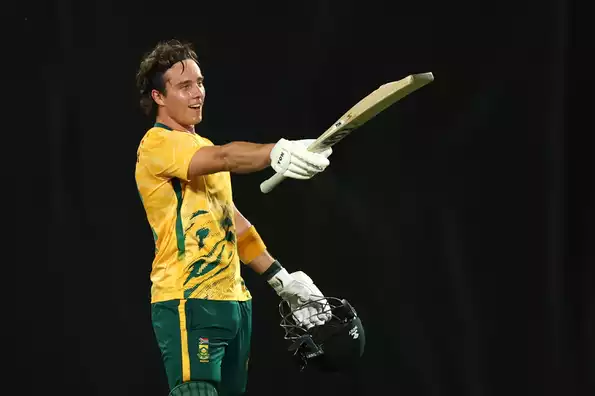
Brevis blitz powers South Africa to series-levelling win in Darwin

Dewald Brevis smashed an unbeaten 125 off 56 balls to power South Africa to a comprehensive 53-run victory over Australia in the second T20I at Darwin’s Marrara Cricket Ground. The explosive knock, laced with 12 fours and 8 sixes, not only levelled the three-match series 1-1 but also ended Australia’s nine-match winning streak in T20Is. After South Africa were put in to bat, they found themselves in familiar trouble at 57/3 in the seventh over losing Ryan Rickelton (14), Aiden Markram (18), and Lhuan-dre Pretorius (10) in the space of twenty balls. However, what followed was a masterclass in T20 batting from the 21-year-old Brevis, who turned the match on its head with a breathtaking innings. Brevis found an able ally in Tristan Stubbs (31 off 22 balls), and the pair added 126 runs for the fourth wicket in just 9.3 overs. The partnership was the bedrock of South Africa’s recovery, with Brevis showcasing his full repertoire of strokes. His strike rate of 223.21 reflected the carnage he inflicted on the Australian bowling attack. The young right-hander was particularly severe on Glenn Maxwell whom he launched for 6, 6, 4, 6 en route to a half-century, becoming the third youngest South African to achieve this feat. His innings never lost momentum thereafter. In just 16 balls, he raced from 50 to 100 recording the secondfastest T20I ton for South Africa and the faster that anyone has against Australia. Even after Stubbs fell to Adam Zampa in the 17th over, Brevis continued his assault and yet managed to remain unbeaten till the end. South Africa’s total of 218/7 was their highest T20I score against Australia, built on the foundation of Brevis’s record-breaking knock. Chasing a daunting target, Australia’s reply was riddled with hiccups. The hosts lost Travis Head (5) in the second over, bowled by Aiden Markram, before Cameron Green (9) was spectacularly caught by Nqabayomzi Peter off Kwena Maphaka at midwicket. Even though there was fumble as he was getting up, the third umpire deemed that he was in control of the catch. Mitchell Marsh and Tim David started the recovery job with a counter-assault in a 48-run stand before the former was caught off Corbin Bosch. David, however, kept the chase on with a 23-ball fifty hitting four sixes and as many fours. But he fell soon after reaching the milestone, hitting a cutter from Kagiso Rabada to cover and thereby applying the brakes on the chase. At 104/4 inside the tenth over, Australia’s chase started to derail with a few starts from the lower-order coming to a swift end with Bosch and Mphaka picking three apiece. With this emphatic victory, South Africa bounced back in style after their 17-run defeat in the series opener. The series now moves to Cairns for the decisive third T20I on August 14. Brief Scores: South Africa 218/7 (Dewald Brevis 125) beat Australia 165 all out (Tim David 50; Corbin Bosch 3-20) by 53 runs

Read More

Labuschagne ‘happy’ to open as he eyes Test return

Marnus Labuschagne has revealed that he would be happy to open the batting for Australia if that’s the way forward for him to return to the Test XI. One of the consistent batters over the years for Australia, Labuschagne has struggled for form off late in red-ball cricket that led to him being axed for the recent West Indies tour. While he is expected to feature in the ODI XI this month against South Africa, especially after the retirements of Steve Smith and Glenn Maxwell from the format, Labuschagne is eyeing a swift return to the Test squad with a home Ashes series scheduled this summer. With Cameron Green slotting in at No.3 in West Indies, Labuschagne’s favoured position, the 31-year-old’s best bet could be right up top especially with young Sam Konstas not making his chance count in the three Tests. “If you had asked me where I prefer to bat, obviously I have batted at three my whole career, but at this stage you don’t get a choice,” Labuschagne admitted to News Corp. “I opened in the World Test Championship final and felt I batted quite well. I got in but did not go on with it. I would be happy to do that. I would love to. If opener is where I need to bat to be playing in the Test team, that’s fine.” The moment he was told that he would be left out, Labuschagne’s immediate thoughts were on the Ashes series with Australia not scheduled to play any Tests prior to that. To strengthen his case now, Labuschagne will also have three Sheffield Shield games before the marquee series apart from the ODIs. “It was tough because you never want to be dropped,” he looked back. “But almost as soon as their (selectors) words came out my mind shifted straight away to, ‘Okay, how am I playing the Ashes … how do I make that happen?’.” However, being left out gave Labuschagne an opportunity to sit back and reflect on his game, as per his own admission. “This has given me an opportunity to reflect and not having the pressure of the media saying, ‘Marnus has got to go’, he said. “I mean that’s part of the game. There is a tipping point but it’s something I thrive on… proving the doubters wrong and being able to find a way. Missing those West Indies Tests gave me the chance to back and think, ‘This is where I want to be and this is how I’m going to get there’.”

Read More

David, Hazlewood combine for Australia’s 9th straight T20I win

Tim David batted around top-order wreckage, smashing eight sixes in his whirlwind knock that pushed Australia to a winning total of 178 in the T20I series opener against South Africa in Darwin. The impressive 19-year-old pacer Kwena Maphaka’s 4-20 was then eclipsed by Josh Hazlewood, as South Africa fell short in chase. This was Australia’s record ninth straight win – their longest winning streak in T20Is, surpassing eight wins between February 2024 and June 2024. Mitchell Marsh kickstarted the Aussie summer with a six over extra cover off Lungi Ngidi. That paved the way for a chaotic PowerPlay where Australia lost four wickets while hitting 71 runs. Kagiso Rabada didn’t let the Aussie opening pair of Marsh and Travis Head blossom beyond the second over as he dismissed the latter for just two. George Linde then saw the back of Josh Inglis for a first-ball duck. Marsh was gone by the start of the fourth over too but Tim David and Cameron Green swung for the hills when the restriction was still on. Green started off with two fours and a six against Linde in the third over and David smashed Rabada – including a disdainful six down the ground. The pair went after Corbin Bosch in an 18-over over before Green lived and died by the sword against Ngidi in the sixth over. He fell for a 13-ball 35. The young and strapping Kwena Maphaka struck in his first over in the middle-phase to dent Australia further, as they dropped to 73/5. That became 75/6 in the eighth over when Glenn Maxwell holed out to sweeper cover against Senuran Muthusamy. The wreckage did not perturb David in his endeavours to repeatedly send the ball to the stands. He and Ben Dwarshuis took the team to 88/6 at the halfway stage. This pair batted for seven overs to add 59 runs, of which Dwarshuis scored just 17. During this stand, David deposited a ball from Muthusamy on the roof to take Australia past the 100-run mark in the 12th and also got to his seventh T20I half-century. Maphaka returned in the 15th over to break the stand with Dwarshuis’s wicket, and Muthusamy nearly ended David’s stay too, but Stubbs fluffed a catch. David punished South Africa for their missteps at the death by carting sixes. Rabada thought he finally stopped David in his tracks, only for a no-ball to be adjudged on a catch in the deep. Not for the first time though, Maphaka returned to strike, getting David caught in the deep for an exceptional 52-ball 83. In the same over, Maphaka dismissed Adam Zampa to finish with figures of 4 for 20 in 4 overs. A 12-run final over pushed Australia to 178, which proved sufficient on the evening. South Africa made a false start when Aiden Markram drove Josh Hazlewood on the up, but straight to Green at cover in the first over after already started out with three fours. South Africa too threw caution to the winds in the PowerPlay as Lhuan Dre-Pretorius and Ryan Rickelton eyed quick boundaries. But the former was sent packing in fifth over before Dewald Brewis was taken out by Dwarshuis in the sixth over. South Africa had an inferior PowerPlay total of 48/3 but were offered a facelift by the fourth-wicket alliance between Rickelton and Tristan Stubbs. Australia attempted to squeeze the chase with spin through the middle as this pair dragged the visitors to 78/3 in 10 overs, still needing 101 in the second half. From 85/3 in 11 overs, Stubbs attempted to narrow the equation and put some pressure back on Australia in the process. He hit Nathan Ellis for two fours, and then took on Zampa, with Rickelton taking runs off Maxwell between those two overs. With 60 needed off 36, Mitchell Marsh brought back Hazlewood, whose double-wicket over squarely put the control back in the home team’s favour. Hazlewood ended Stubbs’s fight and dismissed George Linde, which was followed by Zampa following suit and picking two wickets in his six deliveries. The leggie got rid of Corbin Bosch and Muthusamy to leave South Africa down to 123/7 in 16 overs and the equation at: 56 runs off 24 balls. Yet, Australia were kept on their toes by Rickelton, who got to his fifty, and refused to give up. He messed with Ellis’s lengths in the penultimate over where 16 runs were taken to bring the chase down to 21 off 6. Dwarshuis started with a well-disguised slower ball for a dot and then Maxwell showed off his boundary line theatrics to dismiss Rickelton and effectively bring down the curtains on the chase. Dwarshuis picked his third wicket of the evening – cleaning up Rabada – on the last ball to secure the 17-run win. Brief Scores: Australia 178 in 20 overs (Tim David 83, Cameron Green 35; Kwena Maphaka 4-20) beat South Africa 161/9 in 20 overs (Ryan Rickelton 71; Josh Hazlewood 3-26, Adam Zampa 2-33) by 17 runs

Read More

Ashwin and CSK likely to part ways

Are R Ashwin and Chennai Super Kings drifting apart? While that may not yet be confirmed, the latest developments in the CSK camp seem to suggest that Ashwin – one of the greatest match-winners for India in red-ball cricket – is likely to part ways with the Super Kings franchise. The exact reason for the inevitable separation is immediately not clear but the veteran offspinner is believed to have made up his mind and is understood to have conveyed this to the franchise. Whether he has got any indications of CSK’s future plans is not known but as Cricbuzz reported yesterday, top CSK officials and players, including current and former skippers, MS Dhoni and Ruturaj Gaikwad, have been meeting in Chennai over the last few days. It is likely that the franchise discussed plans for the coming season. In what seems like an inevitable step, the veteran spinner is likely to give up his role as the Director of Operations at the CSK Academy – a position he has held for the past year. If he were to join another franchise, continuing in the CSK role could present a situation of a conflict of interest, something he is, it is learnt, keen to avoid. A veteran of 221 matches with 187 wickets (with a healthy economy rate of 7.29) and 833 runs (with a strike rate of 118), Ashwin will inevitably find takers in the IPL circuit. The point of interest is whether the player will be traded to another franchise or he will go to the auction. Last season he played nine games for the franchise. Ashwin was an INR 9.75 crore buy for CSK, marking his return to his home franchise after nine years away. Between 2016 and 2024, he turned out for Delhi Capitals, Punjab Kings, and Rajasthan Royals. The veteran off-spinner began his IPL journey with CSK, spending his first eight seasons (2008-2015) with the MS Dhoni-led side; he made his debut in 2009. The development comes a day after this website reported that Sanju Samson has requested the Rajasthan Royals franchise to release him. Cricbuzz reached out to CSK officials for a comment. Ashwin was unavailable for immediate response.

Read More

On the front seat of a roller-coaster ride with Siraj

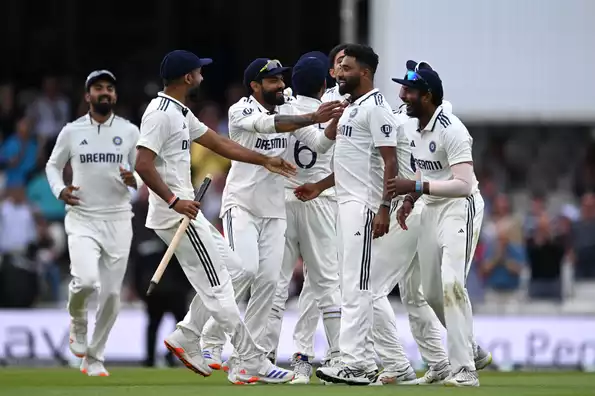
India had begun their lap of honour around The Oval without their man of the moment. Three-fourths of the ground had stood to applaud a famous win. But Mohammed Siraj was still finishing up with his interviews, beaming his smile through questions, when all he wanted was to be among his people. When he finally broke free, he sprinted across the turf to catch up. And the first person he sought out wasn’t the captain, or the coach, or the cameras. It was Prasidh Krishna. They say fast bowlers often move in pairs. Siraj didn’t just join him. He leapt into his arms. It was a spontaneous, joyous hug at the end of a historic Test win. But what made it even more poignant was where it happened, that very part of the ground near the Vauxhall End where the two had shared a quieter, more private embrace just a day earlier. Lunch had just been called on Day 4. And Siraj, instead of turning toward the dressing room, began walking in the other direction where Prasidh had been fielding. He could’ve waited for Prasidh to join him. When he got there, he put an arm around his partner and then patted his head. It was an apology. For the mis-step that had cost India Harry Brook’s wicket. And possibly the match. Possibly the series. That was the story of the Anderson-Tendular Trophy, encapsulated in two Siraj vignettes. Because if this series that finished 2-2 was a roller-coaster, then Siraj was the guy in the front seat: wind in his face, hands off the rail, riding every twist, turn, plunge and peak. Even on Day 25, after 181 overs, he wasn’t done with the ride. He woke up at 6 a.m., two hours earlier than he had on any match day across the last six weeks. On his phone, he searched for an image of Cristiano Ronaldo, one with “Believe” emblazoned across it, and set it as his wallpaper. All series long, Siraj had been bounding in. On hot days and flat tracks, through cramps and collapses. He was the only fast-bowling survivor across all five Tests, still running. Still believing. Even when England were only 35 runs away from clinching the series. On the last day, he was running even before the first ball was bowled. India had just finished their morning huddle, one of those long, shoulder-gripping kinds meant to lock in the final hour of a long tour. As it broke, Siraj peeled away first, eager and restless. Only, in his urgency, he tripped over a BCCI staffer who was filming the moment. It would be the only misstep he’d make for the next 56 minutes. It was plain obvious that Gill would have him continue from where he’d left off the previous evening under similar cloud cover. Siraj’s 42nd – and final – spell of the series had started before Tea on Day 4 and was now spilling into a third session. On the final morning, it resumed after England had knocked off eight more runs before he got the ball in hand. He began by curling a 77-over-old ball away from the right-handed Jamie Smith. He stuck to that channel once more. Then, on the third, Smith shuffled across to cover the angle, perhaps to get outside the line of the wobble-seam nip-backer, or to smother the swing. He managed neither. He nicked off. The first wobble-seam ball actually went to Gus Atkinson, who somehow survived. But Jamie Overton didn’t. And when all the conventional wicket plans had gone out the window against Atkinson, who was farming the strike with an injured Chris Woakes and looking to hit big, Siraj switched to white-ball mode. His 1122nd delivery (including extras) of the series was a 143kph full ball that dipped late and snuck under Atkinson’s bat swing to knock out the off-stump and end the series.

Read More

Siraj five seals Oval epic as India level series 2-2

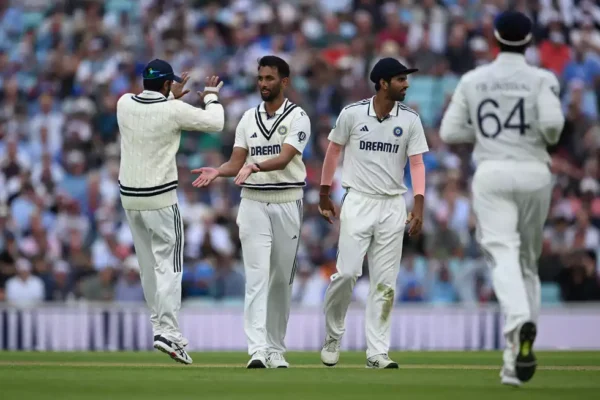
Mohammed Siraj starred in a stunning come-from-behind win at The Oval as India levelled the Anderson-Tendulkar Trophy 2-2 with a thrilling six-run victory on an overcast fifth morning in London. England needed 35 runs with four wickets in hand, one of which was Chirs Woakes with a dislocated right shoulder. Siraj, however, got the ball to swing as much as two degrees amidst a drizzle, and picked up three wickets in a testing spell with the old ball to finish with a fifer that scripted a memorable win. It was Harry Brook and Joe Root’s hundreds, and a 195-run stand, on Day 4 that gave England the upper hand before a short sharp spell of rain shortly after Tea forced action to spill into the fifth day. Prasidh Krishna resumed his over from last evening with a short ball first up, and Jamie Overton pulled him confidently to the fence to begin with a boundary. He almost chopped on the next ball, but the edge snuck over the stumps and into the fine leg ropes for four more. India’s comeback started at the other end where Jamie Smith was beaten twice by Siraj before he finally nicked one behind without adding anything to his overnight score of 2. Siraj, and India, could have had a second wicket in as many deliveries but Gus Atinkson lucked out when the edge dropped just short of KL Rahul at second slip. Overton’s luck then ran out. Siraj had him trapped in front of middle and leg with a nip-backer and saw umpire Kumar Dharmasena raise his finger after a moment of deliberation. Overton availed a review, only to find ‘umpire’s call’ on wickets and see the finger raised again. The review came to Josh Tongue’s rescue in the following over when he was adjudged LBW, off Prasidh, but the tracking found the ball to be going down leg. Tongue, after a bunch of play-and-a-miss against Siraj, was then cleaned up by a pinpoint yorker from Prasidh, leaving England 17 away with no option but to call on the injured Woakes. The allrounder walked out to a rousing applause – bat in the left hand and his dominant arm in a sling. Atkinson did his part in ensuring Woakes stayed at the non-striker’s end. It involved refusing singles until the last deliveries of the overs, and targeting big hits – the very first attempt at which could have been caught in the deep but Akash Deep palmed it over for a six instead. Fittingly, it was Siraj’s tenacity that prevailed over England’s last pair’s valiant fight. The pacer nailed a yorker to clean up Atkinson on 17, propelling India to a momentous win in front of a near capacity Oval. Brief scores: India 224 (Karun Nair 57; Gus Atkinson 5-33, Josh Tongue 3-57) & 396 (Yashasvi Jaiswal 118, Akash Deep 66, Washington Sundar 53, Ravindra Jadeja 53; Josh Tongue 5-125, Gus Atkinson 3-127) beat England 247 (Zak Crawley 64, Harry Brook 53; Prasidh Krishna 4-62, Mohd. Siraj 4-86) & 367 (Harry Brook 111, Joe Root 105; Mohd. Siraj 5-104, Prasidh Krishna 4-126) by 6 runs.

Read More

The Oval learning curve: When India’s quicks course-corrected on the go

Today was the day they’d warned about. India took the light roller in the morning, hoping to preserve a bit of juice in the pitch for their bowlers, and lost their four remaining wickets in 28 minutes, across just 34 deliveries. Then England wheeled out the heavy roller, not to tame the menace, but to smooth the stage for their own. How would India’s 224 stack up against a philosophy? On the 22nd day of the series, Bazball arrived in all its unruly glory. The word – so often accompanied by an exclamation or a sigh, depending on the side of the fence – today felt less like a slogan, more like reflex. And if ever there was a day for it, this was it: the pitch alive, the opposition’s total middling, the risk-reward equation tilted just enough. This was a chance for another thumb to the eye of tradition, but one that made perfect cricketing sense. On a surface like the one at The Oval, it wasn’t about surviving the test. It was about landing your shots first. Funnily enough, it was India who landed the first jab. After a tidy first over, Akash Deep sent a sharp nip-backer into Ben Duckett’s groin. His next ball seamed away and India burned a review chasing an LBW that wasn’t there. Then came the mood swing: Duckett charged and missed, fended another off the splice that lobbed just between two fielders, and finally, with audacity still unbeaten, reverse-scooped the last ball for six. India might still have claimed moral victory in the moment, if they hadn’t lost their lengths and gone 10 overs without a boundary-free set or a wicket. In that time, Duckett and Zak Crawley plundered 92 runs. The spell’s most audacious moment came when Siraj offered a full ball outside off, an invitation to drive. Instead, Duckett walked across his stumps, got inside the line, and scooped it over the ‘keeper’s head for six. It was the final ball of the seventh over. Siraj wandered to mid-on, dazed. KL Rahul, the designated ball-shiner, had to call out three times before he could toss him the ball, which Siraj passed along absent-mindedly. Ravindra Jadeja then strolled over, gesturing for calm. Shubman Gill took him off after four. It was hard to say if Siraj had bowled well or poorly. The truth lay somewhere in between. But in Test cricket, bowlers of the quality of Siraj don’t usually go at seven an over in a “somewhere-in-between” spell. That’s Bazball for you: turning half-spells into full-blown spells of pressure. Yet this wasn’t the spray-and-pray of Manchester. India’s seamers bowled good lines; Duckett and Zak Crawley took risks to hit them off their lengths. But there was a subtler trick to it, too: what counted as a ‘good’ ball shifted between Duckett and Crawley. Their height difference distorted lengths. What Crawley punched on the rise, Duckett pulled or cut. They disrupt by design, and on a tricky wicket with a low total, disruption hits harder. So where could Gill turn? He had picked the extra batter – Karun Nair, who had done his bit with a crisp, necessary 57 – but that left him with just three seamers on a seam-friendly wicket. And none of them answered to the name Jasprit Bumrah. There would be no shortcuts. No relief. They had to troubleshoot on the fly. This was school, a classroom in the open. And the learning had to be fast. One more bad session and the series they’d dominated would be lost in a whimper. Prasidh Krishna revealed later that the three quicks had huddled at lunch. They spoke of plans, yes, but also of presence, how to lift each other, how to carry better body language. And Akash had given them a spark. Just before the break, he’d switched angles and came over the wicket to Duckett. Dot. Dot. Then a release-seeking reverse scoop, edged to the keeper. India had a crack. Gill kept him going from the Pavilion End after lunch, and Akash responded with five tight overs (0 for 16). After resting for merely three overs, he returned from the Vauxhall End for six more (0 for 18). The squeeze paid off. Prasidh struck from the other end when Crawley miscued a pull and fell for 64.In the hour post-lunch, India bowled nearly half a metre fuller on average. More balls in the channel (59.8% to 65.1%). More hitting the stumps (5.1% to 16.2%). The shift wasn’t seismic, but it was enough to bend the day. England trailed by just 95. But India had nudged a door open, and through it stormed Siraj. After just four overs in the morning, he returned with an eight-over burst (8-0-35-3) that was all heart and hostility. After five overs, Gill would glance his way at every change of ends, and Siraj would already be in the process of removing his jumper and heading towards the umpire. Siraj is the only quick still standing after featuring in all five Tests of this unforgiving series. It was his 38th and longest spell. Yet there was no fade, no slack in his seams. He had spoken in Manchester about drawing inspiration from Ben Stokes’ long spells. Now he was writing his own. Longer spells can take a lot out of you, but they can also help you get into serious rhythm if the ball is coming out right. He hit that in-between length, just full enough to draw doubt, just short enough to prevent a stride. He found outswing. He got the wobble to nip back. Ollie Pope was cut in half. Joe Root was set up with two away swingers, then pinned by the one that seamed back. Jacob Bethell got the only full ball, a surprise yorker that dipped and tailed into his boot. At the other end, Prasidh held his ground. Dropped in Manchester for a bowler who flew in and jumped the queue, he now had a point to prove….

Read More

Kolkata Knight Riders part ways with head coach Chandrakant Pandit

Kolkata Knight Riders have parted ways with head coach Chandrakant Pandit after three seasons. Pandit came on board in August 2022, filling in the vacancy following Brendon McCullum’s appointment as the new England Men’s Test head coach. The former India keeper-batter was at the helm when KKR, under the leadership of Shreyas Iyer, lifted the trophy in 2024 after a decade. “Mr. Chandrakant Pandit has decided to explore new opportunities and will not continue as Head Coach of Kolkata Knight Riders,” the franchise said in a statement on Tuesday (July 29). “We are thankful for his invaluable contributions – including leading KKR to the Tata IPL Championship in 2024 and helping build a strong, resilient squad. His leadership and discipline have left a lasting impact on the team. We wish him all the very best for the future.” Under Pandit, KKR won 22 of the 42 games across three seasons while losing 18 (2 no-results). In the 2025 season, however, KKR finished eighth winning only five of their 14 league outings. KKR is yet to announce a replacement for Pandit.

Read More

Gautam Gambhir in heated exchange with Oval groundsman ahead of fifth Test

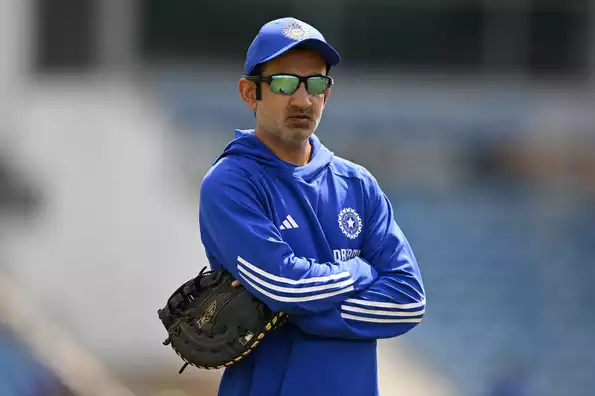
India’s first practice session ahead of the fifth Test of the Anderson-Tendulkar Trophy began with an unexpected flashpoint – a heated on-field altercation between head coach Gautam Gambhir and The Oval’s head groundsman, Lee Fortis. The confrontation unfolded during India’s training session and appeared to stem from a disagreement over the team’s use of the practice square. Gambhir was spotted wagging his finger and raising his voice, visibly agitated, as Fortis objected to equipment being brought onto the square. Assistant coach Sitanshu Kotak later offered the team’s version of events. According to him, the tension started earlier in the morning when India’s support staff went to inspect the match pitch, something they do everywhere before a match. “When some of us coaches went to see the wicket, a member of the ground staff [asked us to] stay away at least 2.5 metres, which was a little surprising. Because it is the pitch, the match is starting day after, it will be a five-day Test, and we’re standing in our joggers, so we felt a little awkward,” Kotak said. “[If] somebody is trying to put something in the wicket or somebody wearing spikes, the curator feels that it is fine. But it was a very strange way of saying you go and stand two and a half meters away from here. So, I think that is what started. Because Gautam is someone who does not even speak unnecessary things. He does not talk to anyone. “Last four games we played, everywhere, wherever we go, all the curators when they talk, they even tell you when they are going to cut the grass, whether they are going to cut the grass. And if they do not want to give an answer, they will say, we will see [based] on the weather, we will see tomorrow. So, that is a good answer…” The more visible flashpoint came when support staff wheeled a ‘cooling box’ onto the square while players were practising. Fortis, seated on a roller, reportedly shouted at the staff, which prompted a strong reaction from Gambhir. “Curators also need to understand that the people they are talking to, they are highly skilled and intelligent people. So for example if you go on the ground now where we practiced you won’t even see that any bowlers in outfield would have marked with his spikes. So we keep spray. So we try and see and that all comes from head coach that we’ll try and see that this ground also should not get damaged. “If you sound a bit arrogant or if you come across like you know you can be protective but end of the day it’s a cricket pitch. It’s not an antique where you can’t touch because otherwise it’s 200 years old and it can be broken you know.” “When he was bringing the cooling box there, still he was sitting on the roller, he shouted and told the support staff not to take it there. Now the weight of that cooling box will be 10 kilos according to me,” Kotak said. As the confrontation escalated, videos surfaced on social media, their authenticity unverified, where Gambhir could allegedly be heard saying: “You report whatever you want. Go, f**k off from here. Go tell him to f***ing report it to the match referee. Don’t tell us what we need to do. Don’t tell us what to do. You don’t tell anyone of us what to do. You’re just a groundsman, stay in your capacity. You’re just a groundsman, nothing beyond that, you’re just a groundsman. You’re just the groundsman. Stay in your capacity.” Kotak didn’t entail the details of the exchange but said Gambhir was standing up for his staff. He also pointed out that that other visiting teams have faced similar issues at Surrey’s ground. Incidentally, since starting in this role in 2012, Fortis is a four-time winner, including a hat-trick which he completed last November, of ECB’s Bernard Flack Memorial Trophy for for the best multi-day pitches. “So, it is good to be a little possessive and it is also good to be protective, but not that much. So, then Gautam just said that do not talk to the support staff like this, because the support staff, we all come under the head coach. Any head coach will say that you cannot shout from there and say this. So, it was very normal. Then he [Fortis] came there and he was saying… I think it got built up from the wicket when we were watching. And to be very, very honest, if you want me to be very honest, before coming to Oval, most of the team knows that the curator is not the easiest person to get on with. And I am sure you also would be aware about it. So, that gives a lot of answers.” Cricbuzz understands that Fortis’ concerns with the usage of square stemmed from how much cricket is still left to be played at the venue, in the domestic season and The Hundred that will begin after the Test series. “You tell me day after day a batsman will be sliding to survive from run out. A bowler will be sliding there to stop the ball,” Kotak added. “He said that we are trying to get this grass [on the other pitches in the square]. Next wicket to the center wicket I mean I don’t know how much grass will grow in one day and what will happen in next five days. So sometimes you want your ground to be good and square to be good but end of the day it’s a cricket ground.”

Read More

Gambhir and Stokes at opposite ends of injury replacement debate

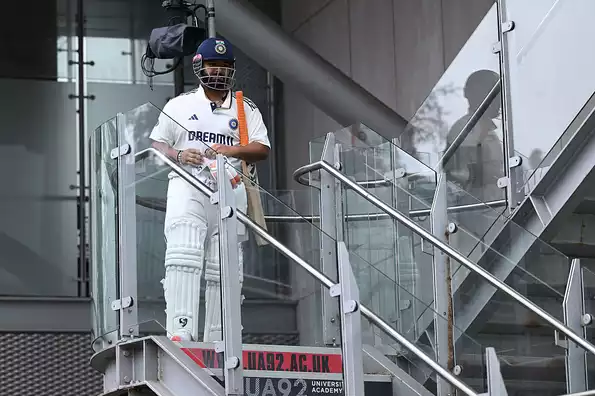
India head coach Gautam Gambhir and England captain Ben Stokes stood at opposite ends of a fierce debate: whether a team should be allowed a replacement player if one suffers a serious external injury during a Test match. The topic arose sharply after Rishabh Pant fractured his toe while batting on the opening day of the Manchester Test. Pant, though hobbling, courageously returned to the crease the next day and added a further 17 runs to score his third half-century of the series, to go with twin hundreds in Leeds. Yet, his involvement ended there, with Dhruv Jurel stepping in as a substitute wicketkeeper for the remainder of the game. Gambhir voiced strong support for a rule that would permit teams to bring in a replacement under such circumstances, to prevent the contest from becoming an uneven ten-versus-eleven battle. “Absolutely, I’m all for it,” Gambhir said after the game. “If the umpires and the match referee sees and feels that is a major injury, I think it’s very important. It’s very important to have this rule where you can get a substitute, that is, if it’s [the injury] very visible. “There’s nothing wrong in doing that, especially in a series like this where it’s been such a closely-fought series in the previous three Test matches. Imagine if we would’ve had to play with 10 men against 11. How unfortunate would this be for us.” Stokes, on the other hand, dismissed the idea as untenable, warning that such a rule could open the door to abuse and manipulation. Under current playing conditions, replacements are only allowed for concussion or if a player contracts Covid-19 during the match. “I think it’s absolutely ridiculous that there’s a conversation around an injury replacement,” Stokes said. “I think that there would just be too many loopholes for teams to be able to go through. You pick your 11 for a game; injuries are part of the game. I completely understand the concussion replacement: player welfare, player safety. But I think the conversation should just honestly stop around injury replacements because if you stick me in an MRI scanner, I could get someone else in straightaway. “If you stick anyone else with an MRI scanner, a bowler is going to show, ‘Oh yeah, you’ve got a bit of inflammation around your knee. Oh sweet, we can get another fresh bowler in’. I just think that conversation should be shut down and stopped.” Meanwhile, Gambhir reserved his highest praise for Pant’s grit and commitment to the team. Although now ruled out of the series, Pant was even prepared to bat in the second innings if the situation demanded it. “Rishabh, already it’s been declared that he’s out of the series. One thing I want to say is that the character, the foundation of this team will be built on something that [he] did for the team and for the country as well. Any amount of praise is not enough for him, especially batting with a broken foot. “Not many people have done that in the past, and he had put his hand up and that is why I say it. Any amount of praise [is not enough]. I can sit here and talk about this for hours and hours. I think the generations to come forward will talk about this, and generations coming forward should talk about it that there is someone who’s batted with a broken foot. “It’s unfortunate because of the kind of form he was in, but again he’s an important member of the Test side, and I hope he recovers quickly and comes back quickly, and try and deliver again for us.”

Read More