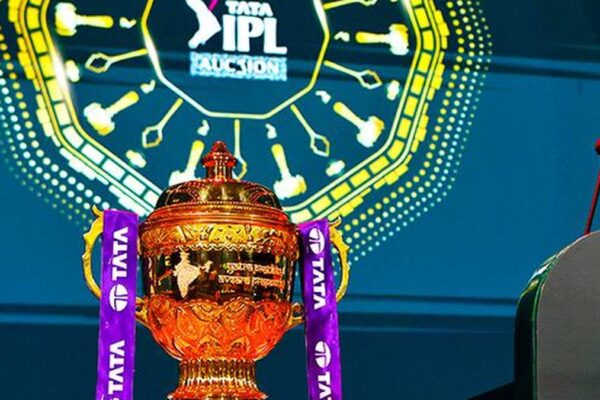
IPL meet: Captains exempt from match bans for slow over-rates

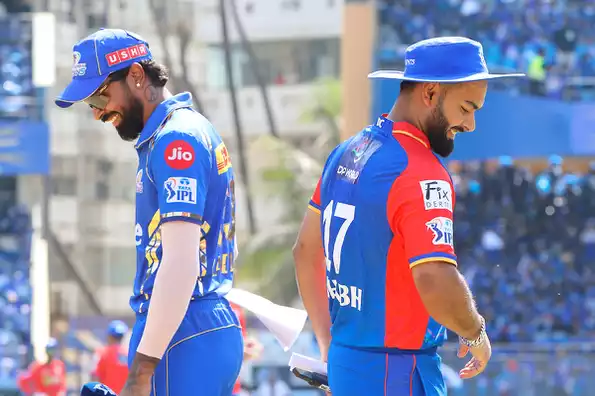
The Board of Control for Cricket in India (BCCI) has revised the playing conditions for the upcoming season of the Indian Premier League (IPL), with the most notable change concerning over-rate offences and the captain having to pay the price for that. The BCCI has decided that captains will no longer face match bans. Instead, they will be penalised with demerit points, with a ban being enforced only in extreme cases. At the captains and managers meeting held at the BCCI office in Mumbai on Thursday (March 20), the BCCI informed the think-tanks of the 10 franchises that there will be no match bans for slow over rate offences. Instead, a system similar to that of the ICC has been introduced, with demerit points assigned to the captain based on the severity of the offence. These demerit points will carry over for a period of three years. “The captain will be penalised with demerit points but will not face a match ban for the slow over-rate,” says an internal communique seen by Cricbuzz. The Level 1 offence will be charged 25 to 75 percent match fees with demerit points which will be calculated for next three years. “A Level 2 offence, if exactly deemed serious, will result in four demerit points. “For every 4 demerit points accumulated, the match referee can impose a penalty, either in the form of a 100 percent fine or additional demerit points. These demerit points could potentially lead to a match ban in the future,” a source in the know said. “But for slow overrate it won’t be a match ban (immediately).” A couple of captains have received match-bans in the IPL for slow over-rates. Rishabh Pant had to miss a crucial match for Delhi Capitals against Royal Challengers Bengaluru last season due to his team’s slow over-rate while Hardik Pandya will be missing in action in Mumbai Indians’ opening game of IPL 2025 due to an over-rate offence in the previous season. Additionally, the BCCI has stated that the Impact Player Rule, which has had its fair share of critics, will be reviewed after the 2027 edition, which means the rule will stay for the current IPL cycle. “The IPL will continue to implement the Impact Player rule, allowing teams to substitute one player during a match, at least until 2027,” a source has informed Cricbuzz. The BCCI has also amended that DRS clause in the playing conditions. The referral will be applicable for the height wides and wides outside the off-stump. These changes are in addition to the revocation of saliva ban and introduction of a provision of a second ball in the second innings to counter dew which Cricbuzz has already reported.

Read More

DC set for new era as Axar & Co. aim to arrest slump

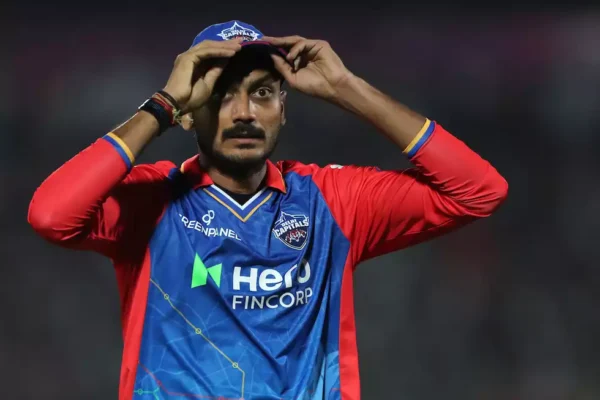
What’s new with Delhi Capitals in the new cycle? A new captain, a new head coach and plenty of new additions to the squad. Losing Rishabh Pant meant DC were always on the lookout for their next leader. While it was widely speculated that KL Rahul might don the role the moment he was acquired, the responsibility has fallen on the shoulders of Axar Patel. It’s certainly a reward for a player who has been with the franchise since 2019, and someone who seems to be at the prime of his career having established himself in the Indian limited-overs squads. Not to forget that he was DC’s top retention ahead of the auction at INR 16.5 Crore. There has been an overhaul in the coaching setup as well. After a long stint with Australian great Ricky Ponting, the Capitals parted ways to hand over the reins to former India batter Hemang Badani. His assistant Matthew Mott comes in with a rich experience having coached the Australian Women’s team, and the England Men’s team in recent years. Former England player Kevin Pietersen has been signed up as the team mentor, bolstering that coaching group further that also has India’s 2011 World Cup winning member Munaf Patel. In terms of personnel, DC certainly appear stronger on paper compared to the previous season. Australian great Mitchell Starc and India’s T Natarajan are the primary additions to the pace attack. Mohit Sharma, who had an excellent IPL in 2023, has been bought as well. In the batting department, apart from Rahul, DC added veteran Faf du Plessis to the mix and he has also been named Axar’s deputy. The likes of Karun Nair, Sameer Rizvi and the exciting Ashutosh Sharma who had a stellar campaign last year will be bolstering the lineup as well.. Capitals were the only team apart from Punjab Kings to have not made the playoffs in the previous cycle. They would certainly hope for a change in fortunes now in the new cycle. Full Squad KL Rahul, Jake Fraser-McGurk, Karun Nair, Faf du Plessis, Donovan Ferreira, Abishek Porel, Tristan Stubbs, Sameer Rizvi, Ashutosh Sharma, Darshan Nalkande, Vipraj Nigam, Ajay Mandal, Manvanth Kumar L, Tripurana Vijay, Madhav Tiwari, Axar Patel (C), Mitchell Starc, T Natarajan, Kuldeep Yadav, Mohit Sharma, Mukesh Kumar, Dushmantha Chameera The best XII as things stand Jake Fraser-McGurk, Faf du Plessis, Abishek Porel (WK), KL Rahul, Karun Nair, Tristan Stubbs, Axar Patel (C), Ashutosh Sharma, Mitchell Starc, Kuldeep Yadav, T Natarajan, Mukesh Kumar Injury/Availability Concerns Harry Brook pulling out of the competition is indeed a massive blow for the franchise. They haven’t named a replacement for him yet. In his absence they can either add the explosive Donovan Ferreira down the order as a finisher or use Faf du Plessis as an opener up top. While Mitchell Starc is all set to return to competitive action after skipping the Champions Trophy, he did mention that he had some pain in his ankle recently while playing Test cricket. It will be interesting to see if his workload is managed given he has a WTC Final to play immediately after the IPL. The player with a point to prove is… ‘What more can I do?’ remarked KL Rahul earlier this month after the Champions Trophy semifinal on constant question marks over his place in the ODI side. While there are absolutely zero doubts over his place in the 50-over set up for India, Rahul certainly has a lot to do in order to convince the selectors to bring him back into the T20I fold. In recent years, Rahul’s strike rate in the IPL has been up for debate especially with a lot of flamboyant batters making a mark. His recent breakup with Lucknow Super Giants was certainly bitter. As he embarks on his next chapter in the IPL, all eyes will be on him whenever DC take the field even though he isn’t going to be leading the side. Will we see Rahul break free and go back to his 2018 self? Or is there a possibility of Rahul going down the order in this format as well to reinvent himself? A player who could have a breakout season? Sameer Rizvi came in with a lot of reputation when Chennai Super Kings initially bought him for a massive price. But his opportunities were indeed limited for the five-time champions. Now with Harry Brook pulling out, Capitals certainly need someone to step up. Rizvi has been in good touch for Uttar Pradesh consistently scoring runs from the middle order. 2025 could be the season where he translates that onto the big stage. Fixture build-up and run-in… The Capitals will kick off their campaign with two games in their second home in Vizag. By the time they play their first fixture in Delhi, we would be three weeks into the tournament already. However, one advantage DC do have at the start is the amount of gaps between games. There’s a five-day gap before they play their second fixture and another five days before the third. In case of a false start, this will give them plenty of time to regroup and work on strategies before the fixture congestion hits in mid-April. A home ground stat to watchout for this season The average first innings total in Delhi last IPL was 235 – the highest among all venues. Pace and spin were equally taken apart at this venue last year. No wonder DC were the worst death bowling side in the IPL across the last two editions. They would hope the additions of Starc and Natarajan will help them correct that record.

Read More

Player replacement rule in IPL – Explainer

The IPL season has not yet started, and quite a few replacements have already been announced, and one has ended up in a legal suit. Chetan Sakariya for Umran Malik by Kolkata Knight Riders, Mujeeb-ur-Rahman for Allah Ghazanfar by Mumbai Indians and Wiaan Mulder for Brydon Carse by Sunrisers Hyderabad have seamlessly been replaced. There may be a few more in the form of Shardul Thakur and Shivam Mavi for any of the three injured pacers – Mayank Yadav, Mohsin Khan and Avesh Khan – in the Lucknow Super Giants squad. Curiously enough, one replacement has run into complications with Corbin Bosch, who came in place of Lizaad Williams in the Mumbai Indians side, facing potential legal action from the Pakistan Cricket Board (PCB) for alleged breach of contractual obligation. He has allegedly jumped the PSL contract for the IPL gig. That is for later, first the rules. The Board of Control for Cricket in India allows replacements if a player suffers a season-ending injury or illness not only prior to the season but also in the middle of it. In fact, the BCCI has revised the rule this season allowing replacements till the 12th league match of the season. Earlier, it was allowed only till the seventh match. How do the replacement regulations work in the IPL? To come in as a Replacement Player, one must have his name been included on the Registered Available Player Pool (RAPP) list for the relevant season and his league fee for the full season – assuming 100 percent availability – must not be less than the reserve price set by him as documented on the RAPP list. There are instances of franchisees having bowlers figuring in the RAPP list as net bowlers. But those franchises will have no authority to stop a player or players if another franchisee wishes to take him/them. A replacement player can be recruited at a fee that is not more than the league fee that would have been payable to the player he would be replacing. “If a Replacement Player is recruited during a season, the League Fee actually paid to him will be reduced to take account of the Franchisee’s Matches during the relevant season which took place before he was registered and any other relevant deductions under the Player Contract,” the rule explains. How do the replacement rules reflect on the salary cap? The BCCI rule states, “The League Fee payable to any Replacement Player signed pursuant to this paragraph 6 will be ignored for the purpose of the Salary Cap for that Season. If a Replacement Player’s Player Contract is extended in accordance with its terms, the League Fee payable to the Player for the subsequent Season will be charged against the Salary Cap for the relevant Season.” The statutory IPL clauses, of course, apply here. While taking replacement players, the franchisees must remain in compliance with the squad composition regulations of 25 players. Franchisees who take replacement players during the 2025, 2026 and 2027 seasons have a right (if any) to extend the term of the contract for the next applicable season. “For the avoidance of doubt, if a franchisee extends the contract of a replacement player, he shall, for any relevant subsequent season, be treated as any other player for the purpose of the squad composition regulations and the salary cap,” the BCCI clarifies. As for the mid-season replacement for an injured player, who has played a game, the regulations say… i) The said injury or illness occurs during or before the 12th League Match of the relevant Team in the Season; “ii) a doctor nominated by the BCCI confirms that the injury or illness is season ending (i.e. it means the Player will not be match fit until after the end of the Season (including the Playoffs)); iii) absent the injury or illness, the Player would have been available for all of the remaining Matches in the Season; and iv) as a result of the injury or illness the Player would miss the remaining League Matches in that Season. NB: In such circumstances, the Player who is replaced may not play for the Franchisee again in any Match during the relevant Season.” Coming back to the specifics, Mujeeb has joined MI for INR 2 Crore although he comes in place of a INR 4.8 crore player (Allah Ghazanfar). Mulder and Sakaria have been taken in by SRH and KKR for INR 75 lakh each, their base prices. But there is no mention of Bosch’s value. He had enrolled in the auction for INR 30 lakh, but he went unsold. He has come in place of fellow South African Lizaad Williams, who was bought by MI for his base price of INR 75 lakh at the auction. But Bosch is believed to have had a contract for INR 50-75 lakh for being picked in the Diamond category by Peshawar Zalmi (in the USD 60,000-80,000 range) in the PSL draft.

Read More

UP Warriorz Struggle with Middle-Order and Slow Finish

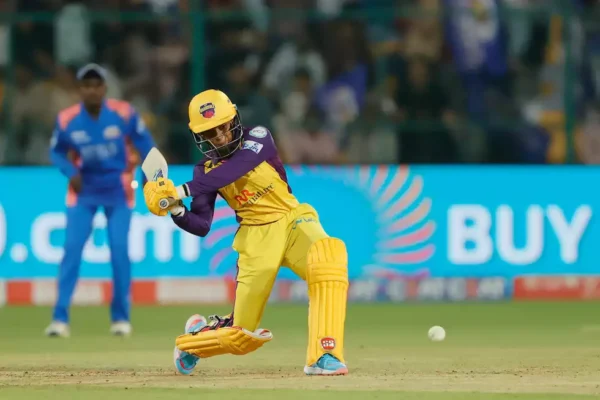
Even for a contest that was as one-sided as the one played out on Wednesday evening, between Mumbai Indians and UP Warriorz, there were a few moments where the momentum hung in balance. One among those was at the end of the 12th over of Warriorz’s innings. UP Warriorz’s decision to break the Indian top-order trio and add some extra firepower upfront by promoting Grace Harris to open, had paid off. Even as Kiran Navgire departed early, Harris took apart Shabnim Ismail for a hat-trick of boundaries and then tore into Hayley Matthews, collecting two sixes and as many fours to provide Warriorz the start they would’ve hoped for. A promise that flickered with 48 runs on the board at the end of the fourth over, however, vanished soon. The second-wicket partnership, between Harris and Vrinda Dinesh, extended to 79 runs before the former was trapped leg-before while attempting to slogsweep Amelia Kerr’s googly early in the 10th over. The game stood in balance even at that point. But old concerns, that have become now a recurring visitor, stopped by again to say hello – the middle order collapse. In five games so far, Warriorz have lost 24 wickets during the middle overs. Sanskriti Gupta was the beneficiary of the fall this time. Vrinda holed out to deep square leg and Tahlia McGrath was cleaned up. In the next over, Deepti Sharma’s top-edged sweep couldn’t make it past Harmanpreet Kaur’s leap at short fine leg as UPW slipped to 93 for 5. The momentum had shifted in favour of Mumbai Indians, but the early blaze of Harris had meant that UPW too had the chance to dictate the last stretch of their innings. And to take control of that phase, they had Chinelle Henry yet to come. The hard-hitting West Indian has not only put to the fore the best of her batting skills in this tournament, but has also been the momentum-shifter and the game-changer for UPW. M. Chinnaswamy Stadium, the same venue, was a witness to her destructive powers only a few days ago. At that point, with only eight overs left and the game still largely in balance, there was a possibility of exposing Henry to face roughly 25 to 30 deliveries. But not for the first time, they decided to hold her back, and sent in Uma Chetry instead. That was the start of the slide of UPW’s fortunes from which they never recovered, even if partially at times promised to do so. By the time Henry walked in to bat on Wednesday, with 32 balls remaining, not only the potential number of balls that she could face had dropped significantly but also was she pushed into the fifth gear earlier than adequate. In 2.4 overs of the lost time, Chetry had struggled her way to two runs in eight deliveries. Henry’s limitations in hitting were exploited by Kim Garth in the Super Over against Royal Challengers Bengaluru when the pacer had taken the pace off, short and outside the offstump line with adequate protection in the deep. Nat Sciver-Brunt employed a similar strategy, while Shabnim Ismail introduced some variations. But with the scoring rate dropping significantly, the attempts to manufacture big shots proved counter-productive, and she mistimed a swipe to a cutter to the deep mid wicket fielder. Unlike most other teams in the women’s game that allow their power-hitters greater ball-facing opportunities, UPW have unusually held back their muscle in the team. Whether it was Harris in the previous games or Henry in all the encounters, they’ve played the waiting game to accelerate. The onus has been on Kiran Navgire to provide the early blitz in the powerplay, and with Deepti and Vrinda unable quite exploit the field restrictions, much of UPW’s fortunes have been burdened on Navgire. On days when Henry has provided that power lower down the order, like in the two encounters against Delhi Capitals, the move to hold her back doesn’t seem too bothersome. Yet, even in those innings, the fact that she returned unbeaten was an indicator that had she gotten more deliveries to face, there could have been potential for higher scores. By the time Henry could eventually come out to bat, the odds of the contest had already become heavier in favour of the inaugural champions. Given how Nat Sciver-Brunt batted later in her innings and the eventual margin of victory, it would be unfair to pin the blame on one decision. Concerns were many, including the usual slip-ups on the field. The gaze shifts towards the underutilisation of Henry’s batting abilities is primarily because of the lack of experienced Indian batters in the UPW setup as also the lack of contributions from the overseas batters. Primary among their concerns is the inability of Tahlia McGrath – who should have ideally served as the backbone of the middle order – to get past the binary scores of 1 and 0. On the one occasion she did, she struggled to go past the run-a-ball pace. That Tahlia found a place in the side despite another capable all-rounder, Chamari Athapaththu, available as an option on the bench is merely an extension of how UP Warriorz have operated this season, trusting their personnel with long runs before making panic changes. Have we seen a team in yellow jersey do that at an Indian league before? Maybe, yes. However, five games down, there are only two wins to boast of. One eked out through a late all-round effort of Sophie Ecclestone and another courtesy Henry’s multi-record-smashing knock. Multiple players are enduring poor form, and those who have shown glimpses of promise have failed to fire in unison. Given the tightly contested situation the teams are in, UP Warriorz are now left with only two options: trust or panic. On Wednesday, they opted for ‘trust’ with their plans, but it didn’t yield the desired result. For as wise as they wish to be at this point with their team selections and strategies,…

Read More

Harmanpreet & Co. spoil RCB’s homecoming

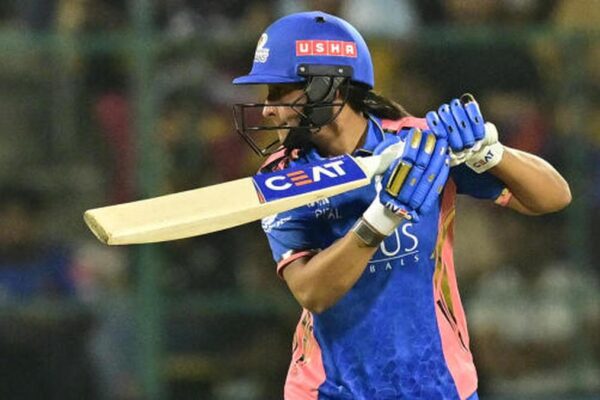
The Garden City rarely misses an opportunity to turn up in numbers for a Women’s Premier League match. And so it did on Friday (February 21, 2025), filling the M. Chinnaswamy Stadium to the brim. Unfortunately, it had to return home disappointed as its beloved Royal Challengers Bengaluru lost to Mumbai Indians by four wickets. An Ellyse Perry special (81, 43b, 11×4, 2×6) had carried RCB to a competitive 167 for seven but MI, via Nat Sciver-Brunt’s scorching 42 (21b, 9×4), captain Harmanpreet Kaur’s part-sedate, part-aggressive 50 (38b, 8×4, 1×6) and Amanjot Kaur’s first-rate finishing act (34 n.o., 27b, 2×4, 2×6) handed RCB its first loss in three games. Sciver-Brunt set the PowerPlay overs on fire before Harmanpreet and Amanjot brought the equation down to 24 off 18. Tweaker Georgia Wareham nearly turned the game on its head by removing Harmanpreet and Sajana Sajeevan off back-to-back deliveries. Closing it out But with 22 required off 12, Amanjot smoked Kanika Ahuja for two sixes before the nerveless G. Kamalini, all of 16, brought MI its second win from three matches with a fiercely driven four off the penultimate ball. Earlier, after RCB was asked to bat first, Perry blossomed even as those around her withered. Skipper Smriti Mandhana started superbly (26, 13b, 4×4, 1×6), pulling and cutting Shabnim Ismail and Sciver-Brunt in expert fashion. But a miscued hoick in the third over off Shabnam ended her stay, and from 29 for one, RCB fell to 57 for four.  However, a fine 50-run partnership between Perry and Richa Ghosh (28, 25b, 3×4, 1×6) resurrected the RCB innings and the duo ensured the home side accumulated 105 runs from overs 10 to 20. Perry was solid on the leg-side, planting her foot and smashing everything in sight. The gorgeous boundary over extra cover off Amelia Kerr that she executed to get to her half-century showed her all-round batting ability. But even her best couldn’t save the day for RCB.

Read More

IPL 2025 schedule: KKR vs RCB at Eden to kick off season

The BCCI on Sunday (February 16, 2025) unveiled a 74-match schedule for the 18th Indian Premier League that will be held across 13 venues, starting on March 22 with three franchises playing at least a couple of their home games at their designated second bases. The event will kick off with a clash between Kolkata Knight Riders and Royal Challengers Bengaluru at Eden Gardens on March 22 and culminate at the same venue on May 25 in a schedule that did not offer any surprises. A schedule features 12 double-headers. The games will be held over 65 days across 13 venues, with Dharamsala, Guwahati, and Visakhapatnam hosting a couple of IPL fixtures each. As has been the norm, Dharamsala will serve as Punjab Kings’ second home venue alongside Mullanpur (New Chandigarh), while Rajasthan Royals will make Guwahati their base in addition to Jaipur. Delhi Capitals will have Visakhapatnam as their second home venue and will start their league campaign there on March 24 against Lucknow Super Giants. Guwahati and Visakhapatnam will host two matches each, while Dharamsala will stage three matches. The first double-header of the season will be held on March 23 in which Sunrisers Hyderabad will face Rajasthan Royals in an afternoon game in Hyderabad, followed by a contest between Chennai Super Kings and Mumbai Indians at the MA Chidambaram Stadium in Chennai. The playoffs will be staged in Hyderabad and Kolkata after the league stage. Hyderabad will host Qualifier 1 and the Eliminator on May 20 and May 21, respectively, with the action shifting to Kolkata for Qualifier 2 on May 23. The IPL will continue with its two-group structure after the 2022 expansion to a 10-team format. Kolkata Knight Riders, Royal Challengers Bangalore, Rajasthan Royals, Chennai Super Kings, and Punjab Kings are in one group, while Sunrisers Hyderabad, Delhi Capitals, Gujarat Titans, Mumbai Indians, and Lucknow Super Giants are in the other. Each team will play the other sides in their group twice, one pre-determined team from the opposite group, and the remaining four teams from the other group once.

Read More

IPL 2025 mega auction: Vijay Shankar relishes return to Chennai Super Kings after a decade

On the eve of last weekend’s IPL mega auction in Jeddah, Vijay Shankar was asked whether he would be keeping an eye on the proceedings that will determine his future in the marquee T20 competition. “No, I won’t be watching. Nothing is in our control anyway,” was his quick response. The 33-year-old Tamil Nadu all-rounder stuck to his word, but when he eventually found out that he will be heading to the Chennai Super Kings, which pipped his former team Gujarat Titans with a bid of ₹1.2 crore, he was chuffed. Apart from it being the franchise of his home State, it is also the franchise where he started his IPL journey, though he played just one game in 2014 when he was very much a rookie. “I bowled one over for CSK in 2014. I didn’t bat. For me to have started my IPL career there and to go back to that team after 10 years is really special. It is a different feel altogether to play at Chepauk in the IPL. I have played there a few times when I was in the opposition,” Vijay told The Hindu. â€śThere’s an aura that CSK has. The way they play cricket is different from other teams.” After that lone appearance for the five-time IPL champion, he went on to play for Sunrisers Hyderabad, Delhi Capitals and Gujarat Titans. He enjoyed some success with the Gujarat Titans particularly in 2023 — in 14 matches, he contributed 301 runs at 37.63 while striking at 160.11. For the moment, he has his focus on doing well in Tamil Nadu’s domestic campaign. While he was left out of the team for the first two Ranji Trophy matches of the season, he has managed to make his experience count since making a comeback. “It was very tough to sit out for two games. But you need to keep doing your best. That is the work ethic that has been instilled in me from my early days,” he said.

Read More

IPL mega auction 2025: 13-year-old Vaibhav Suryavanshi goes to Rajasthan Royals

The 13-year-old Vaibhav Suryavanshi bagged a ₹1.10 crore contract with Rajasthan Royals on the second day of the mega auction in Jeddah on Monday (November 25, 2024). Suryavanshi, talked about as a prodigy, made his T20 debut for Bihar in the ongoing Syed Mushtaq Ali Trophy against Rajasthan on Saturday and made a 6-ball 13 before falling to Deepak Chahar. IPL auction 2025 Day 2 LIVE updates Hailing from Samastipur, Suryavanshi debuted at just 12 years and 284 days against Mumbai, becoming the youngest player in the tournament’s history. This remarkable feat broke records held by cricketing legends like Yuvraj Singh, who debuted at 15 years and 57 days, and Sachin Tendulkar, who started at 15 years and 230 days. Suryavanshi further solidified his reputation during the Youth Test series against Australia in Chennai, where he smashed 104 runs off just 62 balls. At 13 years and 188 days, he became the youngest centurion in the 170-year history of competitive cricket and also set the record for the fastest century by an Indian at the youth level. His blistering century off 58 balls stands as the second fastest at this level, just behind England’s Moeen Ali, who achieved the feat in 56 balls. This remarkable feat broke records held by cricketing legends like Yuvraj Singh, who debuted at 15 years and 57 days, and Sachin Tendulkar, who started at 15 years and 230 days. The Mumbai troika of Shardul Thakur, Prithvi Shaw and Ajinkya Rahane along with New Zealand stars Kane Williamson and Glenn Phillips were among the unsold players.

Read More

IPL 2025 mega auction: What are the RTM rules during the auction

The Right to Match (RTM) was introduced for the first time in 2018. The RTM rule will allow the franchises to bring back a player from their previous season to their squad. The RTM rule allows a franchise to retain a player they released by matching the highest bid for that player at the auction. The RTM card will allow teams that didn’t use their full quota of six player retentions ahead of the auction to retain some of the players from their previous squads. A team can use the RTM card to match the highest bid placed on a player who was part of its squad during the previous season. However, in this auction, the franchise that places the original bid will be allowed one more opportunity to raise the bid for the player after the RTM card is invoked. If the team with the RTM option decides to match that final bid, it will retain the player in question. If not, the original bidder will secure the player’s services while the RTM card will be restored for the team that loses out.

Read More

IPL 2025 mega auction Day 1 LIVE: Rishabh Pant becomes most expensive buy at ₹27 crore, Shreyas fetches ₹26.75 crore deal

Day one of the Indian Premier League player auction witnessed some expensive buying and new records as Indian wicket-keeper Rishabh Pant became the most expensive buy after Lucknow Super Giants bought him for massive ₹27 crore. Moments before Pant emerged as the most expensive player, Shreyas Iyer held the record for just 22 minutes after Punjab Kings bought him for ₹26.75 crores.Rishabh Pant becomes most expensive IPL buy at ₹27 crore, Iyer fetches ₹26.75 crore deal It means that the likes of Faf du Plessis, Sam Curran and Prithvi Shaw will be up for grabs at the start of Day Two. The Board of Control for Cricket in India (BCCI) confirmed the sequence in a communication to the franchises after Saturday night’s pre-auction briefing. It confirmed that the opening day will see the 12 12 sets being called, with one 30-minute break and two breaks of 15 minutes each during the proceedings. A total of 574 players have been selected from an original pool of 1,574 candidates. These players will be auctioned on November 24-25 in Jeddah. The roster comprises 208 international players, 12 uncapped international prospects, and 318 uncapped Indian players.  This year’s auction will feature some high-profile India stars such as Rishabh Pant, K.L. Rahul, Shreyas Iyer and Arshdeep Singh. The 10 franchises will collectively have around ₹641.5 crore to spend for the available 204 slots.

Read More