Old ball or dry ball: The death-over dilemma for captains

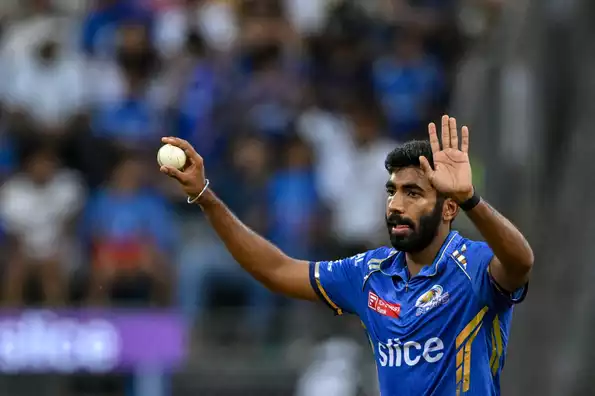
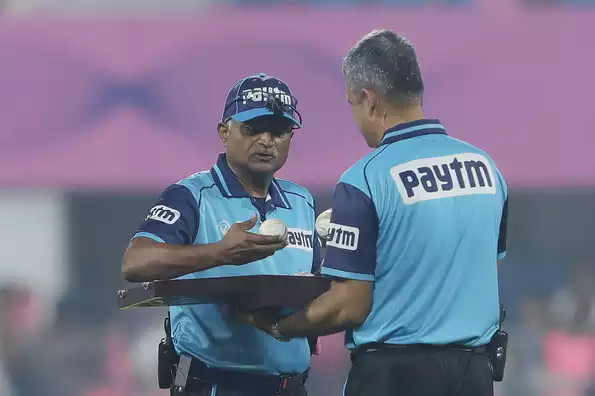
This IPL season has brought in two rule changes that are meant to help bowlers. But they’ve ended up creating a tricky choice for the captains. One brings back the use of saliva to shine the ball and use reverse swing. The other rule allows the fielding captain to replace the ball with one of “similar wear and tear” after the 10th over in the second innings of a night game, even in the absence of visible dew. In effect, teams can now swap a soft and/or damp ball for a harder and drier one. While both the rules were introduced to balance the skewed bat-ball dynamic, they can be at odds with each other in practice. If you’ve worked on the ball all innings to get it to reverse, do you stick with it? Or do you opt for another one that might buy your spinner more grip and turn in the final 10 overs of the match? The conundrum came into play in Match #5 between Punjab Kings and Gujarat Titans. Shreyas Iyer chose not to change the ball and the plan to bowl wide yorkers from over-the-wicket to Sherfane Rutherford bore fruit. “Arshdeep played an important role in that (the wide yorker plan),” Shreyas revealed after the match. “He came in and said the ball is actually reversing a bit, so the saliva on the ball is helping the bowlers a bit I guess. He got Sai [Sudharsan] and that changed the momentum for us, and then he came in and said let’s start the wide yorkers earlier than trying it too late.” Punjab’s fast bowling coach James Hopes explained the thinking behind it, but also underlined the trade-off. “Arshdeep enjoyed it, he was going to work on the ball properly with saliva and we did get a little bit of [reverse] swing in that last game at the end. But to be fair, that came at the expense of getting a dry ball as well because we didn’t change our ball, and that probably affected Yuzi [Yuzvendra Chahal] a little bit as well because he wasn’t bowling with the dry ball for that game,” Hope said. A few days later, Royal Challengers Bengaluru did the opposite. In their win over Chennai Super Kings in Chennai, they changed the ball before the 20th over and handed it to Krunal Pandya. The game was already effectively lost by then, so it may not have made a big difference but it showed another way to use the rule. On some pitches where the ball grips, giving your spinner a dry, hard ball at the end can be a smart move. It’s a strategy that might be used more often as teams get used to the new rules. In contrast, Shreyas’s decision to not opt for the harder ball meant that Yuzvendra Chahal, who was bought by PBKS at a record-breaking INR 18 crore, making him the most expensive specialist spinner in IPL history, wasn’t even able to complete his quota of overs. It was a surprising call, given that Chahal had been brought in specifically to address the team’s long-standing spin bowling struggles. For context, PBKS had one of the weakest spin attacks in the last cycle, with Rahul Chahar unable to replicate the success he had at Mumbai Indians. So when they broke the bank for Chahal, it was with the clear intent of giving their spin department a reliable match-winner. But for that to work, the conditions have to suit him. And that’s where the ball change rule becomes a strategic call. “So we have to weigh up what we’re going to need the most,” Hope explained. “Whether we’re going to need to try and get a little bit of tail with the older ball or whether we’re going to need to give our world-class spinner a dry ball to make an impact within the last 10 overs. So we’re going to have to weigh that up game to game based on conditions.” And when you’re up against big hitters like Nicholas Pooran, these decisions matter even more. “I think what we’ve seen on these grounds and on these pitches sometimes, someone like Pooran for example, he’s had an unbelievable last two years. It’s just about trying to limit the damage sometimes,” Hopes said. “You’re really aggressive with him in his first five or six balls and you’re trying to get him out. Then it’s almost what you’ve seen teams doing, they’re trying to shut the game down in the seventh over. They’re bowling yorkers straight away. They’re not waiting until the 15th over. We had a guy come in the last game and bowl yorkers from the first ball he bowled and try to bowl 18 of them in a row. “You’ve got to expect there’s going to be fours and sixes. Just trying to limit the damage all the time,” Hopes added. As the tournament progresses and dew patterns vary across venues deep into the summer, how captains negotiate this conundrum will be something to watch out for, especially on nights where a single over can tilt the contest.
Read More

SRH accuses HCA president of blackmail over ticketing demands

Sunrisers Hyderabad have accused the Hyderabad Cricket Association (HCA) president of blackmail, coercion and threatening its staff at the Rajiv Gandhi International Stadium in Uppal, Hyderabad. The SRH team, owned by the Chennai-based Sun Group, has also alleged that HCA president Jagan Mohan Rao locked the corporate boxes hours before their game against Lucknow Super Giants (March 27), and has sought a meeting with the association to sort out the vexing issue of tickets and complimentary passes. Simultaneously, SRH management has also appraised the Board of Control for Cricket in India (BCCI) and the IPL management of the troubles it is facing from the HCA president while also thanking the cooperation received from the other officials of the association, including secretary, CEO and others. “It is the HCA President Mr. Jagan Mohan Rao who is resorting to threats, coercion and blackmail. Even before the IPL started, Rao threatened our staff with coercion, who in return out of fear wrote an email to him, placing on record the threat he made,” a recent SRH communique, sent to the HCA Apex Council members, says. “This is in reference to your email dated 29th March 2025. Firstly, we wish to place on record that we have no grievances against HCA’s Secretary, CEO, Treasurer or other office bearers of HCA. In fact, we would like to thank them for their cooperation,” the mail says, adding that a corporate box allotted to LSG owner Sanjiv Goenka was locked by Rao. SRH played against LSG on March 27. “Without waiting for a resolution, the HCA president Mr. Jagan Mohan Rao locked the F3 box just few hours before the start of the game, knowing very well that this box was given to the owner of Lucknow SuperGiants, Mr. Goenka. This was done just to blackmail us and put coercive pressure on us to give additional 20 complimentary tickets before the game.” Cricbuzz has reached out to Rao and other HCA officials. The management has also alleged that Rao was requesting ticket and pass allotments for personal use, instead of going through the normal channel of the host state association. “Few days before the start of IPL, the HCA President suddenly said that he wants us to block 10% of tickets every match (3900 tickets per match) for himself to purchase. This is over and above the 3900 tickets that we give complimentary to HCA. We refused stating that the fans of SRH will miss out on buying said tickets and this will lead to suspicion regarding the transparency of the sale of tickets. “But he was insisting on a minimum of 2500 tickets with separate individual purchase links and that if we did not block tickets for his purchase, he would not cooperate with us. Reluctantly, we had no choice and agreed to block 1000 tickets for his purchase. But he shouted at our on-ground team that it is unacceptable and therefore we increased it to 2000 tickets. We categorically said that we cannot do individual payment links because it leads to suspicion regarding the purchaser of the tickets and subsequent sale in the black market. “We were forced to accommodate this request due to coercion, but we insisted the payment must be made from the OFFICIAL HCA Bank account, via only ONE payment link that will be sent directly to the HCA email address, as this provides transparency regarding the transaction. Since we were adamant on this condition, Mr. Jagan Mohan Rao did not respond thereafter. “For the last two games, 3900 complimentary tickets were handed over to HCA, but we were told that under instructions from the President Mr. Jagan Mohan Rao, 20 tickets of F-12 A were given back saying that we must give them 20 tickets in a different box. So, it is false to state that we gave only 3880 tickets. “Lastly, we categorically deny that Mr.Shammi (Shanmuganathan, SRH CEO) or Mr.Kiran agreed to give extra 20 tickets in a different box. They only communicated that we need to sit and find a solution because this seat allocation was what was historically followed for more than 10 years, without any issues. Mr. Shammi has replied to your messages via whatsapp and we have proof of the same. Therefore, your allegation that no reply was made by him is false.” SRH has also accused Rao of taking credit for the work done by the franchise. “It is important to note, that it was us, the Sun Group, who spent huge sums of money painting the stadium, renovating the toilets, upgrading the boxes, installing new ACs etc. But Mr. Jagan Mohan Rao, went around giving interviews stating that he was the one who made all the renovations etc. “When we wrote an email to him (Email attached as B), stating that it was us who made all the renovations that he was taking credit for, and we should have a joint press conference if required to clarify this, he instead only put one tweet acknowledging our efforts.” Franchises pay a fee of Rs 1 crore to the state association for each IPL game they host. “The franchise has sought a meeting with the association. “I kindly request the Apex council to meet us in person so that we can clarify regarding all that has transpired and show the required evidence to the members. We once again wish to state that it is only the HCA President Mr. Jagan Mohan Rao who is behaving unprofessionally, resorting to threats, coercion and blackmail. “It was always our intention to resolve these issues amicably, but when Mr. Jagan Mohan Rao went to the extent of locking the F3 box and blackmailing for complimentary tickets, we had no choice but to escalate this matter. We thank the other office bearers of the HCA for cooperating with us and hope we can have a meeting scheduled immediately so we can solve this in person.” The HCA is yet to revert on the franchise’s request over the proposal of…

Read More

Rana, Hasaranga give Royals first points with tight win

Rajasthan Royals clinched a thrilling six-run victory over Chennai Super Kings to bring up their first win of IPL 2025. Starring with the bat for the Royals was Nitish Rana who hit a powerful 81 before Wanindu Hasaranga helped defend the total with crucial strikes right through . Where was the match won? While Rana’s onslaught in the powerplay set RR up to get a total that was above-par, CSK had managed to pull things back at the back-end. In the chase, however, RR managed to keep things in control with regular strikes right through. The chief architect of that was Wanindu Hasaranga who struck at important junctures not allowing CSK to get away. RAJASTHAN ROYALS Powerplay – Nitish Rana runs amok Phase score – 79/1 [RR: 13.16; 4s/6s: 9/5] Nitish Rana found himself coming in just the first over of the innings after Yashasvi Jaiswal chipped a simple catch to mid off. What had started off well for Khaleel Ahmed and CSK, who had opted to bowl, soon took a turn for the worse. Rana hit the second ball he faced for a boundary to get going. Jamie Overton, making his IPL debut, was carted for 14 runs in his first over and 16 in his next as CSK struggled to get their lengths right. In a bid to shake up things, R Ashwin was brought in but Rana employed the sweep behind square to good effect as RR picked up 19 in that over. Khaleel erred in lengths once again in his third over of the powerplay and allowed Rana to cash in further on a surface that was not offering much for the bowlers. Out of RR’s 79 inside the powerplay, Rana alone accounted for 58. Middle overs – Spinners pull things back for CSK Phase score – 66/4 [RR: 7.33; 4s/6s: 4/2] Rana remained CSK’s biggest threat from one end but Noor Ahmed managed to strike straightaway at the other bagging a well-set Sanju Samson caught at long off. It helped apply the brakes on the scoring-rate although RR had a good base already. Rana though was taking one of CSK’s main weapon in R Ashwin out sweeping him for another four and a six when the offspinner returned. But Ashwin had the last laugh throwing one wide when Rana danced down the track early to be stumped for a 36-ball 81. This helped further CSK’s cause as they applied the squeeze through their spinners. Both Ahmed and Ravindra Jadeja chipped in getting Dhruv Jurel and Wanindu Hasaranga caught off mishits as CSK bounced back successfully. Death overs – RR stutter at the finish Phase score – 37/4 [RR: 7.4; 4s/6s: 2/2] Riyan Parag and Shimron Hetmyer, who was dropped first ball, were the only other batters from RR who found the boundaries apart from the top-order. But neither could get them at the frequency that RR would have liked. Parag was yorked by Pathirana in the 18th over while Hetmyer was caught in the final over. Through it all CSK stitched together overs without boundaries that helped keep them in the game. RR still managed to get past 180 thanks to the initial onslaught from Rana. CHENNAI SUPER KINGS Powerplay – Blows exchanged in tight phase Phase score – 42/1 [RR: 7; 4s/6s: 6/1] The Guwahati pitch began to assist the pacers more as the game progressed and both Jofra Archer and Tushar Deshpande extracted appreciable bounce from it straihgtaway. The former got one of the balls to kick up and angled across Rachin Ravindra to have him caught behind. Shot-making was not easy through the line in this phase with Ruturaj Gaikwad also being struck on the elbow once. After Archer’s maiden over to start, CSK had put on only 5 on the board after the first three overs. But gradually both Gaikwad and Rahul Tripathi found other ways to get the boundaries. They began to use the pace behind square on the onside and put the bowlers off their lengths. As a result, CSK got some useful boundaries in the latter half of the powerplay which helped get the chase back on track. Middle overs – Hasaranga keeps CSK in check Phase score – 80/3 [RR: 8.88; 4s/6s: 6/3] This was a phase of play that CSK were threatening to break free with wickets in hand. But Rajasthan were almost single-handedly kept in the game by Wanindu Hasaranga’s three strikes through the middle overs. He struck with his first ball having Tripathi caught at deepmidwicket. But CSK had their best spin-hitter in Shivam Dube walk in and he took the attack straight back to Hasaranga hitting him for a six down the ground. He continued the onslaught in Hasaranga’s next over hitting him for a four and a six, readying to get that one big over that could tilt the equation. But Dube fell immediately after thanks to a magical catch at cover by a diving Riyan Parag. But CSK hit back through their skipper Gaikwad who picked up three boundaries off Kumar Kartikeya to keep the run-rate up. When he needed more support at the other end, Vijay Shankar briefly promised to do so hitting Hasaranga for a six but only to be fooled by a googly off the very next ball. Gaikwad brought up his fifty soon after but heading into the final five overs, CSK needed 61 with a set Gaikwad being their biggest bet. Death overs – CSK fall just short Phase score – 54/2 [RR: 10.8, 4s/6s: 2/4] Hasaranga once again played his part in the final overs with Gaikwad trying to take charge. CSK’s captain managed to tonk Hasaranga down the ground for a crucial six but became the legspinner’s fourth victim of the night when he holed out to long on next ball to fall for 63. Hasaranga finished with figures of 4-35 and ensured that he played a major part in RR’s defence of a middling total. For CSK, the onus lied on Ravindra…

Read More

Haven’t been able to read the wickets at Chepauk – Stephen Fleming

Straight after CSK’s 50-run loss to RCB, once the handshakes were done, head coach Stephen Fleming walked to the match pitch with a member of Chepauk’s ground staff. Five days earlier, on the adjacent surface, 25 overs of spin dictated terms as CSK edged out Mumbai Indians. This time, seam, bounce, and two-paced deliveries turned the game on its head. “Well, as we’ve been telling you for a number of years, there was no home advantage at Chepauk,” an unusually terse Fleming said after CSK’s biggest home defeat. “We’ve won away from home a couple of times. And we haven’t been able to read… we’ve been really honest with you. We haven’t been able to read the wickets here in the last couple of years. So, it’s not new. We are trying to come to grips each day with what we get, and we don’t know.” CSK’s team-building strategy – of playing three frontline spinners – was predicated on home conditions favoring turn. But just two games in, that logic has been called into question. “It’s not the Chepauk [of old] where you can just go in and play four spinners,” Fleming admitted. “We’re having to work really hard to try and understand what the nature of each pitch is, and it’s quite different.” On Friday, CSK expected dew to aid their chase of 196. Instead, the pitch only got tackier. “No, we didn’t get it right,” Fleming said. “It’s so hard to read, but we thought it was going to skid on with the dew, but it actually got a bit tacky. So, it certainly made it harder here.” Captain Ruturaj Gaikwad echoed those thoughts. “I still feel 170 was a par score on this wicket. It wasn’t that easy to bat,” he said at the post-match presentation. “When you’re chasing 170, you have a little more time, but when you’re chasing 20 runs extra you have to bat differently in the PowerPlay, and it didn’t happen today. It got a little slower, it got a little sticky. The new ball was sticking a bit. Don’t know how it happened. Rahul backed his shot, I backed mine as well. Sometimes it works, sometimes it doesn’t.” While CSK floundered with the bat, RCB’s top order ensured their total went beyond par. Phil Salt, Devdutt Padikkal, and Rajat Patidar played aggressive knocks to offset Virat Kohli’s unusually scratchy innings. Salt, in particular, provided a blistering start, smashing 32 off 16 in a 45-run opening stand. “I think it’s been made very clear to me why I’m here at RCB and what they were looking for in the auction to partner with Virat,” Salt said. “So the dynamics of the partnership I’m very aware of, and it’s to be aggressive and to take the pressure off the rest of the guys. “Especially when you come somewhere like here, if you don’t take advantage of those early seam overs, then you can be left up against it when the spin comes on and they can really take control of the game. So it was very key here and that was spoken about, yeah.” Salt also heaped praise on captain Patidar, who rode his luck to smash 51 off 32 before captaining his bowling attack to RCB’s first Chepauk win over CSK in 17 years. “I think he’s brilliant in all areas if I’m being honest with you,” Salt said. “I think the batting is right up there with the best around. I’ve not seen anybody hit spin the way that he can. “Obviously, he rode his luck a little bit tonight, but that’s the game. You get that in patches. I’ve not seen anyone hit the ball like him off spinners. Especially some of those slower balls that he hit for six, it was unbelievable. Then you come to his captaincy and he’s a cool head. He’s very calm under pressure. He’s got a very good cricket brain. He thinks about the game very deeply. As I’ve already said, the way that he spun the bowlers around tonight to make sure that we were keeping pressure on them at all times, there’s not much more you can ask for.”

Read More

CSK vs RCB: When a fixture became a feeling

All eyes were on the Chennai man at the centre of the RCB dressing room. Dinesh Karthik, straddling two worlds as broadcaster and late-career professional cricketer, broke into an evocative post-game speech. “We all know how proud our franchise is and how our fans are… and we gave them a treat to watch. Also, you’ve got to understand the gravity of this game…” Karthik was talking at the close of a match that sliced through the haze of fours and sixes that was IPL 2024. The clock had ticked well past midnight but outside, on the Queens, Cubbon and MG Road roads embracing the M. Chinnaswamy Stadium in Bengaluru, an impromptu, full-blown after-party raged. What began with banter and a celebration of a memorable turnaround of RCB’s season slowly descended into public nuisance. Well past midnight, a group of fans scaled one of the fire trucks near the stadium to hoist an RCB flag, at which point the local police swung in to quickly restore order. A little distance away, on the internet, amid the generous exchange of vitriol, a different kind of policing took over: “What are you even celebrating?”, “Tell us, how many IPL titles you have again?”, “Can’t wait to welcome RCB to Chennai…” As the IPL enters adulthood, the Chinnaswamy clash of May 18, 2024 may have become the flashpoint that turned CSK vs RCB into something more than a marketing construct. For the first time in a while, RCB, CSK and their respective fans entered that fixture standing at a crossroads that only one could traverse. The fact they had the fate of the other in their hands caused the supporters to identify with one another in a way they could not tolerate. So, how did it get to this point? Interestingly, in 2009, RCB beat CSK in the first-ever knockout game between these two franchises. Any notion of a rivalry though was continuously smothered by the general excellence of the Chennai teams that followed. CSK won every match of note, including a Qualifier 1 and a Final in 2011, and a Qualifier 2 in 2015. However, even amid the blur of games in the IPL, moments and feelings from this fixture refused to fade. In 2013, with two required off the final ball, RCB seemed to have clinched victory when RP Singh had Ravindra Jadeja caught at third man, only for the bowler to foot-fault, handing CSK a no-ball and the win. The cameras panned to Virat Kohli, whose face cycled through emotions of nervous anticipation, ecstasy, and devastation in the span of three seconds. A year earlier, Kohli was at the centre of another heartbreak, conceding 28 runs in a single over to Albie Morkel when RCB needed to defend 43 off 12. In 2018, MS Dhoni famously crashed RCB’s party with an ice-cold 70* off 34, finishing with a classic six. But a year later, he fell just short trying to get 26 in the final over. Almost always, RCB were the ones trying to puncture the great CSK bubble, and also the ones left picking up the pieces. No titles, no away wins in Chepauk since 2008, and a lopsided 21-11 head-to-head record in CSK’s favour: by every metric, this is a rivalry that shouldn’t exist. At 16-14, CSK have a closer contest with Punjab Kings. Their bouts with Mumbai Indians too are fought on more equal footing, with both teams tied on five titles. But rivalries in sport aren’t built on numbers alone. They are forged by geographies, histories, and identities. Karnataka and Tamil Nadu, where the two teams are based, share deep economic and cultural ties, with large Tamil populations in Karnataka and vice versa. Yet, beneath the surface, tensions always simmer, rooted in language politics and, most infamously, the long-standing dispute over sharing the Kaveri river. These political undercurrents have surfaced at the Ranji Trophy level. Former India fast bowler Venkatesh Prasad recalls a famous clash where Karnataka, beaten at home by a Krishnamachari Srikkanth-led Tamil Nadu side, saw fans hurl plastic chairs onto the field in frustration. During last season’s RCB-CSK showdown, Prasad likened the clash to its Ranji Trophy counterpart. It was a curious comparison, given that the IPL operates in a transient, corporate ecosystem where players aren’t tied to teams by domicile. In fact, a common gripe among fans of both franchises is their reluctance to field local talent. But while history and politics provide some backdrop, the IPL rivalry as it exists today was shaped just as much by branding and identity. CSK and RCB weren’t just two teams; they were two ways of being, built differently from the top down. CSK presented itself as an earthy, local and massy team in line with the understated persona of its ownership. RCB, with its superstar players, felt like a franchise born in the plush UB Towers on Lavelle Road in the heart of Bengaluru’s CBD and somewhat detached from the city’s larger identity. Interestingly, just two months before that CSK clash, RCB took a subtle step toward forging a more local identity, changing ‘Bangalore’ in their team name to the more vernacular ‘Bengaluru’ and getting Kohli to call it a ‘hosa adhyaya‘ – a new chapter. At the forefront of the two teams for the longest time stood two of the most popular Indian cricketers of the 21st century, Kohli and Dhoni, each embodying as well as shaping the very essence of the teams they led. This carefully crafted branding extended beyond the teams themselves. Rivalries in sport aren’t just about competition; they fulfill a deeper, almost narcissistic need for identity. Fans define themselves not just by who they are, but just as much by who they are not. CSK fans mock RCB over their former owner Vijay Mallya’s fugitive status, while RCB fans fire back with reminders of CSK’s two-year suspension for their ownership’s involvement in the spot-fixing scandal. But while fans are deeply entrenched in the rivalry, what about the players themselves? Does…

Read More

Shreyas, Shashank, Vyshak give PBKS tight win

A blistering unbeaten 97 from skipper Shreyas Iyer, a powerful finish from Shashank Singh and a terrific exhibition of bowling at the death from impact sub Vijaykumar Vyshak helped a new-look Punjab Kings make a winning start to IPL 2025. Gujarat Titans were in the hunt for the major part of the chase despite having a daunting target of 244 in front of them, but they fell short in the end by a mere 11 runs. Where was the game won? Undoubtedly at the death. Punjab Kings powered by a stunning cameo from Shashank Singh hammered 87 runs from the final five overs – 77 from the final four. But when Gujarat Titans needed 70 from 30, their bowlers did enough to help their side pull through with Vyshak and Marco Jansen getting the job done. Punjab Kings PowerPlay – Priyansh Arya makes an early mark Phase score – 73/1 [RR: 12.16, 4s/6s: 9/3] India continues to produce top-class batting talent all the time. On Tuesday (March 25), it was the turn of Priyansh Arya to make a mark very early in his IPL career. He hit just the second ball he faced for a boundary and even though he received a big reprieve in the very next over, the left-hander took full toll of that costly drop and took on Mohammed Siraj again – an effortless flick for a six which was then followed by a boundary. Kagiso Rabada then gave Titans the breakthrough by sending Prabhsimran Singh back early but Shreyas Iyer walked out to the middle with intent for his new franchise and took the South African apart for a four and a six off his first four deliveries. Arshad Khan was the next to bear the brunt as he was welcomed into the attack by Arya with three delightful fours and a six. Overall, they smashed 73 in the powerplay with the young opener fetching 42 out of those. Middle overs – Sai Kishore and Shreyas dominate Phase score – 83/3 [RR: 9.22, 4s/6s: 5/7] After that powerplay, Titans had to rely on Rashid Khan to provide them the breakthrough. He gladly obliged as Arya top-edged one to miss a debut fifty by three runs. However, Rashid’s Afghanistan teammate Azmatullah Omarzai smashed him for a six first ball to signal his intentions. He then proceeded to hit Prasidh Krishna for a couple of boundaries but either side of that got worked over by Sai Kishore who bowled a brilliant spell. He was rewarded with wickets off successive deliveries as Omarzai and Glenn Maxwell departed to suddenly leave PBKS in a jittery spot. That still didn’t deter Shreyas though as he kickstarted Sai Kishore’s next over with two massive sixes. He was dealing only in sixes at one point as he then rounded off the following over from Rashid with two sixes as well to bring up a fifty. The ball continued to fly as Shreyas and Marcus Stoinis targetted Siraj for a six each to round off a terrific spell of play for the batting side. Death overs – The Shashank Singh show Phase score – 87/1 [RR: 17.6, 4s/6s: 8/6] Titans actually made a pretty good start to the final phase of the innings when Sai Kishore returned to pick up the big wicket of Stoinis. However, what followed suit was a stunning assault from the well-set Shreyas and new man Shashank Singh. The captain kickstarted the assault with a massive 24-run over that saw him clear the ropes three more times on the night to race to 90. But he still couldn’t get to his hundred despite staying unbeaten until the end because of a one-man show from Shashank. High on confidence after last season’s exploits, Shashank pulled Rashid for a six and lofted him straight down the ground for another big one to race to 20 off 7. In the final over, he denied Shreyas the strike with the skipper on 97 and faced all six deliveries to make the most of it. Siraj was clobbered to all parts of the ground as PBKS’ finisher found the boundary five times to ensure his side made a mind-boggling 77 runs from the final four overs. Gujarat Titans PowerPlay – Titans make up after slow start Phase score – 61/1 [RR: 10.16, 4s/6s: 3/5] Sai Sudharsan played a couple of delightful shots at the start but Omarzai and Arshdeep Singh still managed to keep him fairly quiet that ensured Titans made only 17 runs from the first three overs. That required Shubman Gill to take the initiative at the other end as he flicked the Afghan allrounder for a six and pulled another one over the ropes two balls later. Two more sixes – one from each opener – followed in Marco Jansen’s first over as Titans finally got a big move. However, Maxwell’s introduction in the final over of the powerplay proved to be a masterstroke for the bowling side as Gill miscued one terribly in his attempt to smash one down the ground that saw the skipper depart for a 14-ball 33. Middle overs – Titans stay in hunt Phase score – 113/1 [RR: 12.55, 4s/6s: 8/8] Just staying in the hunt needed a herculean effort from the Titans. But they managed to do that heading into the death overs as Sudharsan now started teeing off after Gill’s departure. Taking down Stoinis initially, the left-hander was also severe against Yuzvendra Chahal, allowing Jos Buttler time to settle in. Maxwell’s reintroduction didn’t work this time as both the batters clobbered a six each to send him out of the attack before Sudharsan took on Chahal again, fetching two fours and a six in an over to put the pressure back on the bowling side. Arshdeep came back into the attack to finally get rid of the well-set batter but Buttler and then impact sub Sherfane Rutherford got into the attack to launch an assault that brought down the equation to a gettable 75…

Read More

Sensational Ashutosh stuns LSG in Vizag thriller

Delhi Capitals clinched a thrilling one-wicket win in the final over chasing down 210 with Ashutosh Sharma playing a sensational finishing role. Where the match was won? Ashutosh Sharma hit an unbeaten 66 of 31 balls after DC slipped to 66/5 in a 209-run chase. In a game filled with dramatic twists, it was Ashutosh’s nerveless, clean-hitting in the death overs that sealed the deal for Delhi Capitals. He hit 35 of the 61 runs that DC needed in the last five overs and got them home with just one wicket to spare. Unlike LSG’s innings which had a lot of power-hitting in the front-end, DC stuttered, stumbled but eventually got over the line thanks to the belligerence of Ashutosh. Lucknow Super Giants Powerplay – Mitchell Marsh leads the charge Phase Score: 64/1 (RR 10.67; 4s/6s: 7/4) The Australian imposed himself with some cracking hits inside the powerplay, particularly against anything short in length which Delhi Capitals were guilty of being. The initial assault began against Delhi Captials’ strike-force and his Australian teammate Mitchell Starc whom he flicked for six in the first over. In Starc’s following over after Aiden Markram lofted him over cover for six, Marsh peppered the onside boundary as he went for 21. DC’s reply to the onslaught was to turn to a wrist-spinner early and Vipraj Nigam managed to have Markram holing out to long off even as he was picked up for boundaries. In all Lucknow were pretty comfortably placed after the powerplay with DC being forced to do the catching up thereafter. Middle overs – Pooran takes over Phase Score: 106/3 (RR 11.77; 4s/6s: 6/10) There was little distinction between the end of a powerplay and thereafter. In fact, LSG went on a bigger offensive with both Marsh and Nicholas Pooran getting their eye in. The former brought up a well-deserved 21-ball half-century while Pooran showcased what was to come with a takedown of Nigam hitting him for three sixes even as he was dropped once. Pooran was devastating against spin overall taking complete control of the middle overs. The duo put on 87 in 42 balls before Marsh miscued a big hit against a slower ball from Mukesh. It did little to affect Pooran who proceeded to smash Tristan Stubbs for four consecutive sixes and a four in the 13th over. In the process, he also notched up a 24-ball half-century. Just as LSG were looking set to get onto a bigger onslaught they lost both Rishabh Pant, holing out to long off for a duck, and Pooran, bowled by a reverse-swinging delivery from Starc, to push them back. Death overs – LSG taper off Phase Score: 39/4 (RR 7.8; 4s/6s: 2/2) The wickets getting into the back end and the lack of adequate firepower in the lower-order did not help LSG’s cause. Ayush Badoni was caught in the deep of Kuldeep while Mitchell Starc struck twice in the penultimate over that kept robbing LSG off momentum. But they still had David Miller unbeaten till the end and his two sixes off the last two balls of the innings gave it a much-needed fillip taking them over 200. At one point they had threatened to be touching 250, so the end overs was a win for Delhi Capitals even though the total was a daunting one. Delhi Capitals Powerplay – Delhi stutter and stumble Phase Score: 58/4 (RR 9.6;4/6s: 7/2) Shardul Thakur gave LSG the perfect start with two wickets in the first over. First Jake Fraser-McGurk was done in by a slower ball while Abishek Porel too mistimed a big hit. M Siddharth, the impact player for LSG, then had Sameer Rizvi caught behind leaving DC in dire straits. But skipper Axar Patel, along with the experienced Faf du Plessis, managed to get a repair job going. Siddharth was picked up for 15 in his next over and Shardul for 13 as the chase got back on track. But just as they were getting into the groove, Patel swept Digvesh Rathi straight into the hands of square leg. Middle overs – Back on course Phase Score: 90/2 (RR 10, 4s/6s: 6/6) DC saw an upsurge come through the middle overs with Tristan Stubbs, Ashutosh Sharma and Vipraj Nigam taking a liking to LSG’s thinning bowling resources. Soon after the end of Du Plessis, Sharma and Stubbs put on a quickfire 48-run stand. Stubbs eyed a big over from M Siddharth lofting him for back-to-back sixes but was castled with a fresher ball after the previous one was lost. But his departure did not dull DC’s momentum for Vipraj got going almost immediately. He laid into Ravi Bishnoi hitting him for 16 in an over and picking 12 in the next over from Shabaz Ahmed. It left DC needing 61 in the final five overs. Death overs – Nerveless Ashutosh seals the thriller Phase score – 62/3 [RR: 13.77, 4s/6s: 6/5] There were plenty of twists right through the back end. Nigam and Ashutosh picked up 20 off Prince Yadav’s 16th over but the former was dismissed missing a lap in the following over. LSG kept hitting back with regular wickets as Bishnoi accounted for Mitchell Starc while Kuldeep Yadav was run-out in a mix-up. But through it all, Ashutosh managed to keep clearing the ropes when he got on strike. Straight after Starc’s dismissal he powered Bishnoi for three boundaries, and similarly cracked Prince Yadav after Kuldeep was dismissed. In the final over with just six needed, Mohit Sharma had a chance going his way where he overbalanced and was hit on the pad by a turner from Shabaz. The deflection took it past Pant who missed the stumping and to Mohit’s good fortune he was not LBW on review as well. He calmly tapped a single the following ball to get Ashutosh back on strike who nonchalantly lofted his fifth six to seal the match. Brief Scores: Lucknow Super Giants 209/8 (Nicholas Pooran 75, Mitchell Marsh 72; Mitchell Starc 3-42) lost…

Read More

Revamped Gujarat, Punjab look to begin on the right note

Every IPL team this season has seen changes – new players, new captains, and new coaches – thanks to the mega auction. But Gujarat Titans have had something even bigger: new owners. The original promoter group, CVC, has ceded control to a new corporate entity. But ask Shubman Gill and he would say, ‘The more things change, the more they stay the same.’ Until last year, one key difference between Gujarat Titans and other IPL teams was their owners’ delegative approach. The former owners remained largely invisible, allowing the team management to run cricketing affairs without interference, a contrast to most other franchises of the league. And when Gill says, “We are the team with the highest win percentage in the past three years,” it is largely because of the hands-off approach by the erstwhile GT management. “I haven’t had a chance to speak with them but I think that’s a good thing. Because if there was anything new I must have had a reason to talk to them. Except for the great players that we have added in this team I don’t think there is anything new as such,” the GT skipper said of the new management and changes to the squad on the eve of their season-opener against Punjab Kings. With the influx of players like Jos Buttler, Glenn Phillips, Kagiso Rabada, and Mohammed Siraj, the Titans appear quite formidable. The addition of Rashid Khan, Shubman Gill, Sai Sudharsan, Shahrukh Khan, and Rahul Tewatia to that line-up further strengthens the squad. As someone noted in the pre-match media conference, the Titans now have a ‘problem of plenty,’ boasting a strong group of specialists across batting, bowling, and even fielding. With a steady coach enjoying an uninterrupted three-year stint and a retained captain, the Titans are undoubtedly one of the most settled sides in the league. Their key dilemma is whether to have Buttler open with Gill or stick with Sai Sudharsan. While having Siraj take the new ball is a luxury, the real question for the GT think tank is how effective he will be in the death overs. The revamped Punjab side, under the management of Shreyas Iyer and Ricky Ponting, promises to be the best Punjab side ever. “The overall vision for this team is to win the IPL. I told the guys on the very first day when I joined the camp in Dharamshala that we were going to create and become the greatest Punjab Kings team that’s played,” said the former Australia captain. That’s quite an ambitious goal for a side that appears a bit light on batting. Beyond Shreyas Iyer, there are no established names in the batting lineup and they will need uncapped Shashank Singh to step up and hope for Josh Inglis to replicate his form from the Pakistan leg of the Champions Trophy. While Marcus Stoinis and Glenn Maxwell have the ability to win matches on their day, consistency has not been their strong point. Moreover, if Prabhsimran Singh and Priyansh Arya are indeed set to open the innings, they would be among the least experienced opening pairs in the league. If this Punjab Kings team were to be considered the greatest side ever, the players will need to perform beyond their limits. On paper, however, the Titans appear far stronger for Tuesday’s game. When: Tuesday, March 25, 2025, 7:30 PM IST Where: Gujarat Titans vs Punjab Kings, Narendra Modi Stadium, Ahmedabad What to expect: It should be a high-scoring game with no impact of toss but teams may like to field first irrespective of the new rule allowing a second ball in the second innings to counter any element of dew. Largely it will be a contest between the specialists in Gujarat and the all-rounders in Punjab Kings. Head to Head: Titans have a 3-2 lead over Punjab, but the visitors won the only previous meeting between the two teams in Ahmedabad last year. Team Watch: Gujarat Titans: Injury/Unavailability: There is no information of any injury or unavailability. Tactics & Matchups: Jos Buttler’s experience and Shubman Gill’s form will be crucial to the side’s chances in the league in general and in Tuesday’s game in particular. Punjab have solid firepower in Arshdeep Singh, Lockie Ferguson and Marco Jansen and how the Gujarat openers will handle the quicker bowlers shall determine the team’s chances. Glenn Philips and Shah Rukh Khan will be left to counter the guiles of Yuzvendra Chahal, the most successful spinner in the IPL. Probable XII: Shubman Gill (C), Jos Buttler, Sai Sudarshan, Shahrukh Khan, Glenn Philips, Washington Sundar, Rahul Tewatia, Rashid Khan, Kagiso Rabada, Prasidh Krishna, Mohammed Siraj Punjab Kings: Injury/Unavailability: All players are available for selection. Tactics & Matchups: With three top-quality all-rounders – Marcus Stoinis Glenn Maxwell and Marco Jansen – followed by two quality pacers and a spinner – Arshdeep Singh, Lockie Ferguson and Yuzvendra Chahal – Punjab have enough all-round and all-condition bowling resources. They need their batters to step up. Probable XII: Shreyas Iyer, Prabhsimran Singh, Priyansh Arya, Marcus Stoinis, Glenn Maxwell , Shashank Singh, Nehal Wadhera/Suryansh Shegde, Marco Jansen, Harpreet Brar, Lockie Ferguson, Arshdeep Singh and Yuzvendra Chahal, Did you know? What They said “Every player brings a different skill set and a different combination to the team. But at the end of the day a bowler or a fast bowler, who’s bowling in the PowerPlay, the purpose is the same to get wickets. We are not trying to replace Shami bhai (Mohammed Shami). We are not trying to compare any players. We just want Mohammed Siraj to be himself.” – Shubman Gill on Mohammed Siraj filling the shoes of Mohammed Shami “We know he’s got as good cricket knowledge and standing in the game as anyone. But I think that the care he shows, not just for his whole team, but his whole organisation,I think that’s the one thing that stands out from Ricky.” – PBKS Assistant coach Brad Haddin on coach Ricky Ponting

Read More

KL Rahul to miss DC’s opening game against LSG

KL Rahul, the Delhi Capitals’ new recruit, will miss the team’s season opener on Monday due to personal reasons. The Indian batter, who is expecting his first child, has received special permission from the Delhi Capitals management to skip the match against his former franchise Lucknow Super Giants (LSG) at the Dr. YS Rajasekhara Reddy ACA-VDCA Cricket Stadium in Visakhapatnam. The Indian batter rushed back home to Mumbai on Sunday night upon learning that his wife, Athiya Shetty, could give birth at any moment. However, he is expected to rejoin his Delhi Capitals teammates for their second game against Sunrisers Hyderabad on March 30. “He has returned home to be with his wife, as the baby is expected any time. However, he is certain to be available for the team’s next game,” said a family friend of Rahul. Rahul has been in excellent form recently and was one of India’s standout performers in their Champions Trophy triumph in Dubai. However, he has not been part of India’s T20I squad and, during the tournament in Dubai, he stated that his goal is to reclaim his place in the T20I lineup. Before joining the Delhi Capitals camp in Visakhapatnam, Rahul trained in Mumbai under Abhishek Nayar, India’s assistant coach, for the Indian Premier League (IPL) season. Rahul was bought by the Delhi management for INR 12 crore in the mega auction after he parted with LSG, a franchise he led for the past three seasons.

Read More

Bumrah back at the NCA amid renewed optimism of a quick return

Jasprit Bumrah is back at the National Cricket Academy (NCA) in Bengaluru. After visiting the facility more than a week ago, the India and Mumbai Indians pacer has returned to assess his readiness for the upcoming IPL and to seek clearance to play. His availability – partial or full – will be known during this visit. This is his second visit in a short span. During his previous visit, he was understood to have experienced some pain and discomfort while bowling. After observing him in action, the NCA managers recommended specific exercises and advised him to return at a later date. However, this time, there is a sense of optimism surrounding his progress. If he feels comfortable while bowling and doesn’t experience any pain or discomfort, he could be cleared to participate in the IPL. However, the general consensus is that it will take at least another week before he can be considered fit for an IPL match, effectively ruling him out of Mumbai Indians’ first two games. Asked about Bumrah, MI coach Mahela Jayawardene sounded more hopeful than despondent on Wednesday. “He just started that progress. We have to wait and see what their feedback is on him. At the moment, everything is going well but obviously, it is on a day-to-day basis, the progress. He is in good spirits and hopefully, he can join the team sooner. “Obviously, not having him is a challenge. He is one of the best bowlers in the world and he has been a fantastic pro for us for many years,” the MI head coach said during a media conference. Meanwhile, it has been learned that Sanju Samson will return to the NCA for clearance next month. He has received partial clearance, meaning he is allowed to bat but is not yet cleared to keep wicket following surgery on his right index finger. As a result, Rajasthan Royals have decided to use him solely as an impact player and have handed the reins of the captaincy to Riyan Parag. After three games, Samson will consult with the NCA to determine if he can resume keeping duties

Read More