
officialsquarexsports

shubha gilll

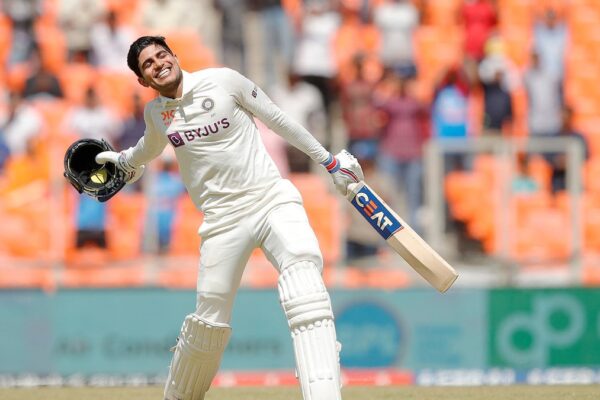
India vs England 2nd Test: What the hundred means to Shubman Gill

The muted celebration when Shubman Gill got to his third Test century fitted his knock. There were no angry gestures or loud cries or fist pumping. Just a sigh of relief followed by a smile. The hundred, too, was calm and composed, after the early wobble. For a batsman living on borrowed time when the squad for the England Test series was announced, the last three innings had pushed him to the verge of the exit door. With the squad for the three remaining matches yet to be named, Gill needed breathing space. On Sunday, as the locals turned up in numbers at Visakhapatnam, and luck shone brightly on him, Gill found the cushion he had desperately sought. From the time Gill walked in after James Anderson bowled Rohit Sharma with a peach, he looked tentative. When he and Shreyas Iyer were in the middle, it looked like a straight shootout between the two to lock a spot for the Rajkot Test. By the end of Day 3, he had his place locked at Rajkot, as his 104 took India to 255 in the second innings and set England a target of 399. At stumps, England were 67/1, needing another 332 runs to go 2-0 up. This was no means a flawless century from Gill. If anything, right through the stay, especially in the first half of his knock, he learned the areas he needs to work on. Even before he got to 25, he survived thrice, and in the process, exposing his problematic areas. Time and again, he tends to thrust his pad ahead of the bat. The incoming deliveries from the seamers continue to cause him trouble. When defending or driving, the long strides go missing, forcing him to lunge forward or push at the ball. For a batsman short on confidence and runs, he wasn’t running short of luck. First up, the snicko came to his rescue. Adjudged LBW to Tom Hartley to the one that went straight on, the snicko spotted a thin edge off his bat. It was a review that Gill had taken more out of desperation than conviction. As the big screen flashed ‘not out’ Gill would smile in disbelief. In the next over, James Anderson went for a review after Gill ended up missing one that seamed back in. This time, he was saved by the on-field umpire’s call on the height as the ball tracker showed it just about clipping the top of middle and leg stumps. Seven overs later, Hartley would draw him forward with one that gripped and turned, but the resultant edge would head to the boundary in the gap between Ben Foakes and Joe Root at first slip. Cause of concern For a batsman who had put his hand-up and wanted to bat at No 3 during the tour of West Indies, such glitches were beginning to be a cause of concern with every passing outing. Since scoring a century last year in the drawn Test against Australia at Ahmedabad, Gill’s string of scores prior to this innings read: 13, 18, 6, 10, 29*, 2, 26, 36, 10, 23, 0, 34 with the first two coming as an opener. Of course, since his debut series in Australia during the 2020/21 season, Gill hasn’t played on batting-friendly tracks. But in the last two at Hyderabad and Visakhapatnam, where India have gone back to traditional slow turners, Gill has looked as tentative at the start as he was on challenging decks. For No 3, India have largely relied on batsmen who can blunt the new ball by being defensive and set the base for their middle-order. With Gill, a more aggressive player by nature, they have opted for a change of direction, in tune with the times. But for it to work, they need Gill to fix these holes, for there is little place to keep attacking for a prolonged period without having a strong defence. That there are the likes of Rajat Patidar and Sarfaraz Khan waiting in the wings only added to the noise around Gill. It is not as if the 24-year-old was not aware of it. After the first Test, the noise was not just from outside. He could even hear it within the walls of the dressing room as well, with serious deliberation taking place whether to send Gill back to the domestic fold, especially with the Ranji Trophy’s league phase on. The century thus gives Gill space to work on his game, without any noise in the background. He would later say: “I think it’s very important to stay true to who you are and how you have gotten there. Sometimes if you get over defensive or over aggressive or try to play or try to be someone that you are not, then you are prolonging those (bad) innings. Then you’re sometimes not able to get out of that shell. Going into this test match I said ‘I’m going to play how I’ve played my cricket throughout’ and that was that.” for more sports news Click here

Read More

‘Sloppy’ ‘Want people more hungry’ ‘When Kohli comes back …’ Kevin Pietersen blasts Shreyas Iyer’s batting in second Test

Shreyas Iyer’s batting, labeling his innings as “sloppy” and expressing a desire for players in the dressing room with a greater hunger for success. Pietersen, in his critique on Jio Cinema, remarked, “Listen, when Kohli comes back and other guys come back [KL Rahul and Ravindra Jadeja], these are the days these boys are going to look back and go, ‘oh why did I not get a hundred? I had the opportunity to get the hundred.’ And when you are sloppy like that, getting out doesn’t impress me at all.” He went on to emphasize the need for players to seize the moment and dominate the game, saying, “You’ve got to really grab the game by the scruff of its neck and say I am not letting go here. I am afraid to say with Shreyas, it all seems a bit too sloppy. Sloppy is the word.” Former England cricketer Kevin Pietersen did not hold back in his criticism of Shreyas Iyer’s performance during the second Test against England. Pietersen referred to Iyer’s innings as “sloppy” and expressed a desire for players in the dressing room who exhibit greater hunger for success. Pietersen, speaking on Jio Cinema, remarked, “Listen, when Kohli comes back and other guys return [KL Rahul and Ravindra Jadeja], these are the days these boys are going to look back and go, ‘oh why did I not get a hundred? I had the opportunity to get the hundred.’ And when you are sloppy like that, getting out doesn’t impress me at all.” He emphasized the importance of players seizing crucial opportunities in the game, stating, “You’ve got to really grab the game by the scruff of its neck and say I am not letting go here. I am afraid to say with Shreyas, it all seems a bit too sloppy. Sloppy is the word.” During his innings, Shreyas Iyer scored 27 runs from 59 balls before being dismissed, under-edging an intended cut to the wicketkeeper off left-arm spinner Tom Hartley. Iyer’s unorthodox approach against pace and spin on a slow, batting-friendly pitch drew attention. James Anderson, the fast bowler, bowled a couple of overs with bouncers, and Iyer initially pulled them successfully. However, he later changed his approach, attempting to flat-bat the ball to the off side by shuffling outside leg, which proved unsuccessful and led to moments of amusement among the opposition players, including Ollie Pope. Shubman Gill too didn’t make the chance count, falling for 36 to his old failing of transfer of weight. James Anderson served him a series of length balls, tailing this way and that, around the off stump line before pushing one out wider. Gill lunged out, rather than glide out, and had a firm push at it, bat away from the body, and edged it. Virat Kohli and KL Rahul are expected to return for the third Test in Rajkot.

Read More

IND vs ENG: How Yashasvi Jaiswal saved the day for India with his intent and discipline

On most nights before a game Yashasvi Jaiswal listens to Celine Dion’s chartbuster soundtrack from the movie Titanic, “Every Night in My Dreams.” Whether he stuck to his tradition the night before the Visakhapatnam Test or not, he certainly composed a knock straight out of his dreams. It was near flawless and pivotal to his team’s cause, helping them from crashing onto an iceberg and drowning into the seas, steering them to relatively safe shores with an undefeated 179, more than half of India’s first-day total. It is his most influential knock yet. The pitch was flat, but the slowness made stroke-making difficult. England’s spinners were callow; one was a debutant, the other two had a combined experience of three games, but they bowled diligently. to keep India’s progress under check. The total of 336 for six is not formidable on this pitch, but the reason India reached this far only due to the 22-year-old’s application and hunger for runs. Every partner of his got a start, but departed without even a forty. The second highest score was Shubman Gill’s 34. But Jaiswal waged a lonely battle, repelling the waves and playing his strokes, ensuring that India remained in the game, and in the series, having lost the first Test in Hyderabad. There is an arc of redemption too. In the first Test at Hyderabad, his first at home, Jaiswal squandered a hundred-scoring chance. Until he remained in the crease, Jais-ball seemed to have an edge over Bazball. With his aggressive white-ball influenced approach, the left-hander had all the answers to what England threw at him. But he spilled his wicket on 80 runs, rather than kicking on to score a hundred and taking the game away from England.

Read More

Debut for Rajat Patidar, Washington Sundar in for Ravindra Jadeja, and a choice between Siraj and Kuldeep in India vs England 2nd Test.

India, aiming to level the Test series after losing the first match, faces England in the 2nd Test at Dr. Y.S. Rajasekhara Reddy ACA-VDCA Cricket Stadium, Visakhapatnam. Despite a strong position in the first innings, India faltered against Ollie Pope’s 196. Compounding the setback, key players Ravindra Jadeja and KL Rahul are injured and ruled out. England also adjusts as Jack Leach is now unavailable, prompting changes to their winning combination. Let us have a look at the probable XIs of both sides: Patidar sets to make his debut: The Madhya Pradesh middle-order batter is all set to replace KL Rahul. Patidar is gifted with timing and can play long innings as well. Patidar was also seen sweeping the likes of Axar Patel and Ravi Ashwin in the practice sessions ahead of the game. The 29-year-old in first-class cricket has made 4000 runs at an average of 45.97 with 12 centuries and 22 half-centuries. Replacing Jadeja poses a challenge for India, yet Sundar emerges as a viable option. His dual proficiency with the bat and ball was evident in his crucial 62 at Gabba, forming a valuable partnership with Shardul Thakur. Sundar’s sound technique and composed temperament were on display. In the 2021 India vs England series, he showcased his batting prowess with a stylish 85 in the first Test in Chennai. Toss-up between Siraj and Kuldeep: India predicted XI: Rohit Sharma (c), Yashasvi Jaiswal, Rajat Patidar, Shubman Gill, Shreyas Iyer, KS Bharat (wk), Washington Sundar, R Ashwin, Axar Patel, Jasprit Bumrah, Kuldeep Yadav. England predicted XI: Zak Crawley, Ben Duckett, Ollie Pope, Joe Root, Jonny Bairstow, Ben Stokes (c), Ben Foakes, Rehan Ahmed, Tom Hartley, James Anderson, Shoaib Bashir.

Read More

India vs England Highlights, 1st Test: Yashasvi Jaiswal, Shubman Gill hold fort in the middle at Stumps on Day 1

India vs England Highlights, 1st Test Day 1: Shubman Gill and Yashasvi Jaiswal in the middle as India ended the day at 119/1, still trailing England by 127 runs. IND vs ENG 1st Test Highlights:  Yashasvi Jaiswal (76*) and Rohit Sharma (24) started strong for India in their first innings before the latter was snapped up by Jack Leach. Shubman Gill would join Jaiswal in the middle and ended the day with India at 119/1, still trailing England by 127 runs. Earlier, Jasprit Bumrah picked up the final wicket of Ben Stokes to restrict England to 246 in the first IND vs ENG Test at the Rajiv Gandhi International Stadium in Hyderabad on Thursday. Before that, Ravindra Jadeja’s three wickets have restricted England to 215/8 at the Tea break. Joe Root and Jonny Bairstow’s partnership had taken England to 108/3 at lunch. Ravichandran Ashwin and Ravindra Jadeja reduced England to 60/3 after the visiting team’s captain Ben Stokes had won the toss and elected to bat first. While Ashwin claimed the wickets of Zak Crawley and Ben Duckett, Jadeja sent Ollie Pope back to the pavilion.

Read More

Shoaib Malik Getting Married to Pakistani Actor Has Indians Spewing Hate: ‘Feel For Sania Mirza’

In a surprising turn of events, seasoned Pakistani cricketer Shoaib Malik exchanged vows with Pakistani actor Sana Javed, sparking a wave of speculation surrounding his rumoured divorce from Indian tennis legend Sania Mirza. The cricketer took to ‘X’, formerly known as Twitter, on a Saturday to share glimpses of their wedding ceremony, leaving both sides of the border in shock. As discussions unfolded, Indians expressed their disapproval and unleashed brutal criticism, questioning Malik’s decision to engage in a ‘second’ marriage despite his existing marital ties with Mirza on paper. One disapproving user remarked, “That women (woman) legit opposed her entire nation and married you. People questioned her national commitment and called her names. People spewed hate on her and continue to do so just cause she married. And you cheat on her like this. Wow man. Wow. Men.” Another voice chimed in, highlighting Mirza’s resilience, “This incredible woman Sania Mirza went against the grain of her entire nation to be with him, enduring heaps of hate and criticism. And what did he do in return? You betray her trust by cheating. It’s just not right.”

Read More

Novak Djokovic Fires Up As Aryna Sabalenka And Jannik Sinner Shine At Australian Open

Novak Djokovic was back to his ominous best Friday with a straight-sets romp into the Australian Open last 16 as Aryna Sabalenka and Jannik Sinner emphatically stated their title credentials. On a dynamic day at the Australian Open, Novak Djokovic showcased his formidable form with a straight-sets victory, signaling a strong return to his championship bid. Aryna Sabalenka and Jannik Sinner also asserted their title aspirations, while young talents like Coco Gauff and Mirra Andreeva made compelling statements on the court. Defending champion Djokovic, a ten-time winner at the Australian Open, had faced challenges in his earlier matches, dropping sets and admitting to feeling under the weather. However, he regained his momentum with a convincing 6-3, 6-3, 7-6 (7/2) win against 30th seed Tomas Martin Etcheverry. Djokovic expressed satisfaction with his performance, considering it his best in the tournament so far. The world number one is now set to face French 20th seed Adrian Mannarino in the next round. Aryna Sabalenka, the defending champion on the women’s side, displayed dominance with a commanding 6-0, 6-0 victory over 28th-seed Lesia Tsurenko. Sabalenka, seeded second, continues her impressive run and will face Amanda Anisimova in the next round. Anisimova, making a comeback after eight months, secured a 7-5, 6-4 win against Paula Badosa. Jannik Sinner, the fourth seed, continued his strong form by dropping just four games in a comprehensive victory over Sebastian Baez. Sinner, yet to drop a set in the tournament, emphasized his confidence and will face Russian 15th seed Karen Khachanov in the next round. Mirra Andreeva, the 16-year-old Russian, continued her dream run with a resilient fightback against France’s Diane Parry, winning 1-6, 6-1, 7-6 (10/5). Another young Russian, qualifier Maria Timofeeva, extended her remarkable run with an upset win over 10th seed Beatriz Haddad Maia, becoming the lowest-ranked woman since 2017 to reach this stage at Melbourne Park. As the tournament progresses, the competition intensifies, with intriguing matchups ahead. Fifth seed Andrey Rublev, seventh seed Stefanos Tsitsipas, and 12th seed Taylor Fritz also secured victories, setting the stage for exciting clashes in the upcoming rounds. The Australian Open continues to deliver thrilling moments, with emerging talents challenging established stars on the grand stage of Melbourne.

Read More

Daniil Medvedev On Fire At Australian Open Despite Late Finish Taking Toll

Daniil Medvedev swept past Canada’s Felix Auger-Aliassime for a seventh straight time Saturday to power into the last 16 at the Australian Open despite feeling sluggish. In a dazzling display of skill and resilience at the Australian Open, Daniil Medvedev continued his impressive run by defeating Canada’s Felix Auger-Aliassime for the seventh consecutive time, securing a spot in the last 16. Despite a late-night finish in the previous round against Emil Ruusuvuori, where he managed a remarkable comeback from two sets down, Medvedev powered through the challenges to clinch a 6-3, 6-4, 6-3 victory. The Russian third seed acknowledged the toll of the late-night match, revealing that he had not gone to bed until 7:00 am. Despite feeling less than fresh and not at his optimal condition, Medvedev showcased his determination and tactical brilliance on the court. He strategically focused on delivering tough shots to his opponent, minimizing the need for extensive running. Looking ahead, Medvedev is set to face Portugal’s Nuno Borges in the next round. Borges, ranked 69th in the world, created a major upset by defeating the 13th seed Grigor Dimitrov in four sets. Medvedev, a two-time Australian Open runner-up, expressed satisfaction with his performance, particularly in the third set, where he executed some impressive shots. Reflecting on his flawless 6-0 record against Auger-Aliassime, which included saving a match point in a thrilling five-set encounter in the 2022 quarter-finals, Medvedev highlighted the contrasting nature of their latest match. This time, Medvedev dominated from the start, earning an early break in the opening set and maintaining control throughout. Despite a brief setback when Auger-Aliassime broke immediately in the second set, Medvedev quickly leveled the playing field and took a commanding lead. Known for his ability to transition from defense to attack seamlessly, Medvedev showcased his prowess with entertaining baseline rallies. With an unrelenting determination to reach the finish line, Medvedev sealed the victory in two hours and nine minutes. As he progresses in the tournament, tennis enthusiasts can anticipate more thrilling performances from the Russian star, who aims to overcome the challenges posed by the demanding schedule and continue his pursuit of Grand Slam glory at the Australian Open.

Read More

Indian women’s hockey team to miss Paris Olympics after 0-1 loss to Japan

The Indian women’s hockey team faced a significant setback in their quest for Olympic qualification as they lost 1-0 to Japan in the third-place playoff at the FIH Olympic qualifier in Ranchi. The defeat means that India will not be able to participate in the Paris Olympics, following their semifinal finish at the Tokyo Olympics. Japan secured their victory with a goal from Kana Urata’s penalty corner conversion midway through the first quarter. Despite India’s dominance in possession and territorial advantage in the later quarters, they failed to find the back of the net, struggling against Japan’s solid defense. Despite having nine penalty corners, India couldn’t convert any, and their attempts to break down Japan’s organization proved futile. Captain Savita Punia might reflect on the conceded goal, as it went through her legs during an attempt to kick it away. The toll of the previous night’s semifinal shootout defeat to Germany seemed evident in India’s performance, as they started the game on the back foot. The team seemed to lack a clear plan, resorting to hopeful hits into the circle rather than a strategic approach. Even when Japan received a late green card, reducing them to ten players, India’s coach Janneke Schopman didn’t opt to remove the goalkeeper for an extra outfield player. This decision raised questions, as an additional player might have created more opportunities, especially when Japan had one less defender. The disappointing outcome in Ranchi adds to India’s recent struggles, including underwhelming performances in the 2022 World Cup and the 2023 Asian Games. The teary end in Ranchi could potentially jeopardize Schopman’s position as India’s coach, as achieving Olympic qualification was considered a minimum requirement. While India had their moments during the week in Ranchi, they fell short in crucial situations. Japan’s disciplined adherence to their game-plan frustrated India, ultimately earning them the win and a spot in the Paris Olympics.

Read More

India miss the goals, miss consistency, miss out on Olympics

It is a cruel blow for Indian hockey. Almost three years since the Indian women’s team finished fourth at the Tokyo Olympics, they suffered a devastating loss in the third-place playoff against Japan at the FIH Women’s Hockey Olympic Qualifiers in Ranchi and will miss the Paris Olympics. While it seemed like Indian hockey and the women’s team were starting a positive chapter with their performances in Tokyo, Japan endured a tough campaign at home. The women’s team lost all their matches. Now, under head coach Jude Menezes, the former India goalkeeper, Japan have turned their fortunes around and qualified for the Paris Games with a 1-0 win over India. We take a look at India’s takeaways from what eventually turned out to be a dismal tournament: Inconsistent performances hamper India In a tournament where the top three teams were guaranteed qualification for the Paris Olympics, India ended up fourth. They did not play to their strengths against the USA but did well in the next two games to win them. They lost a close semifinal against the Germans and then failed to break down Japan’s defence. After being pretty ordinary against the USA, India found the goals, mainly through Salima Tete and Udita Duhan, to win against New Zealand and Italy. India qualified for the semifinal, but it was evident that they needed improvement, in terms of other players contributing. They did that against Germany, where the team finally clicked as a unit. India defended well and took their chances under pressure with the match ending 2-2 in regulation time. But strangely, the team faltered in the next match against Japan where their attack and defence (at least in the first half) struggled. India conceded two penalty corners in the opening five minutes of the first quarter and Japan scored from the second chance. Not just the goal-scoring chance, India allowed Japan to dominate in the first half, leaving plenty of open spaces in midfield and defence. Even the best falter at crunch time The inconsistency also came to bite arguably India’s two best players from this tournament – Salima Tete and Udita – who both had off days against Japan. Salima, whose finishing improved massively over the year, missed a golden chance in the dying minutes of the match. She had the ball inside the circle on the left, she did well to control it and went for a shot but missed the target. There were two Indian players — Nisha Warsi and Jyothi in front of goal and ready to receive the pass but it ended up being a bad choice to shoot and a bad miss from Salima. In terms of chance creation as well, she didn’t do enough when her team needed her the most. Udita, meanwhile, was guilty of leaving too much space behind her in the backline which allowed Japan to dominate the left side of the field. She missed a couple of her tackles in the opening quarter, which resulted in Japan entering the circle from the left and creating goal-scoring chances. While she was successful with her penalty corners in the previous matches, she failed against Japan despite multiple attempts. Eventually, India did not convert any of their nine penalty corners.

Read More