officialsquarexsports

Playing all games in Dubai is an advantage, concedes Shami

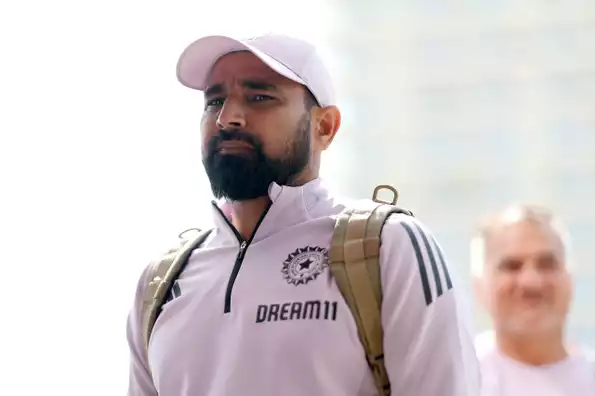
Having to stay and play in one city is a definitive advantage, felt Mohammed Shami, a stance that contrasts with the perspective of the Indian team management, including the captain and coach. “It is certainly helping us. We know the conditions and the behaviour of the pitch,” Shami said after India beat Australia to enter the final. His comments could provide ammunition to critics of the Indian team, who have voiced concerns over India being allowed to play all their games in Dubai. “It is certainly an advantage to play all the matches at one venue,” said Shami, who took three wickets for 48, following the game on Tuesday night (March 4). Skipper Rohit Sharma and coach Gautam Gambhir have spoken quite the opposite. “This is not our home, this is Dubai. So, we don’t play so many matches here. This is new for us too,” Rohit said, dismissing the talk of advantage. Gambhir added, “This is as neutral a venue for us as it is for any other team. We have not played here. I don’t remember which tournament we played in this stadium last. And in fact, we didn’t plan anything like that.” Nasser Hussain and Michael Atherton kick-started the debate by speaking about the topic in a Sky Sports podcast. “What about the advantage India have in playing in Dubai, only in Dubai? Which seems to me to be a hard-to-quantify advantage, but an undeniable advantage,” said Atherton on the recent podcast to which Hussain agreed. India will face New Zealand in the final on March 9 at Dubai International Cricket Stadium (DICS). It will be their fifth match in a row at the venue, while New Zealand too have some experience here, having played their group game against India which they lost.

Read More

New Zealand earn trip back to Dubai with deserved success

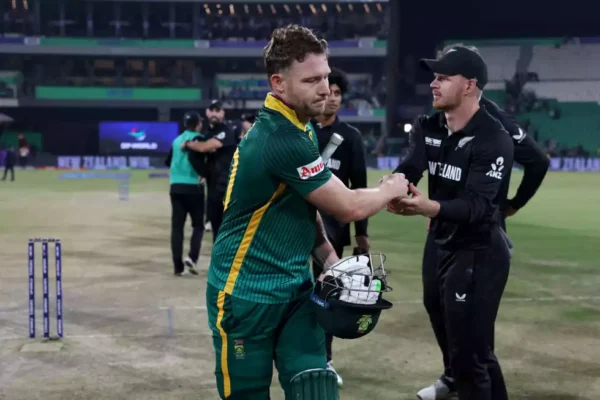
“Vuma! Vuma! Vuma!” It isn’t often any crowd chants Temba Bavuma’s name, or even a reasonable facsimile thereof. But the stands at Gaddafi Stadium in Lahore aren’t filled by just any crowd. These are people who, between the 1996 World Cup final and this edition of the Champions Trophy, didn’t see an ICC event up close and personal. Indeed, they didn’t see any international cricket from March 2009 until May 2015 because of a terror attack on Sri Lanka’s bus as the visitors made their way to the ground on the third day of a Test. A dozen assailants killed seven and injured six. Sadly, Lahore didn’t see their beloved home side during the Champions Trophy. Pakistan played their first match, against New Zealand, in Karachi. Their second, against Bangladesh in Rawalpindi, was washed out entirely. What would have been the spectacle of the group stage, the match between Pakistan and India, could, would and should have been played in Lahore. Instead, it was relegated to the nowhereness of Dubai. Sunday’s final would also have been staged in Lahore. But, as India are involved, it’s in Dubai. Because of security and political reasons, the BCCI would not allow the Indians to set foot in Pakistan. For financial reasons and organisational deficiencies, the ICC were in no position to argue with the BCCI. On this or any other issue. So the spectators in Lahore on Wednesday knew they were watching their last match of the tournament. Like they have done for the other games there – between England and Australia, Afghanistan and England, and even the washed out fixture between Afghanistan and Australia – the fans waved the flags of both competing countries, wore shirts suggesting support for a range of teams who were not Pakistan, except India, flourished posters heralding favoured players, and were generally giddy with the joy of seeing two of the best teams in the game come to them for a change. But on Wednesday there was also something else, something more, something that was communicated all the way back to South Africa: “Vuma! Vuma! Vuma!” Bavuma had just launched Kyle Jamieson over backward square leg for the first six of South Africa’s reply. He crunched Jamieson’s next offering on the ground and into the covers for what looked like a certain boundary before Glenn Phillips did what Glenn Phillips does and swooped and slid and smothered. That was in the throes of a run-a-ball stand of 105 with Rassie van der Dussen. They earned the South Africans powerplay parity – both teams were 56/1 after 10 overs – and kept them in the hunt until Bavuma sliced the ball that had turned the most at that stage of the match, from Mitchell Santner, to backward point in the 23rd. Then Santner bowled Van der Dussen with another sharply turning delivery and had a heaving Heinrich Klaasen caught at long-on by a tumbling Matt Henry, who immediately left the field clutching his bowling shoulder but returned later and bowled again. And then Rachin Ravindra gratefully accepted a return catch from Aiden Markram. Those three wickets disappeared for 28 runs in 38 balls. South Africa had been four runs behind New Zealand and level on a wicket apiece after 20 overs. After 25, the runs were level but the South Africans had lost one more wicket. After 30 South Africa were seven runs and three wickets adrift. The game slipped away from Bavuma’s team – as Ernest Hemingway wrote – gradually, then suddenly. They dwindled to 200/6 after 36, and reached 312/9 with David Miller completing an unbeaten 100 off 67 with the last ball of the match. In the unbroken stand of 56 off 27, Lungi Ngidi faced two and scored one. Winning was always going to be tough after New Zealand made 362/6, which was, and remains, the highest total in this tournament’s history. It was a tower built around the steel of a partnership of 164 off 154 by Ravindra and Kane Williamson. Ravindra unfurled his youthful exuberance and outrageous talent to score 108 off 101. Williamson deployed his eons of experience and peerless imperturbability to make 102 off 94. Maybe South Africa would have done better had their opponents been Australia. Only twice in the 4,854 men’s ODIs played before Wednesday had a team successfully chased more than 363. Twice, that team were South Africa. Twice, their opposition were Australia. There was the South Africans’ 438/9 – still the world record chase – at the Wanderers in March 2006. And their 372/6 at Kingsmead in October 2016. Thus the New Zealanders will return to the scene of their defeat by India by 44 runs on Sunday. It will be the seventh time the Kiwis have been in an ICC final across the formats. They have won two. The South Africans will go home having won only six of their 21 knockout matches in ICC events. This one – a fair and square loss to the team who played the better cricket, and not at all a choke – might hurt less than some of the other disappointments. Bavuma’s team were forced to fly to Dubai on Sunday because, if New Zealand had beaten India that day, South Africa would have had to play Tuesday’s semi against the Indians there – where Rohit Sharma’s side have been ensconced for the entire tournament. The South Africans were in the Emirates for around 18 hours before they left for Lahore. How much enthusiasm would there have been for a trek back to Dubai, even with a trophy on the line? The same question could be asked of the New Zealanders. The Indians? They’ve made the trip of a handful of kilometres from the same hotel to the same ground four times now. Once more shouldn’t be too taxing.

Read More

Steve Smith retires from ODIs

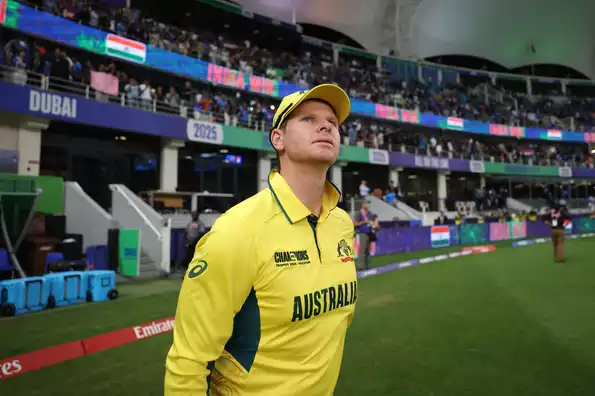
Australia’s star batter Steve Smith has announced his retirement from One-Day Internationals. The middle-order batter’s final appearance in ODIs came in the Champions Trophy semifinal against India in Dubai in which he top-scored for Australia with 73 in a losing cause. The 35-year-old batter featured in 170 ODIs, scoring 5800 runs at an average of 43.28 and a strike rate of 86.96, including 12 centuries and 35 half-centuries. He finished his career as the 12th highest run-getter for Australia in ODIs. He registered his highest score of 164 against New Zealand in 2016. Having made his debut as a legspinning allrounder, he also picked 28 wickets and took 90 catches. According to a Cricket Australia media release, Smith told his team-mates after the semifinal loss that he’ll retire from ODIs immediately. Smith, meanwhile, will continue to be available for Test cricket and Twenty20 Internationals. “It has been a great ride and I have loved every minute of it,” Smith said. “There have been so many amazing times and wonderful memories. Winning two World Cups was a great highlight along with the many fantastic teammates who shared the journey. “Now is a great opportunity for people to start preparing for the 2027 World Cup so it feels like the right time to make way,” he added. “Test cricket remains a priority and I am really looking forward to the World Test Championship Final, the West Indies in the winter and then England at home. I feel I still have a lot to contribute on that stage.” Smith was part of Australia’s ODI World Cup-winning squad in 2015 and 2023, and he took over the captaincy of the 50-over side following the retirement of Michael Clarke. He led Australia in 64 matches, winning 32 and losing 28, with four no results. He took over the captaincy on an interim basis for the Champions Trophy, filling in for Pat Cummins, who was out injured. Speaking about Smith’s decision, George Bailey, the chair of men’s selectors, said: “We fully understand and support Steve’s decision to retire from One Day International cricket. Steve has said on many occasions he is approaching the remainder of his playing career on a series-by-series basis, a position which hasn’t changed and one Cricket Australia supports. “His record as a batter across 167 games is exemplary and to leave the format as a two-time World Cup winner cements his legacy as one of the great Australian ODI players. From an NSP standpoint, Steve remains fully committed to Test cricket and is an integral member of and leader within that team.”

Read More

Little to separate New Zealand from South Africa

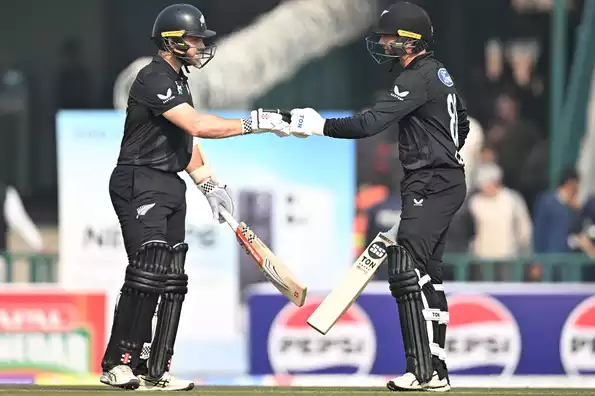
In an increasingly mealy-mouthed cricket world, Herschelle Gibbs isn’t often without a strong opinion on anything related to the game. But, on Tuesday, he paused, considered his verdict, and could manage only, “Not a lot to choose between those two.” Gibbs was trying to lean this way or that about which team might win the Champions Trophy semifinal between New Zealand and South Africa in Lahore on Tuesday. In fairness to him, it was a throwaway line delivered as he warmed up for a session in a Cape Town gym. So it wasn’t as if he was being asked to apply his mind to the question. But in other, similar situations in the same gym, he hasn’t hesitated to fire the sharpest of views, many of which would have had to be censored out of shape before they could be presented in forums like this. If even Gibbs, who is among the most perspicacious pundits out there, struggles to see how a team could get the upper hand in this match, how might the rest of us parse them? Even their travel schedules have been similar. The New Zealanders arrived in Lahore on Monday having made the pilgrimage to Dubai to play India – the only team among the eight in the tournament allowed to not be in Pakistan – on Sunday. The South Africans and Australia were also there. Had New Zealand won, South Africa would have played India in Tuesday’s semifinal. India’s victory, by 44 runs, meant the Aussies stayed in Dubai for Tuesday’s game. Having spent 18 hours in the Emirates neither playing nor training, South Africa travelled from there to Lahore on Monday. It seems an age ago that New Zealand and South Africa met in an ODI, but it will be just 24 days ago when Mitchell Santner and Temba Bavuma walk out for the toss on Wednesday. And it was at the same ground to boot. New Zealand won that Tri-Nations game by six wickets with eight balls remaining, but South Africa’s XI on Wednesday will be markedly different. Of that squad of 13, only Temba Bavuma, Heinrich Klaasen, Wiaan Mulder and Keshav Maharaj are in the Champions Trophy 15. By contrast, Kyle Jamieson is the only New Zealand player in the current tournament who wasn’t also involved last month. That, at least, is a clear point of difference between the sides. As is the fact that South Africa are coming off two wins – over Afghanistan by 107 runs in Rawalpindi last Tuesday and England by seven wickets in Karachi on Saturday – having lost their three previous ODIs. The Kiwis’ loss to India on Sunday was their first defeat in five matches in the format. In the Champions Trophy, they beat Pakistan by 60 runs in Karachi on February 19 and Bangladesh by five wickets in Rawalpindi five days later. But that’s where the differences dry up. New Zealand and South Africa have each scored one of the six totals of 300 or more in the tournament, both in Karachi. They each have a player – Tom Latham and Ryan Rickelton – among the top 10 runscorers, but New Zealand have three of the leading 10 wicket-takers in Matt Henry, Will O’Rourke and Michael Bracewell. South Africa have only Wiaan Mulder. But the South Africans have Mulder and Keshav Maharaj in the top 10 economy rates, where Bracewell is the sole New Zealander. Gibbs would not have considered all of that when he said what he said. He didn’t need to. You don’t have to crunch the numbers to know that there is precious little to choose between these two teams. When: March 5, 2025; 14:00 Local, 11:00 SAT, 14:30 IST Where: Gaddafi Stadium, Lahore What to expect: No rain and a forecast high of 23 degrees Celsius. And, of course, runs – four of the five biggest totals in the tournament have been scored in Lahore. Team news New Zealand: If the choice is between Nathan Smith and Kyle Jamieson, Smith might crack the nod because of his better batting ability. Probable XI: Will Young, Devon Conway, Kane Williamson, Rachin Ravindra, Tom Latham (wk), Glenn Phillips, Michael Bracewell, Mitchell Santner (capt), Nathan Smith, Matt Henry, Will O’Rourke South Africa: George Linde was due to join the squad in Lahore on Tuesday night as a travelling reserve. However, Aiden Markram has been declared fit to play the game. Probable XI: Ryan Rickelton, Temba Bavuma (capt), Rassie van der Dussen, Aiden Markram Heinrich Klaasen (wk), David Miller, Marco Jansen, Wiaan Mulder, Keshav Maharaj, Kagiso Rabada, Lungi Ngidi Did you know? * South Africa are the only country who have been represented in the knockout stages of the last seven ICC tournaments, regardless of age group or gender. * New Zealand have won both men’s knockout games they have played against South Africa, in the 2011 and 2015 World Cups. * Both teams have won this trophy, South Africa in 1998 and New Zealand in 2000, when it was still called the ICC Knockout. What they said: “Scheduling is an issue all around. I don’t know what you can change. With the heavy international schedule and the franchise schedule, and then trying to schedule ICC events, it can be a challenge.” – Mitchell Santner makes his contribution to the ongoing scheduling conversation. “Probably logistically things could have been more efficient. But the guys did enjoy the time to galavant in Dubai. Some played golf, some went sightseeing, some went to the mall. So it was quite enjoyable from that perspective. For other guys it was just another day to recover. The guys made use of it as best they could. It probably wasn’t necessary in the end, but it is what it is. We won’t use that as an excuse in terms of our preparation.” – Temba Bavuma on South Africa’s enforced visit to India’s home away from home, Dubai.

Read More

Prague Masters chess: Praggnanandhaa to take on Shankland after lone rest day

With a career-high world ranking of No.8 as per the latest published list, Grandmaster R Praggnanandhaa will take on American Sam Shankland in the sixth round of the Prague Masters after a rest day on Tuesday (March 4, 2025). Tied at the top spot with compatriot and friend Aravindh Chithambaram, Praggnanandhaa tried to break the defences of his fellow countryman for a long time but only ended up with a draw. The two are now on 3.5 points each out of a possible five. Aravindh was surprised after his second win in the tournament. “I don’t know what’s happening to me here,” said Aravindh, who has also beaten top seed Wei Yi of China in the tournament. The Indian, who has arrived big time in to the elite circles, now will have to tackle the experienced Quang Leim Le of Vietnam in the next round. The two Indians are followed by a pack of four players having 2.5 points each. The most dangerous of the lot is Wei Yi who started with two losses in the first three rounds and then won two in a row to send warning signals to his competitors. Anish Giri and Quang Leim hold the dubious distinction of drawing all the five games thus far while Vincent Keymer has lost two, drawn one and won two out of his five games. Aravindh has been the pick of the tournament so far, as not many had given him a chance. The former national champion has been working very hard and this is the first time he has got a real platform to showcase his real skill-set against the top GMs. Praggnanandhaa has been exceptional in his two victories thus far, against Keymer and Nguyen Thai Dai Van. But his white pieces are not necessarily giving him any serious advantage. It is well known that he makes up for it with his superior calculation skills, and much will depend on it especially against Shankland who also leaves no stone unturned in trying to carve out a niche for himself. Following the contest against Shankland, Praggnanandhaa will have white pieces against Quang Leim and Wei Yi while in the last round he is pitted against the super-solid Giri. For Aravindh, the road could be slightly easier as he has only the bottom field to compete against. In the seventh round, the Indian will play Giri, followed by David Navara of the Czech Republic before finally taking on Gurel Ediz of Turkey in his last round. In the Challengers section, the lone Indian, Divya Deshmukh has got 1.5 points. She will try to gain some important rating points in the last four rounds, which will help her regain some confidence after the losses in the Tata Steel tournament earlier this month. Pairings (Round 6): Sam Shankland (USA, 2) vs R Praggnanandhaa (Ind, 3.5); Aravindh Chithambaram (Ind, 3.5) vs Quang Leim Le (Vie, 2.5); Wei Yi (Chn, 2.5) vs Gurel Ediz (Tur, 2); Nguyen Thai Dai Van (Cze, 2) vs David Navara (Cze, 2); Vincent Keymer (Ger, 2.5)vs Anish Giri (Ned, 2.5). Challengers: Finel Vaclav (Cze, 1.5) vs Divya Deshmukh (Ind, 1.5); Ivan Salgado Lopez (Esp, 3) vs Richard Stalmach (Cze, 2); Stamatis Kourkoulous-Arditis (Gre, 2) vs Nodirbek Yakubboev (Uzb, 4); Jonas Buhl Bzerre (Den, 3.5) vs Marc`andria Maurizzi (Fra, 3); Nemec Jychym (Cze, 2) vs Ma Qun (Chn, 2.5).

Read More

Varun completes redemption arc by exorcising the ghosts of Dubai

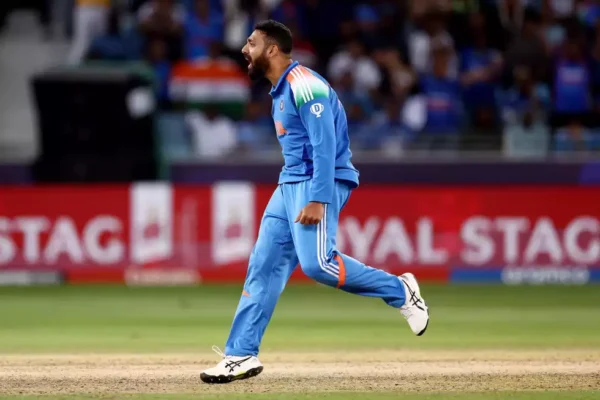
There seems to be a karmic connection between Varun Chakravarthy and the Dubai International Cricket Stadium (DICS). In 2021, it was here that then-India coach Ravi Shastri first saw him and declared him a match-winner, recommending his inclusion in the Test squad for the upcoming tour of Australia. Days later, he was treated like a club cricketer by Babar Azam and Mohammad Rizwan, as Pakistan sauntered to a commanding 10-wicket victory in Twenty20 World Cup. It was also here that he was asked to open the bowling against New Zealand in the same tournament, only for him to return wicketless, once again. His so-called ‘mystery’ had clearly fizzled out. On Sunday night, both his mojo and mystery were back. Given the inconsequential nature of the game, India fielded a crack, experimental squad that included four spinners and only one specialist fast bowler. Chakravarthy, the fourth spinner, made an instant impact, returning with five wickets, and shook off the ghosts of 2021 as India cantered to an emphatic 44-run victory in a rather low-scoring game. “Yeah, of course, in 2021, we didn’t have — I didn’t, personally, have a great tournament here. But I do feel that I did bowl decently. But the results were not our way. But it looks good right now. And Team India is doing well,” Chakaravarthy noted, looking back. In three spells across ten overs, he pulverised the New Zealand batsmen with variations and left the Indian team management in a tizzy whether to pick him for the semifinal against Australia in a couple of days. “He has something different about him, so wanted to try and see what he can offer. We haven’t thought much about the next game, but it’s a good headache to have,” skipper Rohit Sharma said post-match. “Oh, he bowled beautifully, didn’t he?,” said Matt Henry, the New Zealand pacer who himself had a five-wicket haul in the match. “I think he showed his skill tonight, the way he turned the ball both ways, and even the way that he could bowl pace. I thought he was brilliant.” Henry’s figures were identical to Chakaravarthy’s – 5 for 42. The New Zealand batsmen, in pursuit of a modest 250, were cruising at 93 for two but as their skipper Mitchell Santner said, India squeezed them well with their four quality spinners. The standout among the four, of course, was Chakaravarthy who, incidentally, was only playing his second ODI. As a bowler, Chakravarthy is an enigma. Even someone as high profile as Rohit Sharma says that Chakravarthy doesn’t bowl all his variations, even in the nets. He is said to keep the mystery element close to his chest, so that the batsmen do not sort him out. On Sunday, however, he was in a mood to reveal the secrets of his bowling. “Basically the ball that goes inside, outside and goes straight. So, you can keep it that way but there are minute changes that you can do with that also,” he said, decoding his bowling. If only it was so simple. His mystery element is so subtle that picking him becomes as challenging as trying to play a white ball against a white sight screen. Batsmen facing him should vouch for that. There are a few minute nuances that are difficult to pick – his point of delivery, drift in the air, change in speed and length. Accuracy is another key strength of Chakravarthy, who primarily relies on deception. He is difficult to pick, and when the wicket offers support, as it did at DICS on Sunday night, it becomes a double whammy for the batsmen. Chakravarthy completed his full quota of 10 overs, and of the 60 deliveries he bowled, the five that mattered most – the wicket-taking ones – might not have been his best of the night. Will Young played one onto the stumps, becoming Chakravarthy’s first victim. Glenn Phillips, after hitting a six, grew a bit too ambitious, Michael Bracewell was given out LBW that was not and Mitchell Santner fell to a seam-up delivery that lacked any real mystery. Finally, Matt Henry was dismissed while attempting to accelerate. But the quality and deception in other 55 deliveries may have earned him the success in those seemingly innocuous deliveries. “Yeah, I think I can do it better,” he admitted later. “But I would definitely not term it as luck. But it was definitely planned out. I planned out all the deliveries. And if it happens, it happens. In cricket anything can happen and can’t term it as luck.” With enough time in the one-dayers, it’s always a challenge for the 33-year-old Chakravarthy, who is primarily a product of T20 cricket. He thrives in the shorter format because, unlike in the ODIs, batsmen are often in a haste to attack him in T20s. However, the Tamil Nadu and Kolkata Knight Riders spinner has evolved, sharpening his craft in the 50-over Vijay Hazare tournament in domestic cricket. “It really helped me to understand when I can bowl my incoming delivery, outgoing delivery or the straighter one,” Chakaravarthy said, speaking about his shift to the 50-over game. “That gave me a sense of awareness of when to bowl. It is completely different from what I do in the T20. So, yeah, it took me a lot of playing.” That transition will face its big test on Tuesday when India take on Australia in the semifinal.

Read More

Holt overpowers Mochizuki to clinch his second ATP Challenger title

Brandon Holt’s two-week India sojourn had the sweetest of endings as he clinched the Bengaluru Open singles title with a 6-3, 6-3 win over Shintaro Mochizuki at the KLSTA courts here on Sunday. It was only Holt’s second ATP Challenger title — both of which have come this year — and he will be richer by $28,400. But most importantly, the 125 points earned – along with the 50 he received for a runner-up finish in Pune – will leave the 26-year-old on the cusp of the top-100 in Monday’s rankings, a new career high. “It’s my first time in India and it has been great,” Holt told the sizeable weekend crowd after the victory. “The energy of the fans has always been high. Thank you so much.” For Mochizuki, the defeat was his first in three Challenger finals, and by the end of the match, he was teary-eyed and seemed thoroughly broken. Perhaps he thought he deserved more for the intent he showed all evening. The Japanese player went for the lines repeatedly but his inability to hit through the court meant Holt got to nearly every single ball. The American played to a plan – to keep the ball in play, draw mistakes from Mochizuki and pull the occasional trigger. And this strategy worked like a dream, but for a fleeting game or two. In the first set, Holt broke in the second and sixth games, and Mochizuki got a consolation break in the seventh. In the second stanza, Mochizuki, more than once, tried to advance into the court and execute a meaty drive to breach Holt’s defence. But it didn’t work, and even proved his undoing at crucial times – on break-point in the third game when Holt broke and on break-point in the eighth game when Holt held. On his part, Holt hit with style and panache when he absolutely had to, like the thunderous inside-out forehand to break in the opening game of the second set. The final straw for Mochizuki was the break in the ninth game. Serving to stay in the contest, the 21-year-old dumped two consecutive double-faults to give Holt a match-point. A misjudged overhead that crashed into the net brought the curtains down.

Read More

Jos Buttler resigns as England’s white-ball captain

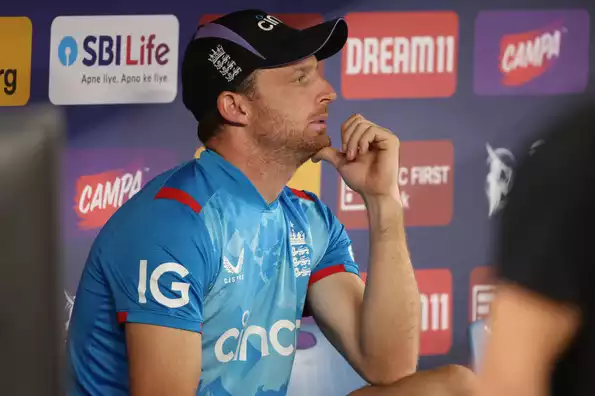
Jos Buttler has decided to stand down as England’s white-ball captain at the end of the team’s campaign in the ongoing Champions Trophy 2025. The 34-year-old announced his decision in Karachi ahead of the team’s last league game, against South Africa. “It’s the right decision for me, it’s the right decision for the team and hopefully somebody else who can come in and work closely alongside Baz [Brendon McCullum] to take the team back to where it needs to be,” Buttler said in a press conference on Friday (February 28). Buttler admitted that the decision was forced by his team’s early elimination from the Champions Trophy following back-to-back losses against Australia and Afghanistan in Lahore. The former World Champions had already endured a poor run of ODI form coming into the tournament, having suffered a 0-3 whitewash at the hands of India a week prior to the tournament in Pakistan and the UAE. “Yeah, I think it’s quite clear that this tournament was going to be important results-wise for my captaincy and obviously two losses and being out of the tournament with a bit of a hangover of some tournaments before, I think I just probably reached the end of the road for me and my captaincy, which is a shame,” Buttler said. “I think overriding emotions are still sadness and disappointment, but I’m sure in time that will pass and I can get back to really enjoying my cricket and also be able to reflect on what an immense honour it is to captain your country and all the special things that come with that.” Buttler took over the reigns of England’s white-ball sides following Eoin Morgan’s retirement in 2022 and instantly won the T20 World Cup in Australia later that year. But results in the two formats nosedived thereafter as England were knocked out in the group stages of the 2023 ODI World Cup. They then crashed out at the semifinal stage in the defence of their T20 crown, losing convincingly to India in Guyana. Amid the dwindling fortunes, England & Wales Cricket Board (ECB) got Brendon McCullum to coach the white-ball sides starting 2025 in addition to his Test match responsibilities. But his partnership with Buttler didn’t result in any quick fixes as England lost nine of the 10 white-ball games since the turn of the year. In all, Buttler captained England in 44 ODIs and 51 T20Is, winning 18 and 26 games respectively. He has the second-worst win-loss ratio in ODIs for any England captain with a minimum of 15 games led. “I’m sad about that and obviously with Brendon coming in only recently, I was really excited to work closely alongside him and hope for a very quick turnaround and take the team forward, but it’s not quite worked out that way. It just feels like it’s the right time for me and also for the team to have a change,” Buttler said. McCullum echoed some of Buttler’s thoughts: “I feel incredibly sad for Jos. We’ve all seen over the last couple of years how much he has invested in captaining his country and trying to get the very best out of those guys around him. “People forget he won the World Cup a couple of years ago and that can never be taken away from him. He’s done a significant job, often without his best players available, so it is incredibly unselfish from Jos to step aside and to leave the post to someone else. “He is still a huge player for us moving forward and I’m sure we’ll look at ways to get the best out of him so he has maximum impact as well,” McCullum opined.

Read More

Finding their groove: Delhi Capitals hit the right notes at the perfect time

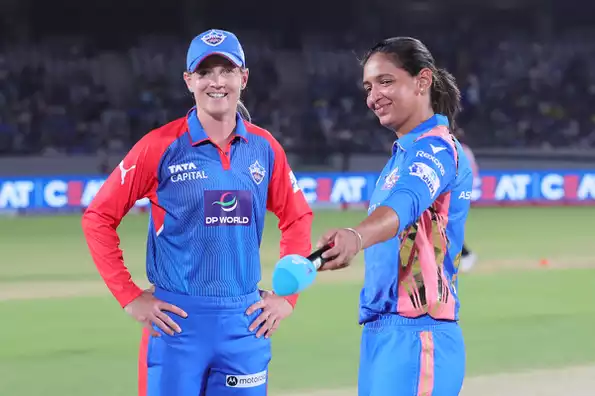
Mumbai Indians’ three-match victory march has come to an end, and it’s Delhi Capitals blowing that whistle to halt it again. This time though, unlike the tense, stuttered scrap to the finish line like in the previous contest, they overhauled the target with a cozy, comfortable cruise. It was not simply a win that helped them bag two points; it was a statement of dominance, a reminder of the strength they possess and one that they threaten to unleash in the critical half of the ongoing Women’s Premier League. With the target to chase as low as 124, it was always expected to be easy work in the second innings for Delhi Capitals. That Shafali Verma and Meg Lanning, the most destructive pair in WPL history, decided to twin strong on the night made the workload far easier. Defending a low total, Mumbai Indians found an early sniff, with Lanning yet again, getting beaten by an incoming delivery. Ismail’s in-nipper hit Lanning on the pads on the first ball of the run-chase, and a desperate Mumbai Indians even went for a review, but in vain. Ismail peppered the out-of-form DC captain with some steam, but she countered it with elegance, driving an overpitched delivery for a boundary and then steering the next through slip and gully for another. At the other end, Shafali authoritatively took on Nat-Sciver Brunt’s short-pitch barrage and smashed her all around, the most productive of the overs yielding 16 runs. With 57 runs ticked off in the powerplay, the early carnage by the duo closed the contest. But the assault was reserved for no one. Not even Amelia Kerr, who followed with her legbreaks. It’s only on rare days that cumulatively neither Ismail, Nat Sciver-Brunt, Kerr nor Hayley Matthews makes an impact with bat or ball. Friday evening’s contest was a rare witness to that off-day for them, and as a result, Mumbai Indians put on one of their most toothless performances, the kind of off-day where nothing worked out — like it was for Royal Challengers Bengaluru a day earlier. But for as off a day as it was for the inaugural champions, with not a single performer standing out, it was as clinical a display from Delhi Capitals on all fronts. The signals didn’t come on early, with Marizanne Kapp struggling to find her lengths and Yastika Bhatia and Hayley Matthews both pulling a boundary each within the first four balls of the innings. The early tempo was set, but then came the challenge that has befuddled many team coaches in the Bengaluru leg – the uncertainty of the conditions, the uncertainty of the gameplans and the inability to pinpoint what exactly is troubling the batters in the powerplay beyond the obvious movement of the ball. Shikha Pandey was quick to find her lengths, and just when it seemed that Mumbai Indians could take the early advantage, she got an edge off Bhatia’s bat to the ‘keeper en route to a wicket-maiden in the last over of the powerplay. It proved to be the turning point of the contest, from where Mumbai Indians struggled to recover. They ended up consuming 55 dot deliveries. Boundaries too were rare. In the post-powerplay period, there were only six hits to the fence, and one six. MI batters did their bit to manufacture shots on a slowish surface, but Delhi Capitals had also strung through one of their most disciplined performances with the ball through the middle and end phases. Even as the scoring rate was underpar, briefly, Harmanpreet Kaur and Sciver-Brunt had promised to set a strong stage for a late surge. Both departed in quick succession, and the incoming batters didn’t find it any easier to get going.

Read More

Mumbai Indians look to keep up Chinnaswamy run

Mumbai Indians are at home. The M Chinnaswamy Stadium might be red and buzzing for RCB, but the inaugural champions are the ones who’ve arrived in style in Bengaluru. Just a night before MI take the field for the third time at the venue this season, Smriti Mandhana’s team limped to their third straight loss at the venue. Harmanpreet Kaur’s side meanwhile have two wins in two there, and harbour hopes of keeping that run going to stay put at the top of the points table. Before MI took flight, with three successful run-chases that was facilitated by the combination of luck at the toss and all-round effort with the ball, they were handed a losing start to the season by their opponents for Friday (February 28). Delhi Capitals downed them despite the best efforts of Nat-Sciver Brunt (81 off 43). Meg Lanning’s team will hope to take a shot at MI once more, with the idea of toppling them off the perch. DC too could’ve had MI’s run at the venue, only to be undone by UP Warriorz’s #8 batter Chenille Henry’s incredible six hitting (62 off 23, 2x4s, 8x6s). Friday’s top-of-the-table clash promises a tight, entertaining contest and for the stands to fill up well, even if the usually overwhelming sea of red has to turn to two (barely) different shades of blue. When:Delhi Capitals vs Mumbai Indians, February 28, 2024, 7:30 PM IST Where: M Chinnaswamy Stadium, Bengaluru What to expect:An influential toss. Five of the six games this season have been won by chasing sides this season. Conditions have been kinder to the batters, even as RCB were restricted to 125/7 in their third defeat at the venue. Team News: Delhi Capitals DC are unlikely to tinker with the XI that secured a comfortable six-wicket win over Gujarat Giants two nights ago. Probable XI:Shafali Verma, Meg Lanning (c), Jemimah Rodrigues, Marizanne Kapp, Annabel Sutherland, Jess Jonassen, Sarah Bryce (wk), Niki Prasad, Shikha Pandey, Minnu Mani, Titas Sadhu Mumbai Indians Seam-bowling all-rounder Jintimani Kalita only got one over to bowl in MI’s last win after replacing Parunika Sisodia in the side. She should keep her spot, alongside the other 10 who secured the win over UP Warriorz just one day ago. Probable XI:Yastika Bhatia (wk), Hayley Matthews, Nat Sciver-Brunt, Harmanpreet Kaur (c), Amelia Kerr, Amanjot Kaur, Sajeevan Sajana, G Kamalini, Sanskriti Gupta, Shabnim Ismail, Jintimani Kalita

Read More