officialsquarexsports

Treesa-Gayatri, Subramanian in quarterfinals of Swiss Open: Indian sports LIVE, March 21

As action packed as Indian sport can get it, it’s easy to miss out on important news and results. That’s where we come in — ESPN India’s daily Indian sports blog has all the updates from the world of Indian sports as well as the news, scores, schedule, results and commentary that comes with it. March will see Indian athletes in action across leagues. You can see details of other events in our 2025 sporting calendar. hat’s on today?

Read More

Bumrah back at the NCA amid renewed optimism of a quick return

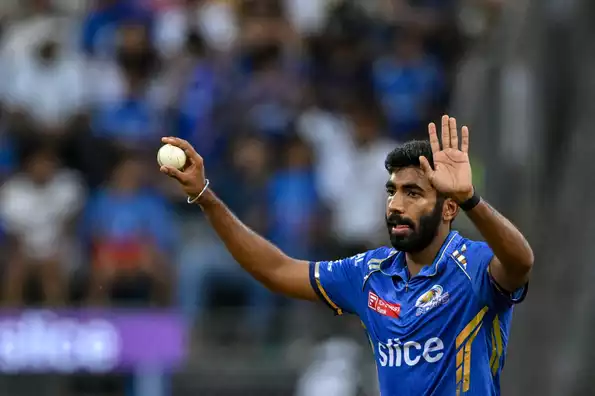
Jasprit Bumrah is back at the National Cricket Academy (NCA) in Bengaluru. After visiting the facility more than a week ago, the India and Mumbai Indians pacer has returned to assess his readiness for the upcoming IPL and to seek clearance to play. His availability – partial or full – will be known during this visit. This is his second visit in a short span. During his previous visit, he was understood to have experienced some pain and discomfort while bowling. After observing him in action, the NCA managers recommended specific exercises and advised him to return at a later date. However, this time, there is a sense of optimism surrounding his progress. If he feels comfortable while bowling and doesn’t experience any pain or discomfort, he could be cleared to participate in the IPL. However, the general consensus is that it will take at least another week before he can be considered fit for an IPL match, effectively ruling him out of Mumbai Indians’ first two games. Asked about Bumrah, MI coach Mahela Jayawardene sounded more hopeful than despondent on Wednesday. “He just started that progress. We have to wait and see what their feedback is on him. At the moment, everything is going well but obviously, it is on a day-to-day basis, the progress. He is in good spirits and hopefully, he can join the team sooner. “Obviously, not having him is a challenge. He is one of the best bowlers in the world and he has been a fantastic pro for us for many years,” the MI head coach said during a media conference. Meanwhile, it has been learned that Sanju Samson will return to the NCA for clearance next month. He has received partial clearance, meaning he is allowed to bat but is not yet cleared to keep wicket following surgery on his right index finger. As a result, Rajasthan Royals have decided to use him solely as an impact player and have handed the reins of the captaincy to Riyan Parag. After three games, Samson will consult with the NCA to determine if he can resume keeping duties

Read More

IPL meet: Captains exempt from match bans for slow over-rates

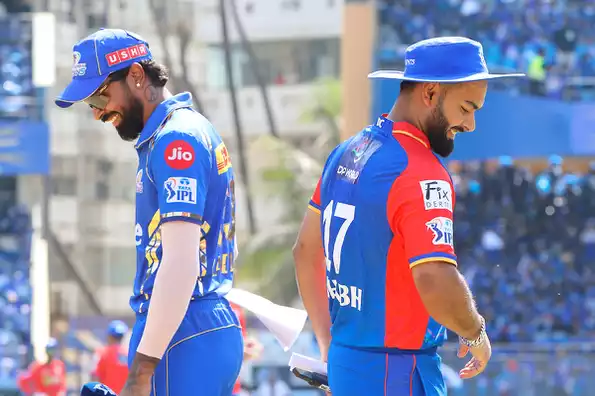
The Board of Control for Cricket in India (BCCI) has revised the playing conditions for the upcoming season of the Indian Premier League (IPL), with the most notable change concerning over-rate offences and the captain having to pay the price for that. The BCCI has decided that captains will no longer face match bans. Instead, they will be penalised with demerit points, with a ban being enforced only in extreme cases. At the captains and managers meeting held at the BCCI office in Mumbai on Thursday (March 20), the BCCI informed the think-tanks of the 10 franchises that there will be no match bans for slow over rate offences. Instead, a system similar to that of the ICC has been introduced, with demerit points assigned to the captain based on the severity of the offence. These demerit points will carry over for a period of three years. “The captain will be penalised with demerit points but will not face a match ban for the slow over-rate,” says an internal communique seen by Cricbuzz. The Level 1 offence will be charged 25 to 75 percent match fees with demerit points which will be calculated for next three years. “A Level 2 offence, if exactly deemed serious, will result in four demerit points. “For every 4 demerit points accumulated, the match referee can impose a penalty, either in the form of a 100 percent fine or additional demerit points. These demerit points could potentially lead to a match ban in the future,” a source in the know said. “But for slow overrate it won’t be a match ban (immediately).” A couple of captains have received match-bans in the IPL for slow over-rates. Rishabh Pant had to miss a crucial match for Delhi Capitals against Royal Challengers Bengaluru last season due to his team’s slow over-rate while Hardik Pandya will be missing in action in Mumbai Indians’ opening game of IPL 2025 due to an over-rate offence in the previous season. Additionally, the BCCI has stated that the Impact Player Rule, which has had its fair share of critics, will be reviewed after the 2027 edition, which means the rule will stay for the current IPL cycle. “The IPL will continue to implement the Impact Player rule, allowing teams to substitute one player during a match, at least until 2027,” a source has informed Cricbuzz. The BCCI has also amended that DRS clause in the playing conditions. The referral will be applicable for the height wides and wides outside the off-stump. These changes are in addition to the revocation of saliva ban and introduction of a provision of a second ball in the second innings to counter dew which Cricbuzz has already reported.

Read More

DC set for new era as Axar & Co. aim to arrest slump

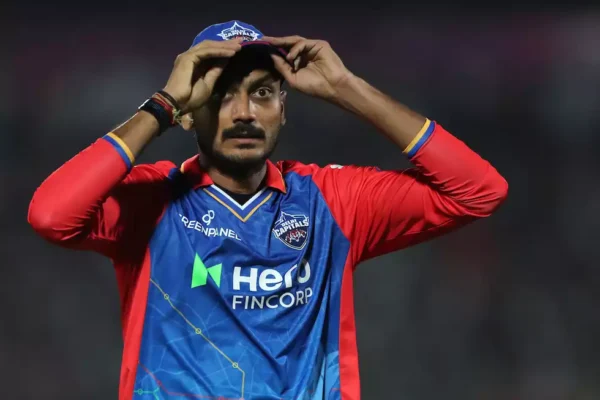
What’s new with Delhi Capitals in the new cycle? A new captain, a new head coach and plenty of new additions to the squad. Losing Rishabh Pant meant DC were always on the lookout for their next leader. While it was widely speculated that KL Rahul might don the role the moment he was acquired, the responsibility has fallen on the shoulders of Axar Patel. It’s certainly a reward for a player who has been with the franchise since 2019, and someone who seems to be at the prime of his career having established himself in the Indian limited-overs squads. Not to forget that he was DC’s top retention ahead of the auction at INR 16.5 Crore. There has been an overhaul in the coaching setup as well. After a long stint with Australian great Ricky Ponting, the Capitals parted ways to hand over the reins to former India batter Hemang Badani. His assistant Matthew Mott comes in with a rich experience having coached the Australian Women’s team, and the England Men’s team in recent years. Former England player Kevin Pietersen has been signed up as the team mentor, bolstering that coaching group further that also has India’s 2011 World Cup winning member Munaf Patel. In terms of personnel, DC certainly appear stronger on paper compared to the previous season. Australian great Mitchell Starc and India’s T Natarajan are the primary additions to the pace attack. Mohit Sharma, who had an excellent IPL in 2023, has been bought as well. In the batting department, apart from Rahul, DC added veteran Faf du Plessis to the mix and he has also been named Axar’s deputy. The likes of Karun Nair, Sameer Rizvi and the exciting Ashutosh Sharma who had a stellar campaign last year will be bolstering the lineup as well.. Capitals were the only team apart from Punjab Kings to have not made the playoffs in the previous cycle. They would certainly hope for a change in fortunes now in the new cycle. Full Squad KL Rahul, Jake Fraser-McGurk, Karun Nair, Faf du Plessis, Donovan Ferreira, Abishek Porel, Tristan Stubbs, Sameer Rizvi, Ashutosh Sharma, Darshan Nalkande, Vipraj Nigam, Ajay Mandal, Manvanth Kumar L, Tripurana Vijay, Madhav Tiwari, Axar Patel (C), Mitchell Starc, T Natarajan, Kuldeep Yadav, Mohit Sharma, Mukesh Kumar, Dushmantha Chameera The best XII as things stand Jake Fraser-McGurk, Faf du Plessis, Abishek Porel (WK), KL Rahul, Karun Nair, Tristan Stubbs, Axar Patel (C), Ashutosh Sharma, Mitchell Starc, Kuldeep Yadav, T Natarajan, Mukesh Kumar Injury/Availability Concerns Harry Brook pulling out of the competition is indeed a massive blow for the franchise. They haven’t named a replacement for him yet. In his absence they can either add the explosive Donovan Ferreira down the order as a finisher or use Faf du Plessis as an opener up top. While Mitchell Starc is all set to return to competitive action after skipping the Champions Trophy, he did mention that he had some pain in his ankle recently while playing Test cricket. It will be interesting to see if his workload is managed given he has a WTC Final to play immediately after the IPL. The player with a point to prove is… ‘What more can I do?’ remarked KL Rahul earlier this month after the Champions Trophy semifinal on constant question marks over his place in the ODI side. While there are absolutely zero doubts over his place in the 50-over set up for India, Rahul certainly has a lot to do in order to convince the selectors to bring him back into the T20I fold. In recent years, Rahul’s strike rate in the IPL has been up for debate especially with a lot of flamboyant batters making a mark. His recent breakup with Lucknow Super Giants was certainly bitter. As he embarks on his next chapter in the IPL, all eyes will be on him whenever DC take the field even though he isn’t going to be leading the side. Will we see Rahul break free and go back to his 2018 self? Or is there a possibility of Rahul going down the order in this format as well to reinvent himself? A player who could have a breakout season? Sameer Rizvi came in with a lot of reputation when Chennai Super Kings initially bought him for a massive price. But his opportunities were indeed limited for the five-time champions. Now with Harry Brook pulling out, Capitals certainly need someone to step up. Rizvi has been in good touch for Uttar Pradesh consistently scoring runs from the middle order. 2025 could be the season where he translates that onto the big stage. Fixture build-up and run-in… The Capitals will kick off their campaign with two games in their second home in Vizag. By the time they play their first fixture in Delhi, we would be three weeks into the tournament already. However, one advantage DC do have at the start is the amount of gaps between games. There’s a five-day gap before they play their second fixture and another five days before the third. In case of a false start, this will give them plenty of time to regroup and work on strategies before the fixture congestion hits in mid-April. A home ground stat to watchout for this season The average first innings total in Delhi last IPL was 235 – the highest among all venues. Pace and spin were equally taken apart at this venue last year. No wonder DC were the worst death bowling side in the IPL across the last two editions. They would hope the additions of Starc and Natarajan will help them correct that record.

Read More

Player replacement rule in IPL – Explainer

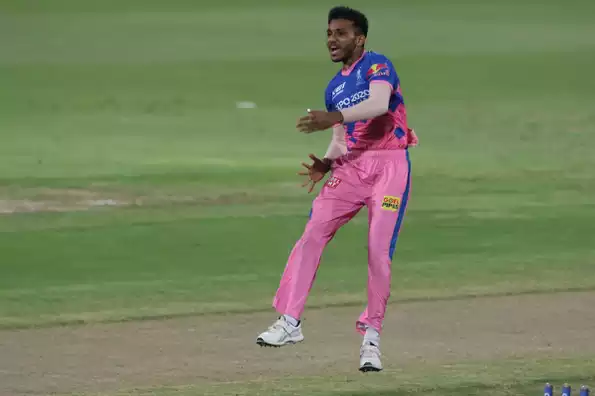
The IPL season has not yet started, and quite a few replacements have already been announced, and one has ended up in a legal suit. Chetan Sakariya for Umran Malik by Kolkata Knight Riders, Mujeeb-ur-Rahman for Allah Ghazanfar by Mumbai Indians and Wiaan Mulder for Brydon Carse by Sunrisers Hyderabad have seamlessly been replaced. There may be a few more in the form of Shardul Thakur and Shivam Mavi for any of the three injured pacers – Mayank Yadav, Mohsin Khan and Avesh Khan – in the Lucknow Super Giants squad. Curiously enough, one replacement has run into complications with Corbin Bosch, who came in place of Lizaad Williams in the Mumbai Indians side, facing potential legal action from the Pakistan Cricket Board (PCB) for alleged breach of contractual obligation. He has allegedly jumped the PSL contract for the IPL gig. That is for later, first the rules. The Board of Control for Cricket in India allows replacements if a player suffers a season-ending injury or illness not only prior to the season but also in the middle of it. In fact, the BCCI has revised the rule this season allowing replacements till the 12th league match of the season. Earlier, it was allowed only till the seventh match. How do the replacement regulations work in the IPL? To come in as a Replacement Player, one must have his name been included on the Registered Available Player Pool (RAPP) list for the relevant season and his league fee for the full season – assuming 100 percent availability – must not be less than the reserve price set by him as documented on the RAPP list. There are instances of franchisees having bowlers figuring in the RAPP list as net bowlers. But those franchises will have no authority to stop a player or players if another franchisee wishes to take him/them. A replacement player can be recruited at a fee that is not more than the league fee that would have been payable to the player he would be replacing. “If a Replacement Player is recruited during a season, the League Fee actually paid to him will be reduced to take account of the Franchisee’s Matches during the relevant season which took place before he was registered and any other relevant deductions under the Player Contract,” the rule explains. How do the replacement rules reflect on the salary cap? The BCCI rule states, “The League Fee payable to any Replacement Player signed pursuant to this paragraph 6 will be ignored for the purpose of the Salary Cap for that Season. If a Replacement Player’s Player Contract is extended in accordance with its terms, the League Fee payable to the Player for the subsequent Season will be charged against the Salary Cap for the relevant Season.” The statutory IPL clauses, of course, apply here. While taking replacement players, the franchisees must remain in compliance with the squad composition regulations of 25 players. Franchisees who take replacement players during the 2025, 2026 and 2027 seasons have a right (if any) to extend the term of the contract for the next applicable season. “For the avoidance of doubt, if a franchisee extends the contract of a replacement player, he shall, for any relevant subsequent season, be treated as any other player for the purpose of the squad composition regulations and the salary cap,” the BCCI clarifies. As for the mid-season replacement for an injured player, who has played a game, the regulations say… i) The said injury or illness occurs during or before the 12th League Match of the relevant Team in the Season; “ii) a doctor nominated by the BCCI confirms that the injury or illness is season ending (i.e. it means the Player will not be match fit until after the end of the Season (including the Playoffs)); iii) absent the injury or illness, the Player would have been available for all of the remaining Matches in the Season; and iv) as a result of the injury or illness the Player would miss the remaining League Matches in that Season. NB: In such circumstances, the Player who is replaced may not play for the Franchisee again in any Match during the relevant Season.” Coming back to the specifics, Mujeeb has joined MI for INR 2 Crore although he comes in place of a INR 4.8 crore player (Allah Ghazanfar). Mulder and Sakaria have been taken in by SRH and KKR for INR 75 lakh each, their base prices. But there is no mention of Bosch’s value. He had enrolled in the auction for INR 30 lakh, but he went unsold. He has come in place of fellow South African Lizaad Williams, who was bought by MI for his base price of INR 75 lakh at the auction. But Bosch is believed to have had a contract for INR 50-75 lakh for being picked in the Diamond category by Peshawar Zalmi (in the USD 60,000-80,000 range) in the PSL draft.

Read More

Rohit Sharma confirms he’s not retiring from ODIs

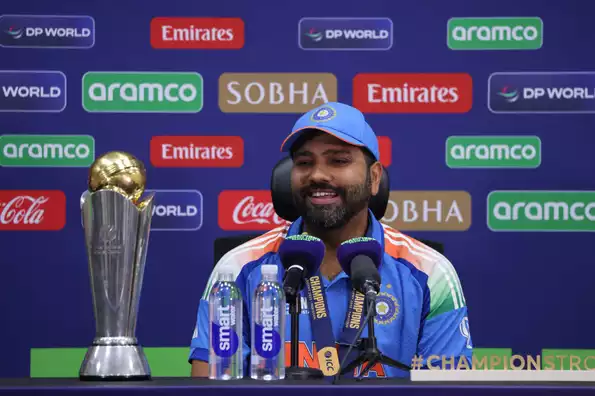
Rohit Sharma has put an end to mounting speculation about his career. “I am not going to retire,” the skipper said after India beat New Zealand in the Champions Trophy final at the Dubai International Cricket Stadium (DICS) on Sunday night. He elaborated on the point suo motto. “One more thing. I’m not going to retire from this format, just to make sure that no rumours are spread moving forward,” Rohit, who led India to four ICC trophy finals, including two titles, declared. In fact, it was more of an announcement than a response to a question. After the customary media conference following the final, he took the opportunity to reaffirm that he was not stepping away from the game. In a partial response to a question during the media conference, he answered in Hindi, stating that things would continue as usual. “Future plan? There is no future plan. What is going on, will continue,” Rohit remarked. He hinted that there is still a lot of hunger in him, implying his drive and passion remain strong. He scored 180 runs in the Champions Trophy, crossing the 11,000-run mark during the course of the tournament. In 273 ODIs, he has 11,168 runs at an average of 48.76 with 32 centuries, including three double centuries. The topic of retirement came up during the Champions Trophy, with many speculating that he would step away, much like he had done after the T20 World Cup in Barbados last June. Immediately after leading the team to the title in the T20 World Cup, he announced his retirement from the T20 format. There has been speculation about Virat Kohli taking that step as well but the former India captain has done reasonably well in the Champions Trophy after previously struggling for runs. He has scored 218 runs, including a century, in the five matches here. Like Rohit, he too hung his T20I shoes in Barbados last June.

Read More

Not just light but luminescence at the end of the tunnel for Rohit

It has been a tumultuous six months for Rohit Sharma, with runs hard to come by and the situation so dire that he even had to drop himself from the XI. But as they say, there’s always light at the end of the tunnel. For Rohit, though, it wasn’t just light – it was radiance, luminescence and resplendence. Few India skippers would be as worthy of the Champions Trophy glory. Amid intense speculation about his future and rumours of differences with coach Gautam Gambhir, there was a cloud of uncertainty surrounding his immediate prospects. Yet, Rohit never compromised on his style or approach to batting. He continued to take on the bowlers with the sole aim of providing a solid start and setting a strong foundation for the team. He succeeded more often than not in the Champions Trophy here in Dubai, although his approach and style of batting drew criticism from legends like Sunil Gavaskar. “As a batter, are you happy with scoring 25-30 runs? You shouldn’t be,” Gavaskar told the India Today channel before the final, referring to his scores of 41, 20, 15 and 28 before the title clash. Rohit responded with a match-winning 76 on Sunday night. He was the player of the final. There is always an element of tenacity to his aggression in his batting. He would try to take early advantage of the field restrictions by going over the head of the fielders. With over 11,000 runs, he was always a safe bet for the team, but lately his contribution lacked consistency. Sunday’s effort should silence his critics. There was selflessness to his approach, as on the slow wickets of Dubai International Cricket Stadium (DICS), scoring with the old ball and with the spread out field has not been easy. He wanted to be proactive in the beginning as he had been in the recent times. “I have not done anything different; I have been doing the same thing that I’m doing over the past 3-4 matches. I know how very important it is to score runs in the powerplay, because we saw in not only one or two games, but all five games, after 10 overs it becomes very difficult when the field spreads and spinners come on,” Rohit explained about the difficulty of scoring runs here. There has not been a single total over 300 in the five games played here. “You may not see the consistency of big runs, but if I’m very clear in my mind about what I have to do. Then as long as I am very clear, I think it is pretty much okay. Today you saw that after 10 overs I changed my game a little. I wanted to play longer. But I went to put a bit of pressure and I got out. But again, you feel very happy when you win a match and when you contributed to it – It feels even better. “I contributed a lot in the 2019 World Cup, but we didn’t win. So, it wasn’t fun. Even if you score 30 or 40 runs and win the match, you get more satisfaction and happiness. So, I think it was very important for me to do something and contribute and bring the team in a position where there is a little comfort for the rest of the batting order.” Scoring runs is only one half of Rohit’s job. Getting the best out of the rest of the team is the more difficult part. He has led the side to four finals of the global events, winning two of them. Over a long period of time, there is always a chance for complacency to creep in and there would be odd defeats. “You lose one series here and there, it doesn’t mean that the team is bad or things are not happening right, things are not going in the right direction. It happens, everybody is allowed to lose and we lost a series in India against New Zealand, the Test series. But that happens. It’s like every time we take the field, we are meant to win everything. But that is not going to happen. This is a sport that we play. There are opposition who are also trying their best to beat us.” It is not easy to keep the collective hunger of the team intact. But Rohit thinks differently, calling his side a bloody good team. “There’s not too much work that is done there. At the end of the day, you’re representing your country, and everyone understands that. So that is not where I come into play. My job is to make sure that whoever we pick to play gets the job done for the team. Like I said, there is a lot of hunger, even for the guys who have played a lot of cricket. So, these things are not supposed to be taught.” He continued, “No, it obviously is just not me. You know, a lot of the captains who’ve played before me, captained the team before me, a lot of credit goes to them as well. A lot of the coaches who have come before Gautam Gambhir, Rahul Dravid and all of these guys – the credit goes to everyone. India is a bloody good team without a doubt.” He is also a bloody good player but, more pertinently, a bloody good captain who recognised that for the team to be bloody good, it needed to win the ICC knockout matches – something that had not been happening previously. In the last three ICC tournaments, they lost only one game and lifted two trophies. That’s a bloody good record, isn’t it?

Read More

A final goodbye against his favourite rival

In a way, it was apt that Steve Smith’s final act as an ODI cricketer was a hug and a fond chat with Virat Kohli. As close-ups would reveal later, it also happened to be the moment when Smith probably made his decision to retire from 50-over cricket public. By confiding in one of his oldest rivals, counterparts, and cricketing mates. It was a touching and poignant moment, as Smith leaned on Kohli’s shoulder, and stayed there for a couple of seconds as the former Indian captain whispered some words into his ear. The fact that it came only minutes following the pretty intense celebrations in the Indian camp, led by a very animated Kohli, after they’d overcome the Australian hurdle to make the Champions Trophy final only made the brotherly embrace even sweeter. For, not only have the two era-defining right-handers been the yardsticks for greatness as contemporaries, they have also been serial adversaries on the field throughout their respective journeys when it comes to ODI cricket. The retiring 35-year-old had, after all, played more 50-over matches against Kohli than any other opposition player, 28 in all, of the 30 he appeared in overall against India. And there was a bit of irony in the fact that Smith couldn’t see Australia home in what would have anyway been his final encounter versus his arch nemeses, who he’s generally dominated against. Not that he didn’t try his hardest to foil the Indian juggernaut, both as batter and as captain, like he’d done so often throughout his ODI career. His innings of 73 on a slow pitch was trademark Smith, one India had become all too familiar with. Both in terms of how he manipulated the fields, and also in the way he set the tempo for his team. Even if he couldn’t see it through, getting out to a very un-Steve Smith like slog. Even if he couldn’t go on to make a century, like he’d done 5 times previously against the Indians, all but one of which resulted in a win for Australia. Just for the record, he never went past 2 centuries against any other country and made only a solitary ton in 40 innings against England. No wonder then that the country he scored most ODI runs against was India, with 1383 runs at 53.19 in 26 innings. And no surprises that despite not being considered one of the best ODI players of his generation, purely in terms of numbers, Smith was dreaded by the best ODI team of his generation, who once too often were at the receiving end of his white-ball genius. Smith’s most significant knock, without doubt, was his maiden ODI century against the Indians, on his home-ground at the SCG, to thwart India’s progress in the 2015 Word Cup. It was a masterful knock that set up the semi-final win at the back end of a home summer where he’d lorded over India with the bat in the Border Gavaskar Trophy. The summer that made Steve Smith, and forever transformed him from the blonde-haired handy all-rounder into the world beater with the bat. It was in his previous avatar that he’d played his first-ever ODI against India, back in late 2010 at Visakhapatnam. Smith didn’t bat and had bowled three expensive overs. Australia lost the match with Virat Kohli producing one of his early run-chase classics, with what was still only is third ODI ton. Just like he did in Smith’s final ODI against India, even if Kohli failed to notch up a three-figure score this time around. That Vizag effort had came at a time when Kohli, probably for the only time in his ODI career was under a bit of pressure, having gone through a lean patch. It also came at a stage when Smith was still very much finding his feet in international cricket. It did however set in motion this enduring battle within a battle between Kohli and Smith, a few months after the Aussie had made his Test debut and still 8 months before the Indian would get his Test cap. And though comparisons between the two have existed throughout their lengthy Test careers, rarely have the duo been spoken of in the same breath when it comes to the 50-over format. It’s probably a simple case of sample size, with Kohli having played nearly double the number of ODIs, while also accumulating a staggering record in the format, one which has few if any rivals. Smith’s 50-over numbers in contrast may not be immediately eye-catching but an average of 43.28 and a strike-rate of 86.96 are quite impressive, considering the role he’s played for his country. They also pale in comparison to his own Test numbers, which put him in a stratosphere of its own. Smith did have moments of brilliance, where he looked like the best ODI player in the world, especially when he scored three ODI tons on the trot in the same year against India. They did come across two separate tours of course but his back-to-back 62-ball tons in Sydney in late 2020-which came on the back of his 132-ball 131 in Bengaluru earlier in the year-were a glimpse into the elite gear that he did possess with his white-ball batting, which he hasn’t always felt the need to tap into, largely because of his defined role in this setup. And while Smith the ODI batter might not be remembered with the level of reverence Smith the Test batter will be, Indian teams will rest easy and be relieved to see the back of him. You just need to go back to that moment in the 2023 World Cup final, when Smith walked away without reviewing his contentious LBW call with just four runs to show for his short stay at the crease. There were few Indian fans at the Narendra Modi Stadium that night, or around the world, who didn’t start feeling a lot better about their team going on to…

Read More

Toss and other factors for India, NZ to contend with

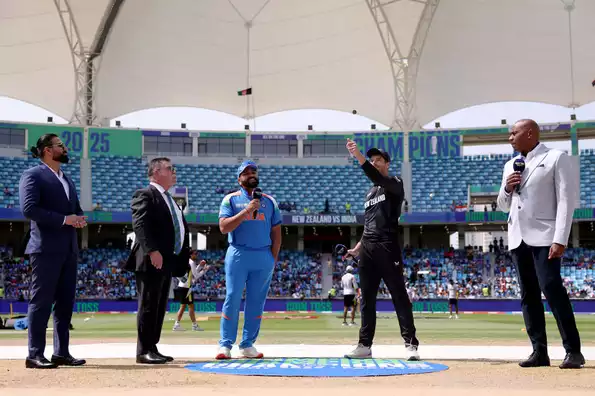
Shaun Pollock has a favorite story about the toss. The former South Africa captain was once advised by Malcolm Marshall to always call ‘Heads’, because, as the legendary West Indian pacer put it, “a human doesn’t have a tail.” It’s still unclear what Rohit Sharma has been calling, or even for that matter what the opposing captains have been choosing. What is clear, however, is that India have not won the toss in their last 14 consecutive ODIs. This marks the longest streak of toss losses in ODI history, beginning with the World Cup final in Ahmedabad on November 19, 2023. Despite this, India have managed nine wins out of the 14 matches, with four losses and one tie (against Sri Lanka). At the Dubai International Cricket Stadium (DICS), India have obviously lost all four tosses yet emerged victorious in each game. Heading into the final against New Zealand on Sunday, they are the only undefeated team in the Champions Trophy so far unimpacted by the toss factor although the DICS has long been notoriously known for providing conditions that favour the team batting second. In the 2021 Twenty20 World Cup, 12 out of 13 matches were won by the chasing side including both the semifinal and the final. The same pattern was noticed during the 2021 IPL, which was partly staged here, as well as in this year’s ILT20 where the toss played a vital role in the outcome. The team batting second largely had the upper hand. This time, there has been no decisive advantage for the chasing team – India have won one match while defending and three while chasing. This refreshing trend can largely be attributed to the absence of dew in the air or on the ground. With the weather being chilly in the nights, dew was expected to play a role in the tournament. Fortunately, it hasn’t. “I for one thought there would be a little bit more dew at this ground at this time of year. Fortunately there hasn’t been. Therefore the toss is actually not a big factor and I think that’s great,” says Mike Hesson, a former New Zealand coach. “Heading into a Champions Trophy final you’re not worried about who wins the toss and certainly if you’re an Indian fan and the fact Rohit Sharma’s lost 14 in a row, it’s not something you’re going to lose a whole heap of sleep over.” Rohit, no doubt, won’t lose sleep over the toss, but he may still have a slight advantage if he wins it. According to Hesson, Varun Chakaravarthy the player of the match in the previous game against New Zealand here, would be difficult to pick under the lights. “I think at the toss, from a tactical point of view, New Zealand will want to bat first and they will want to do what they did against South Africa in the semifinal. The reason why I say that is because of this man here, Varun Chakaravarthy.” Kane Williamson, who hammered a century in the semifinal against South Africa in Lahore on Wednesday, agrees that the conditions would be different at DICS from Gaddafi Stadium but hopes for a good contest. “The conditions are a lot different but you know that’s sort of the nature of the beast. I think in any tournament that you have, conditions change a little bit throughout. For us, it was nice to have that last match against India. “There’s some really good bits there. India are an outstanding team and are playing really well. So, look, it’s important we try and take away some learnings from that last game. Park this match, and in a final, anything can happen. And it was a great atmosphere last game and I’m sure it’ll be a good one again.” The former captain, however, refused to buy the argument that India have had an advantage by playing all games in Dubai. “It is what it is,” he said. “Our focus is the next match, the location of that match, the opposition, they’re all factors. Obviously, we played India once there. The conditions are different, so it’s important that we try and take away some of those positives and be nice and clear in how we’re trying to operate come two- or three-days’ time in the final. It’s the nature of it and we’re looking forward to the final and excited about it.”

Read More