officialsquarexsports

Adaptive and calculative, Arya slays Super Kings

Priyansh Arya set the tone for the Punjab Kings vs Chennai Super Kings game in emphatic fashion, launching the very first ball for an upper-cut six – only the fourth time an IPL match has begun with a maximum. He went on to hammer nine sixes and seven fours in a breathtaking 103 off just 42 balls. In doing so, he became only the eighth uncapped player in IPL history to register a century. While the numbers reflect raw explosiveness and brutal power, Arya’s innings was far more nuanced than the stats alone suggest. Arya’s rise to prominence through his explosive performances in the Delhi Premier League is well-documented. He was the tournament’s leading run-scorer in 2024, amassing over 600 runs in 10 matches, including two centuries and four half-centuries. One of his most talked-about innings came when he smashed six sixes in an over off left-arm spinner Manan Bhardwaj during a whirlwind 50-ball 120. This knock was part of a record-breaking 286-run partnership with Ayush Badoni (165 off 55), propelling the South Delhi Superstarz to a massive 308/5. Arya’s standout performances caught the attention of IPL scouts, leading to his acquisition by the Punjab Kings for INR 3.8 crore – a substantial investment in the flamboyant 24-year-old batter. Arya has also been Delhi’s leading run-scorer in two consecutive editions of the Syed Mushtaq Ali Trophy, tallying a century and three fifties across 16 innings, with his 547 runs coming at a strike rate of 172.55, and only three single-digit scores. Backed by this form, Kings showed their faith in the youngster by naming him an opener in their first game, and he delivered with a quick-fire 23-ball 47 at a strike rate of 204.35 against Gujarat Titans. Although he scored only 8 and 0 in his next two outings, the Kings stuck with him, opting to back his potential rather than seek other options. PBKS’ faith in Arya paid rich dividends in their clash against CSK. While the rest of the top and middle-order crumbled, Arya stood tall, launching a clinical, precision-driven assault on the CSK bowlers. By the end of the eighth over, after PBKS had chosen to bat, they had already lost half their side – Prabhsimran Singh, Shreyas Iyer, Marcus Stoinis, Nehal Wadhera, and Glenn Maxwell – all dismissed for single-digit scores. Yet, remarkably, the team had surged to 83, carried entirely by Arya’s onslaught. The pitch for the PBKS-CSK clash wasn’t a central strip, creating an imbalance with one square boundary noticeably shorter than the other. In such conditions, teams typically look to exploit the shorter side for maximum returns. PBKS, too, adopted that approach but it backfired, costing them most of their top order. Prabhsimran chopped on while trying to pierce the off side, Iyer was bowled attempting a flick, Stoinis got a leading edge trying to work it to leg, and Wadhera top-edged a slog across the line. In contrast, Arya demonstrated a well-rounded and adaptive approach, with calculated shot selection on both sides of the wicket. He consistently aligned his boundary-hitting options with the ball’s line and angle, leveraging the ground dimensions effectively without compromising control. During the powerplay, a total of eight sixes and seven fours were recorded. Six of those maximums came off Arya’s bat, with four cleared over the shorter boundary and two over the longer one. He also struck six fours in this phase, again distributing them intelligently: four to the shorter side and two to the longer. Arya had raced to a 19-ball fifty inside the powerplay but got only seven off his next nine deliveries as he he focused on stabilising the PBKS innings in partnership with Shashank Singh. This phase saw a lull in boundaries between overs 7 and 10, but the duo made up for it swiftly with a blistering 71-run stand in only 34 balls. And once again, Arya showcased smartness in his shot selection. Three sixes and a four were dispatched to the shorter boundary, while four sixes and another four went to the longer side. Arya’s versatility stood out as he converted his maiden IPL fifty into a thunderous 39-ball century – the joint fourth-fastest in the tournament’s history and the fastest by an uncapped player.
Read More

Jayawardene laments MI’s powerplay issues

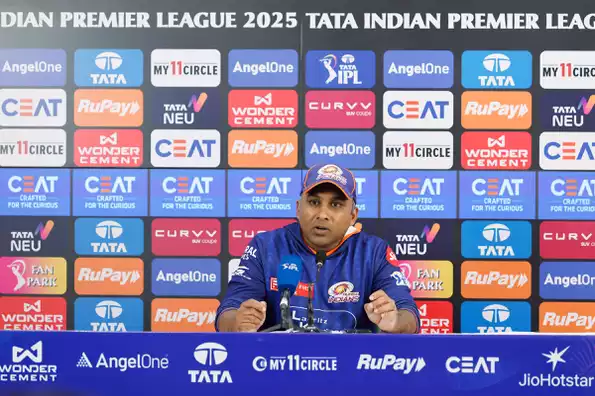
Mumbai Indians head coach Mahela Jayawardene admitted that powerplays have been a concern for his side in this edition. While MI have lost four of their five matches this season, Monday’s (April 8) defeat to Royal Challengers Bengaluru marked their first loss at home. Invited to bat first, RCB racked up 73/1 in the first six overs, their highest ever powerplay total against MI. In contrast, the hosts could only manage a middling 54/2 in the context of the match. “The powerplay is a concern for us with the ball and the bat,” Mahela said after MI’s 12-run defeat. “In the last few games as well, we were leaking too many runs with the ball in the powerplay and we are not getting the starts and losing wickets [with the bat]. “We got an early wicket today as well and then they counterpunched, played good shots and we didn’t react well to that. These are the margins. And then they had the big sixth over [bowled by Deepak Chahar], which really hurt us. We didn’t close the powerplay properly. With the bat as well, I thought we had a good start but just couldn’t continue. We lost those two wickets and then we had to consolidate a little bit and lost a bit of momentum there. We had a few big overs in between even in the powerplay but we weren’t in the game in that first 10 overs [during the chase]. “So the margins are small in this competition and we are not hitting our strides and that’s a concern. We are playing good cricket, but not good enough.” MI also lost their previous game, a 12-run defeat in Lucknow, where a costly 69-run powerplay once again proved decisive. Despite Jasprit Bumrah’s return for this match against RCB, the new ball was handed to Deepak Chahar, a swing bowler who hasn’t had the best of seasons. Chahar has been leaking runs at 11.30 in powerplays this year, the second-worst economy among bowlers who have bowled more than five overs in that phase. “I don’t think chasing was the wrong decision, where we went wrong was with our execution with the ball where we could have controlled things much better,” Mahela said. “I think we got two swing bowlers, we need to give them that opportunity first up and Booms [Jasprit Bumrah] was coming back from a three month layoff as well, so we just wanted to ease him into the competition. “We need to understand that the skills were brilliant but there are areas for us to improve.” MI captain Hardik Pandya played a blinder, scoring 42 off 15 balls but in the end, it was not enough to chase down a mammoth target of 222. “With the talent that we have we know we are always in the game,” the MI head coach said. “We know that we just need to be patient and most of the guys are matchwinners. It’s just that we’re not getting that tempo going consistently. We had to settle down when we lost those early wickets because they also bowled well, they brought the two spinners who didn’t miss much, they bowled well. And we built partnerships after that and then obviously once you hit that 10th-12th over mark, we knew we could give ourselves a chance and obviously when Hardik walked into bat, that was the conversation I had with him. I said try and see whether you can get three big overs in and that’s what he delivered and then the momentum changed.” Being more “ruthless” is something Mahela had emphasized after the loss in Lucknow, and he reiterated the same following the defeat in Mumbai. “I still back the senior pros and all the guys I put out there. I think they have the skill, it’s just that we need to be a bit more ruthless,” Mahela said. “At times we’re missing out on those one or two overs where we lose our discipline, with the bat as well as with the ball. So that’s something that we need to rectify. Losing is not a great thing. I mean you start doubting yourself and sometimes a fresh face coming into this kind of situation might be even tougher for them without the experience. The guys who have the experience know how to handle tough situations and be mentally stronger. Going forward, that’s something that we will bank on and make sure that we really focus on getting the group together and be positive and play the next game.”

Read More

RCB survive Hardik-Tilak onslaught for a famous Wankhede win

Royal Challengers Bengaluru broke a 10-year long jinx to beat Mumbai Indians at the Wankhede stadium for the first time since 2015 in a thrill-a-minute high-scoring contest. The game see-sawed all the way through and nearly sided with the hosts before RCB bowled their way out of trouble in the nick of time to take away two more vital points on the road. Where the match was won? Death overs. Rajat Patidar’s clean hitting and Jitesh Sharma’s inventive stroke-play became the difference-maker in the end. They didn’t let a double-wicket over from Hardik in the 15th push them back at the death. MI had an inferior PowerPlay but made up the lost ground in the middle-overs to set themselves up for the death overs. But RCB once again came up trumps in the final overs to finish as the victors. The death-overs difference Parameters RCB MI Score 70/1 52/5 Run rate 14 10.4 4s/6s 4/6 3/4 Royal Challengers Bengaluru PowerPlay: Kohli, Padikkal fire away Phase score – 73/1 [RR: 12.16, 4s/6s: 8/4] The big ticket game got a picture perfect start. First, Phil Salt played a glorious cover drive on the first ball and then Trent Boult hit back with an inswinger on the second ball to floor the stumps. Virat Kohli welcomed Jasprit Bumrah to the tournament with a whipped six over midwicket. The RCB star showed intent throughout the phase, hitting fours off Boult, Deepak Chahar and Will Jacks. Devdutt Padikkal too arrived with the idea of throwing his bat around as he smashed successive sixes off Chahar to close out an eventful PowerPlay with 20-run over. Middle-overs: RCB maintain intent; Hardik strikes twice Phase score – 78/3 [RR: 8.67, 4s/6s: 6/3] Kohli took his aggression into the middle-overs and slog swept Vignesh Puthur for a six to get to a 29-ball fifty. In the same over, Padikkal’s fiery knock of 37 (22) ended as Jacks took a sharp catch at the long-on fence. The wicket allowed MI to tighten the screws with a couple of quiet overs as the scoring rate dipped a little below 10. Mitchell Santner bowled three excellent overs in this phase, varying his pace very smartly, and giving away just 20 runs. But his fourth over on the other side of the timeout was met with a couple of sixes from Patidar and a four from Kohli. Hardik, fresh from a fifer in his last outing, stopped the pair from getting away with a double-wicket over. First, he had Kohli caught by Naman Dhir at deep square leg for 67 (42) and then snuffed out Liam Livingstone, caught at short third, for a duck. Both wickets came from Hardik sticking to the outside-the-off stump line. Death overs: RCB fly through Patidar, Jitesh Phase score – 70/1 [RR: 14.00, 4s/6s: 4/6] Patidar took down his opposite number at the death. Hardik continued to bowl outside the off-stump but Patidar, who had already sized him up earlier, hit him out effectively. Hardik conceded two sixes and a four to Patidar and a boundary to Jitesh Sharma, who too arrived with the basic instruction of throwing his bat around, in a 23-run over. Bumrah still got the respect from the pair as they took six singles in the 18th over, but made up for it against Boult. The New Zealander conceded 18 in the 16th and then got hit for two sixes by Jitesh in the 19th, but soon saw the back of Patidar for a 32-ball 64, courtesy an incredible diving catch from wicketkeeper Ryan Rickleton who first covered a lot of ground running towards the fence behind him. Bumrah bowled another excellent over at the death – the 20th – even as Jitesh managed to collect a six off it to finish with a stirring cameo of 40* from 19 deliveries. Mumbai Indians PowerPlay: Openers fall; MI lag behind with score rate Phase score – 54/2 [RR: 9.00, 4s/6s: 8/2] Rohit Sharma’s abysmal season continued. He showed signs of turning the tide with pull over square leg and push down the ground but Yash Dayal ended his stay with a full inswinging delivery that rattled the stumps off an inside edge. Ryan Rickleton followed soon through an excellent review for a leg before appeal against Josh Hazlewood. The left-hander was struck on the back leg but even Hazlewood wasn’t sure whether the ball pitched in line. Jitesh however, ran in from behind the stumps, pointed where the ball could’ve bounced and convinced Patidar to review the ball. That conviction turned into a wicket as the onfield decision was overturned. The Aussie then bowled an exceptional sixth over, mixing his lengths very well against Suryakumar Yadav, to concede just two runs. Middle-overs: Hardik Pandya blitzkrieg brings the chase alive Phase score – 103/2 [RR: 11.45, 4s/6s: 10/6] RCB played with fire by bringing on Suyash Sharma against a spin hitter like Suryakumar but the leggie came out on top in this mini-tussle. He stayed away from Suryakumar’s hitting arc and bowled well to his fields and the skewed square dimensions to concede 15 runs in three overs to drag the game away from MI. Both Suryakumar and Jacks tried to target the shorter leg side fence against him but Suyash bowled quicker – upto 104kmph – and outside the off-stump to repeatedly beat both the batters. From the other end, Krunal Pandya conceded three fours in his first over but hit back in the second. Krunal unfurled his surprise short ball – at 117kmph – on Jacks, who pulled but found Kohli at deep backward square leg. Suryakumar, who struggled to get going, was dropped twice before a third offering from the batter was pouched Livingstone at mid-off. RCB were close to acing the middle-overs until Tilak Varma and Hardik Pandya came together in the middle. Tilak, fresh from being retired out for his struggle in the previous game, went after Suyash before Hardik brutally took down Hazlewood with 6, 4, 6, 4 in…

Read More

MI aim to solve PowerPlay problems; RCB aim to go three-in-three on the road

By now it is well established that Mumbai Indians have a dubious reputation for poor starts. And that is not just in terms of match outcomes alone. They often begin the games just as poorly. Increasingly, their fortunes are being decided in the first six overs – more often than not, for the worse. The relevant numbers point to a telling picture. In four games, they lost eight wickets in the first six overs – the second-most among all teams – while managing to take only five wickets in return, also the second-worst. Only Punjab Kings have fared worse in terms of wickets taken during this phase. Their best six-over phases upfront came against Kolkata Knight Riders – five scalps in first seven overs (four in the first six) and lost only one while batting. That was the only time this season when they won a match. In T20 or white ball parlance, it’s the PowerPlay problem. Mahela Jayawardene agreed that the PowerPlays have been a worry. “We have looked at those numbers as well. When you start the season with a new group of players, we will come across these issues. So, that is something that we will have to address. Agreed on the PowerPlays that we need to take a bit more control. Whenever we have done that, we have done that. That is something we are going to plan and see whether we can improve on that.” That could change with the return of two key players for Monday’s game against Royal Challengers Bengaluru at the Wankhede – Jasprit Bumrah and Rohit Sharma. Bumrah has missed all four games so far, while Rohit had to sit out the last one and is eager to make his presence count. Both are more than capable of making an impact – in the PowerPlay overs, primarily. MI will be hoping for that against a side that has shown a lot of promise despite the reversal in the result the previous game at home. With the likes of Phil Salt, Virat Kohli, Rajat Patidar with the bat, while Josh Hazlewood, Bhuvneshwar Kumar and Suyash Sharma follow with the ball…Royal Challengers have raised the hopes of their ever so loyal fans for the season. “It’s been a great start for us – two big wins on the road against KKR and CSK. They’ve been traditionally tough places, so that’s a brilliant start for us,” said Tim David. “The last game (versus GT at home), we lost early wickets, that happens. We’re looking forward to this game.” When: Monday, April 7 at 7:30 PM IST Where: Wankhede Stadium, Mumbai What to expect: Mumbai’s red-soil pitches are known to be batting-friendly, a factor further amplified by the small boundaries. The contest is expected to produce copious amounts of runs, with the key question being whether dew will play a role. The chasing team is likely to have the advantage, but how significant that advantage turns out to be will depend on the level of moisture on the grass on Monday night. Head to Head: MI lead RCB 19-14 but the two teams are evenly matched in recent years, with a 2-2 record since 2022. At the Wankhede, MI dominated them 8-3, with RCB’s last win at the venue dating back to IPL 2015. Since then, they have lost six consecutive matches at the ground. Team Watch Mumbai Indians Injury & Availability: Jasprit Bumrah will finally be available for MI, the team management has confirmed. However, some uncertainty still surrounds Rohit Sharma’s fitness after he missed the previous match after being hit on the knee in the nets. Tilak Varma, who was also on the injury list, is expected to be fit for the game – just as he was in the previous match. Tactics & Match-ups: Deepak Chahar and Trent Boult, both known for consistently striking in the PowerPlay, are likely to continue to wield the new ball. This could leave Jasprit Bumrah to operate in the middle and at the death, with young Ashwani Kumar possibly left out of the XI. Vignesh Puthur may be brought in as a tactical option to counter big-hitters like Liam Livingstone while Bumrah, in the death overs, could be the right man to stop big-hitting Tim David with his toe-crushers. Probable XII: Rohit Sharma, Will Jacks, Ryan Rickelton, Suryakumar Yadav, Hardik Pandya (c), Naman Dhir, Raj Bawa, Mitchell Santner, Deepak Chahar, Jasprit Bumrah, Trent Boult, Vignesh Puthur Royal Challengers Bengaluru Injury & Availability: Tim David confirmed that there is no information of any injuries to the team. Tactics & Match-ups: RCB’s default strategy should be enough to begin with against MI. With Josh Hazlewood and Bhuvneshwar Kumar opening the bowling, they will have enough ammunition to counter the MI openers Rohit Sharma and Ryan Rickelton. Spinner Suyash Sharma will have to tackle the likes of Suryakumar Yadav and Hardik Pandya. Probable XII: Philip Salt, Virat Kohli, Devdutt Padikkal, Rajat Patidar (c), Liam Livingstone, Jitesh Sharma (wk), Tim David, Krunal Pandya, BHuvneshwar Kumar, Josh Hazlewood, Yash Dayal, Suyash Sharma Did you know? – MI picked up four wickets in the PowerPlay against KKR while in the other three games they have just one, largely thanks to Boult’s struggles. – Each of Hardik’s five wickets against LSG have come off hard lengths and seven wickets by him off these lengths is the most by a seamer in IPL 2025 so far. – Tim David has the highest strike rate (220.83) in death overs (16-20) for anyone who faced at least 20 balls in this phase in IPL 2025. What they said: “We needed to take control, which we had in our last one Wankhede game. So, if we can try and be aggressive as we were and execute, that is something that we are looking forward to. And keep building on it. I think the GT game was something that, in my mind, we were not in the game. All the other games, we were right in it. Even against LSG, we fought well. We were in a situation where…

Read More

Washington, Gill and Siraj power GT to third straight win

Sunrisers Hyderabad continued to look like the shadow of their 2024-selves as they suffered their fourth straight defeat of the season – and second at home. The comprehensive seven-wicket win put Gujarat Titans on the opposite end of this spectrum, making it third straight win. On a slow surface where stroke-making was tough, SRH crashed and burned their way to a 150-plus total but were found wanting with the ball once again as Washington Sundar, playing his first game of the season, proved to be an excellent punt at No.4. He and Shubman Gill added 90-runs for the third wicket. Where the match was won In the middle-overs. Washington started GT’s turnaround in the sixth over, after which he and Shubman Gill aced the middle-overs to put the game beyond SRH’s reach. Twice in the day, Pat Cummins tried to single-handedly take his team towards the two points – first with the bat and then the ball in the PowerPlay, only for this GT pair to defy him through the middle phase. The middle-overs difference Parameters SRH GT Score 60/2 82/1 Run-rate 6.67 9.11 4s/6s 5/1 12/0 Sunrisers Hyderabad PowerPlay: Early exit for Travishek again Phase score – 45/2 [RR: 7.50, 4s/6s: 8/0] Sunrisers were greeted with a drier surface at home where hitting through the line was not easy. The hosts learnt it the hard way as they lost both Travis Head – to Siraj in the first over – and Abhishek Sharma – to Siraj again in the fifth. Between the two dismissals, Abhishek managed to get a few boundaries going against an erring Ishant Sharma before Siraj clipped the opener’s wings. Ishan Kishan and Nitish Reddy took the team to 45/2 by the end of the PowerPlay – the team’s second-lowest score in this phase since 2024. Middle-overs: Nitish, Klaasen attempt slow rebuild Phase score – 60/2 [RR: 6.67, 4s/6s: 5/1] The rut went on through this phase too. Kishan couldn’t get on top of a short ball from Prasidh Krishna and hit to backward square leg in the eighth over to fall for 17. In the 11th over, when Nitish played a pre-meditated reverse sweep and sent a Rashid Khan delivery to the third man fence, it was the first four of the SRH innings in 36 deliveries. While Sai Kishore kept it tight from the other end, Nitish and Klaasen targetted Rashid, who has had an ordinary start to the season. Klaasen hit the first six of the innings – in the 13th over off Rashid, as the leggie finished with figures of 0/31 in four overs. Sai Kishore pulled one back from the other end by cleaning up the South African with an arm ball just when he was starting to get going. Death overs: Cummins cameo pushes SRH past 150 Phase score – 47/4 [RR: 9.40, 4s/6s: 6/1] Sai Kishore continued to torment the home side, dismissing Nitish and finishing with exceptional figures of 2 for 24. Siraj then returned to try and deny SRH a late flourish by trapping Aniket Verma leg before and then floored Simarjeet Singh’s leg stump with some reverse swing to finish with figures of 4-17 – a spell that included 17 dot balls. Pat Cummins’s cameo – 22 off 9 – and a 17-run 20th over from Ishant gave SRH bowlers a total (152/8) to work with on a clearly tough pitch for batting. Gujarat Titans PowerPlay: Washington Sundar revives a bad start Phase score – 48/2 [RR: 8.00. 4s/6s: 5/2] A good start from Pat Cummins and Mohammed Shami was sullied in the last over of this phase – from Simarjeet Singh, as Washington went after his short lengths to collect two fours and as many sixes in a 20-run over. Before that, Shami took out Sai Sudharsan for just five and Cummins got the ball to move and had Jos Buttler caught behind for a third ball duck. GT bumped up Washington to No.4 and he delivered right away. Middle-overs: Gill, Washington dwarf the asking rate Phase score – 82/1 [RR: 9.11, 4s/6s: 12/0] The third-wicket pair continued to ride the late PowerPlay momentum to deny SRH a way back into the fixture. None of Cummins’s bowling options could make an impact like he did early on as Gill and Washington comfortably mounted their stand that dragged the match away from the hosts. Leg spinner Zeeshan Ansari bowled three overs of his leg spin for 22 runs but couldn’t break through while the ambidextrous Kamindu Mendis got taken apart for 12 in an over. Cummins came back on in the 11th over in desperate search for a wicket, but was hit for perhaps the shot of the game – a sublime cover drive by Gill. Washington’s excellent knock was brought to an end by a contentious call from the third umpire after Aniket took a diving catch very close to the ground at deep point. Cummins was out of bowling options and turned to Abhishek Sharma’s left-arm spin. But he bowled to the left-handed Sherfane Rutherford, who hit him for four fours in the over, leaving GT with just 23 to get at the death. Death-overs: Gill, Rutherford close out big win Phase score – 23/0 [RR: 13.80, 4s/6s: 3/1] SRH got a change of ball for the death and Ansari returned but Gill hit him to both sides of the ground- a sweep behind square leg and an inside-out hit over extra cover – for two fours. Rutherford then sent one from Cummins out of the ground and followed it up with a four before Gill hit the winning run. Brief Scores: Sunrisers Hyderabad 152/8 (Nitish Reddy 31, Heinrich Klaasen 27, Pat Cummins 22*; Mohammed Siraj 4-17, R Sai Kishore 2-24) lost to Gujarat Titans 153/3 in 16.4 overs (Shubman Gill 61, Washington Sundar 49; Mohammed Shami 2-28) by 7 wickets What next? SRH have five days to reflect on their losing rut before hosting Punjab Kings on April 12. GT head home…

Read More

The abiding romance of Dhoni-CSK hits crossroads

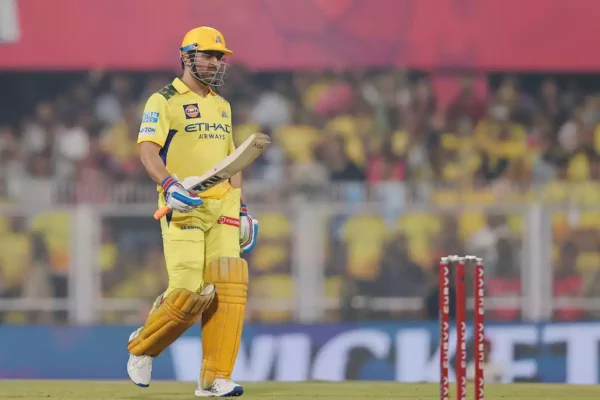
MS Dhoni has always got his timing right. If anything, it’s been a hallmark of his cricket career. Especially when it comes to his exit strategy. He left Test cricket when he felt the Indian team had transitioned and was ready for their next chapter without him. He did the same from white-ball cricket, even if he let this decision – or its announcement anyway – linger for a while longer. Some might say he’s still got his timing, at least when it comes to the unmatched speed with which he flicks the bails off to stump batters out. But why is it then that for the first time ever the man who has been the torchbearer for timing his check out is being accused by many for overstaying his welcome. It’s a sentiment that came to the fore and got louder after Chennai Super Kings’ latest defeat as part of an underwhelming start to their 2025 IPL season. A loss to Rajasthan Royals with another failed run-chase where their former captain showed glimpses of the past but couldn’t take them home. That had come on the back of CSK’s first defeat to Royal Challengers Bengaluru (RCB) at Chepauk since 2008, with another tepid attempt at gunning a sub-200 total down, with Dhoni’s 16-ball unbeaten 30 finishing up as the second-highest score for his team. While the rest of the batting line-up didn’t really set the world on fire either, it was Dhoni’s role in the defeat that got highlighted the most. It wasn’t quite a case of the 43-year-old being turned into a scapegoat for Chennai’s early disappointments but perhaps his own lofty reputation coming back to haunt him. For, it’s not like any of the Chennai batters have started too well so far this summer. Only Rachin Ravindra and captain Ruturaj Gaikwad have managed scores in excess of 30 so far, both of those coming in their opening win against Mumbai Indians. What it’s meant is an added onus on Dhoni to finish the job, which he’s simply not been able to do in recent seasons. Not that his numbers look any less impactful when viewed in isolation. The era-defining finisher recorded the highest strike-rate for batters who played 10 or more games in 2024, 220.55 to be precise to go with an average of 53.67, accentuated by a number of not outs. It was the lack of consistent outcomes, in terms of pulling off the big moments, that got highlighted more though. Especially when his efforts to get over the line against RCB in a crunch game came unstuck after he launched a wet ball from Yash Dayal out of the ground, and the replacement ball did the trick for the left-armer. The fact that it’s come down to Dhoni as often as it has in these run-chases, how much ever the crowds might have loved it, is a reflection of how much he’s found himself in the spotlight even at this twilight stage of his lengthy career. So, you wonder if it is a case of Dhoni no longer being the right fit for Chennai or is it this current Chennai team no longer being the right fit for Dhoni. Or to put it more bluntly, who’s hanging on to whom more here? There is no denying that Dhoni is playing a specific role for his team, and not just behind the stumps. He’s walking out in the death overs with his entry points – as the term in vogue – allowing him to fit into the position he’s so thrived on throughout his career. He’s if anything playing the Andre Russell role for his team. And his overall contributions on the field, you could argue warrant his place in the squad. The natural leadership and the mid-match mentoring for Gaikwad are invaluable, and the CSK management is well aware of that. And it’s a championship-winning role for Dhoni, in case a few in the top-order get it right. Like they have every time Chennai have been able to threaten for the title. Be it all the way back at the beginning with the likes of Matthew Hayden, Michael Hussey, Murali Vijay and Suresh Raina, or through the second stage of their dominance through Brendon McCullum and Dwayne Smith or even more recently when Devon Conway and Gaikwad forged a formidable partnership at the top. The lack of consistency at the top has clearly not helped, even if Dhoni still sticks to walking out to bat only beyond the 12th over at the least. Nor has the drop in power-hitting prowess for Ravindra Jadeja down the order, as was evident the other night against Rajasthan. Coach Stephen Fleming was categoric in the way he described his talisman’s role, admitting to Dhoni’s hindrances with batting for more than 10 overs because of his knees not being the same as before. But though Shivam Dube has become the fierce six-hitter in the middle, something Dhoni trademarked for nearly two decades, there still is nobody else in the mix for CSK to be a like for like for their legendary erstwhile skipper. The Impact Player rule was looked at as being a way for someone like Dhoni to extend his career and even adding an additional couple of years to his already long IPL. It’s certainly done that for Dhoni with regards to letting him operate in his own bubble of sorts.

Read More

Vipraj Nigam spins, swings and dreams

At 65 for 5, Delhi Capitals were in trouble in their first match of IPL 2025 against Lucknow Super Giants. Watching from the sidelines, team mentor Kevin Pietersen was asked in a flash interview if the game was slipping away. The former England captain replied in the negative. He backed Ashutosh Sharma, who’d just walked in, and also picked out Vipraj Nigam, a 20-year-old Lucknow boy in DC’s ranks yet to take the field. Nigam only found out later, after the Capitals had pulled off a stunning win. It has stayed with him. “That was the best part,’ Nigam beams in a chat with Cricbuzz. “To know that someone like him believed in us even before we stepped in, and that we delivered on it, there can’t be a better feeling.” Nigam was living a dream he first saw as an eight-year-old in Barabanki, a town close to the UP capital of Lucknow. The son of a Government teacher and a house wife, Nigam, was enamoured watching Mumbai Indians and Chennai Super Kings clash in the IPL final of 2013. The star-studded line-ups, the dazzling lights, the roaring crowd – they had all captured his imagination. Now in Vizag, he went from being a spectator to becoming the central figure of the spectacle. ‘When you enter the ground, when you’re on the field in the first over, when the crowd is right there, you realise it’s something different. Kuch toh alag hai,’ Nigam says. Mumbai Indians re-entered Nigam’s story last November. They were one of three teams that auditioned him in the lead-up to the mega auction. But ultimately, Delhi Capitals wanted him more, having closely studied what he could offer. A leg-spinner who can hit – it’s a rare combination, and Nigam had it. In a format where versatility is king, the 20-year-old’s ability to turn the ball both ways and clear the ropes made him a prized asset. That’s why the Capitals, despite already having two premier Indian spinners in Kuldeep Yadav and Axar Patel, were eager to bring him in. Interestingly, Nigam’s rise wasn’t built around his leg-spin from the start. He began as a prodigious batter at the Youth Cricket Club in Barabanki. His coach, Sarwar Nawab, pushed him into games above his age group, and Nigam held his own with the bat. He impressed in the inaugural season of the Uttar Pradesh T20 league with his power-hitting, scoring at 165.85 which included plundering 28 runs in a single over for the Lucknow Falcons against the Meerut Mavericks. It was this hitting combined with ability to chip in with a few overs of leg-spin that strengthened his case for a spot in Uttar Pradesh’s Under-19 setup. The real shift came at the National Cricket Academy (NCA), where coaches recognised his potential and pointed out the high demand in India for a leg-spinning all-rounder. That feedback changed everything. Nigam started taking his bowling seriously, but he needed a model to learn from. He found one in Yasir Shah, the wily Pakistan leg-spinner known for his control and sharp turn. Hours were spent in watching and studying how Yasir bowled, as Nigam worked on his new craft. “There was a Test match, West Indies vs Pakistan. I watched the highlights. He had taken 10-11 wickets in that game. The way he used to bowl, I started to bowl leg spin that way. From the start, he was one of the leg spinners who I watched and felt I could bowl like and I felt there were things I could learn from him,” Nigam reveals. Results followed – he had a standout season in the Uttar Pradesh T20 league 2024, finishing with 20 wickets from 11 games as a genuine leg-spinner. On the second day of the mega auction, Nigam was away at the Wankhede stadium in Mumbai with his UP side in the Syed Mushtaq Ali trophy fixture against Himachal Pradesh. His mind was in Jeddah but had to wait until the end of the game to find out if he had any suitors. As he walked back to the dressing room, there was no nervous anticipation, no anxious wait. He fished out his phone, and right at that moment, his name flashed live on the screen. Sold. For the next five to ten minutes, everything was a blur. His mind struggled to process it all. Then came the handshakes and the messages – Rinku Singh, Bhuvneshwar Kumar, and Nitish Rana walked over, offering their congratulations. “The feeling was unlike anything else, it’s imprinted so vividly even now,” Nigam recollects.

Read More

When Siraj and Sai silenced RCB

Siuu went Siraj. It had been an eventful over – the fifth of the first innings. He could have had Phil Salt run out all by himself but missed by a whisker. He then saw the ball being smashed out of the ground, forcing for it to be changed. Siraj wasn’t happy with the replacement ball that came in and the umpires had to coax the Gujarat Titans players to get going as they mulled around complaining. They had good reason to feel a little peeved for the ball that had gone out of the ground then had otherwise worked magically for the Titans in the PowerPlay, and particularly so for Siraj. He had seen one skid past Devdutt Padikkal, rapped Rajat Patidar on the pad and was increasingly finding his rhythm until that six and the ball change. Although a little peeved, Siraj had his eyes on the ball with a full 144kph ball that beat Salt and sent the stumps clattering. Siuu went Siraj, and silenced the RCB crowd that had once cheered their hearts out for this very gimmick when he was donning their colours. He had given them enough reason to. Particularly in Powerplays on an unforgiving ground for bowlers, Siraj had held his own as the numbers below tell. Siraj bowling in Overs 1-6 in IPL since 2023 At Chinnaswamy:14 matches, 12 wickets at 16.25, SR: 15.5, ER: 6.29 Other venues:17 matches, 7 wickets at 43.28, SR: 30, ER: 8.65 After being left out of their retentions, RCB had also chosen not to exercise a Right to Match card when Siraj was picked up for INR 12.25 crore by the Titans. And so Siraj admitted to being a little emotional on returning to play against the team he had been part of for seven seasons previously. “I thought, you know, he bowled an outstanding spell there with the new ball. His lines were really tight, his lengths were good, and he threatened the stumps a lot. So good on him,” said head coach Andy Flower with a wide smile after the game. It could not be anything but bittersweet. For RCB, had done all their auction picks in a bid to get a bowling attack that could be well suited for the conditions. The dynamics of previous auctions had swung in such a way that they now couldn’t hold on to two of the highest wicket-takers at the Chinnaswamy Stadium. So Flower was now left to just admiring it from the other side and wishing Siraj well even after the damage he had inflicted on his team inside the powerplay. But with the batting depth that they had acquired, RCB were still able to ‘scrap’ their way through the middle overs until another spell short-circuited their plans.

Read More

PowerPlays told a story, and so did the captains

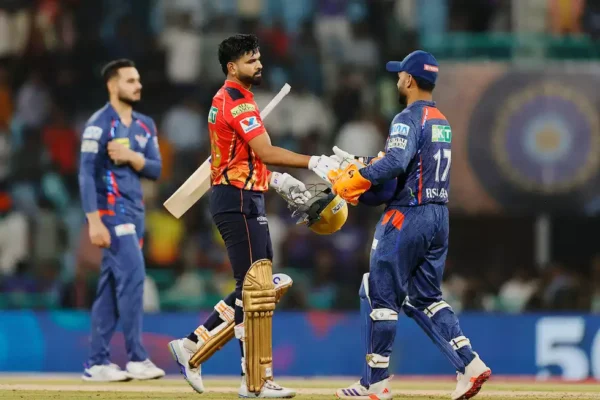
PowerPlays sometimes tell you things that scorecards don’t. One glance at the first six overs of this game and it screams how it unfolded. Punjab Kings were 61/1 after the PowerPlay, and Lucknow Super Giants 39/3. That alone was enough to foretell the result. Because statistically, it’s brutal for teams that lose three or more wickets in the PowerPlay. Since the start of IPL 2023, such teams have gone on to lose over 72% of their matches. But the contrast ran deeper when you read between the numbers. Both teams played the PowerPlay, and perhaps the rest of the match, like their captains would. Shreyas Iyer walked out to bat during the third over, fresh off a selfless near-century in the previous game and remained unbeaten on 52 off 30 to take his team home. He hit 4 sixes, the joint most by any player in the match, and took his sixes-tally to 13 in just two games this season. This knock from him wasn’t like his 97* against Gujarat Titans. Here in Lucknow, he wasn’t the showstopper. Instead, he let others take the spotlight. First, he played second fiddle to Prabhsimran Singh, who set the tempo early, and then he did the same to Nehal Wadhera. Iyer was truly happy to rotate strike, absorb pressure and quietly finish things off. Pant, like Iyer, walked in during the PowerPlay but it was all chaos. Arshdeep had dismissed Mitchell Marsh with a delivery that gripped and cut away sharply, and Aiden Markram had chopped on a fast delivery from Lockie Ferguson. Then Pant fell to a long hop from Glenn Maxwell, the kind of delivery outside leg-stump that he usually hits for sixes. His scores this season now read: 0, 15 and 2 in this match against PBKS. “Definitely [our total] wasn’t enough, we were like 20-25 runs short but that’s part and parcel of the game,” Pant said after the game. “It’s our first home game so still assessing the conditions.” Punjab’s chase was smooth. The pitch had some stickiness, as Arshdeep noted at the innings break, but the shot that lingered came in the PowerPlay: a slower, wider delivery from Ravi Bishnoi that Prabhsimran slapped away for six. It was the last boundary of the PowerPlay but it stayed with you. Not just because of the swing of the bat or how Prabhsimran watched it fly or the fact that it brought the required rate below eight. But also because of where it went. Over cover. For a six. Interestingly, LSG bowled three overs of spin in the PowerPlay. PBKS bowled just one, and that over from Glenn Maxwell brought a wicket. Just like it had against Shubman Gill in the previous match. Bishnoi, meanwhile, looked out of ideas. It was his third straight game being outbowled by 21-year-old Digvesh Rathi. Against Prabhsimran, he was slog-swept, pulled and finally cover-driven for a six. Bishnoi didn’t seem to know where to go. And at a home venue that’s still hard to read, LSG looked just as unsure. “Definitely it’s always going to be tough to get a big total when you lose early wickets, but that’s how the game progresses every day, you can’t control everything,” Pant said. “Each and every player is trying to take the game forward from there.” LSG’s recovery, led by Ayush Badoni and Abdul Samad, couldn’t offset the early damage. At a ground where the average first innings total since 2023 was just 165, and where pacers took a wicket every 17.9 balls, second chances are rare. Sometimes, perhaps all it takes is one look at the first six overs. Or at the captains batting in them. On Tuesday night in Lucknow, one played like he was shaping the game and the other looked like he was still trying to catch up.

Read More

Old ball or dry ball: The death-over dilemma for captains

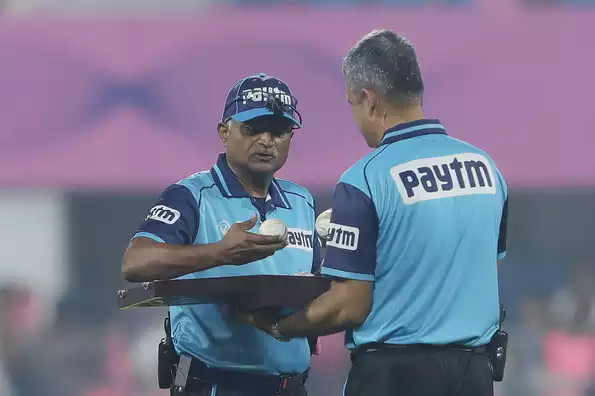
This IPL season has brought in two rule changes that are meant to help bowlers. But they’ve ended up creating a tricky choice for the captains. One brings back the use of saliva to shine the ball and use reverse swing. The other rule allows the fielding captain to replace the ball with one of “similar wear and tear” after the 10th over in the second innings of a night game, even in the absence of visible dew. In effect, teams can now swap a soft and/or damp ball for a harder and drier one. While both the rules were introduced to balance the skewed bat-ball dynamic, they can be at odds with each other in practice. If you’ve worked on the ball all innings to get it to reverse, do you stick with it? Or do you opt for another one that might buy your spinner more grip and turn in the final 10 overs of the match? The conundrum came into play in Match #5 between Punjab Kings and Gujarat Titans. Shreyas Iyer chose not to change the ball and the plan to bowl wide yorkers from over-the-wicket to Sherfane Rutherford bore fruit. “Arshdeep played an important role in that (the wide yorker plan),” Shreyas revealed after the match. “He came in and said the ball is actually reversing a bit, so the saliva on the ball is helping the bowlers a bit I guess. He got Sai [Sudharsan] and that changed the momentum for us, and then he came in and said let’s start the wide yorkers earlier than trying it too late.” Punjab’s fast bowling coach James Hopes explained the thinking behind it, but also underlined the trade-off. “Arshdeep enjoyed it, he was going to work on the ball properly with saliva and we did get a little bit of [reverse] swing in that last game at the end. But to be fair, that came at the expense of getting a dry ball as well because we didn’t change our ball, and that probably affected Yuzi [Yuzvendra Chahal] a little bit as well because he wasn’t bowling with the dry ball for that game,” Hope said. A few days later, Royal Challengers Bengaluru did the opposite. In their win over Chennai Super Kings in Chennai, they changed the ball before the 20th over and handed it to Krunal Pandya. The game was already effectively lost by then, so it may not have made a big difference but it showed another way to use the rule. On some pitches where the ball grips, giving your spinner a dry, hard ball at the end can be a smart move. It’s a strategy that might be used more often as teams get used to the new rules. In contrast, Shreyas’s decision to not opt for the harder ball meant that Yuzvendra Chahal, who was bought by PBKS at a record-breaking INR 18 crore, making him the most expensive specialist spinner in IPL history, wasn’t even able to complete his quota of overs. It was a surprising call, given that Chahal had been brought in specifically to address the team’s long-standing spin bowling struggles. For context, PBKS had one of the weakest spin attacks in the last cycle, with Rahul Chahar unable to replicate the success he had at Mumbai Indians. So when they broke the bank for Chahal, it was with the clear intent of giving their spin department a reliable match-winner. But for that to work, the conditions have to suit him. And that’s where the ball change rule becomes a strategic call. “So we have to weigh up what we’re going to need the most,” Hope explained. “Whether we’re going to need to try and get a little bit of tail with the older ball or whether we’re going to need to give our world-class spinner a dry ball to make an impact within the last 10 overs. So we’re going to have to weigh that up game to game based on conditions.” And when you’re up against big hitters like Nicholas Pooran, these decisions matter even more. “I think what we’ve seen on these grounds and on these pitches sometimes, someone like Pooran for example, he’s had an unbelievable last two years. It’s just about trying to limit the damage sometimes,” Hopes said. “You’re really aggressive with him in his first five or six balls and you’re trying to get him out. Then it’s almost what you’ve seen teams doing, they’re trying to shut the game down in the seventh over. They’re bowling yorkers straight away. They’re not waiting until the 15th over. We had a guy come in the last game and bowl yorkers from the first ball he bowled and try to bowl 18 of them in a row. “You’ve got to expect there’s going to be fours and sixes. Just trying to limit the damage all the time,” Hopes added. As the tournament progresses and dew patterns vary across venues deep into the summer, how captains negotiate this conundrum will be something to watch out for, especially on nights where a single over can tilt the contest.

Read More