officialsquarexsports

The fire still burns for Narine and KKR

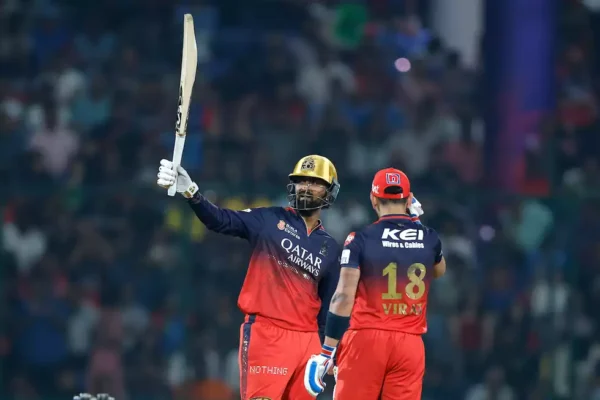
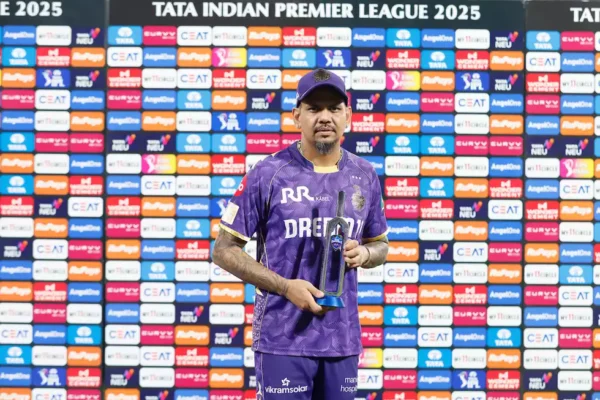
Kolkata Knight Riders’ batting has been far from convincing this season. Heading into the game against Delhi Capitals, their opening partnership tally was the least among all teams, and the middle order fared no better, with the average of their Nos.4-8 being the lowest. However, they did step up against DC at the Arun Jaitley Stadium on Tuesday (April 29), putting on a collective batting display to finish with 204. Even so, skipper Ajinkya Rahane felt they were 15 runs short. But their batting issues aside, KKR have remained afloat in the competition thanks to their bowling, especially their spin department. At the end of Match 48 of IPL 2025, KKR’s spinners have the highest wickets’ tally (27), best average (23.33), best economy (7.24), best dot ball percentage (36.2) and the least boundary percentage (12.83) among all teams. Among their spinners, Varun Chakaravarthy has been the standout performer since joining the KKR setup, while Sunil Narine – a consistent presence since 2012 – has taken on more of a holding role while the Indian spinner has dismantled the opposition batting line-ups in recent years. Varun CV and Sunil Narine in the previous IPL cycle Player (Year) Matches Wickets Ave Econ SR Best Varun (2024) 15 21 19.14 8.04 14.20 3/16 Narine (2024) 15 17 21.64 6.69 19.40 2/22 Varun (2023) 14 20 21.45 8.14 15.80 4/15 Narine (2023) 14 11 34.81 7.97 26.10 3/33 Varun (2022) 11 6 55.33 8.51 39.00 1/22 Narine (2022) 14 9 34.66 5.57 37.30 2/21 Varun is also the leading wicket-taker so far in the current season for KKR, with Narine sitting fourth on the list. Since 2020, Varun has bagged three or more wickets in an innings nine times in the IPL, while Narine has achieved that five times in the same period. Yet, every now and then, the roles reverse – with the West Indian stepping up as the standout performer. It happened earlier in the season in the match against Chennai Super Kings. Moeen Ali delivered an early wicket and ended up with frugal figures of 1-20 before Narine stepped in and derailed CSK completely with his three-for, accounting for Rahul Tripathi, Ravindra Jadeja and MS Dhoni. Varun also bagged a couple of wickets in that game. A similar script unfolded against DC. Anukul Roy provided the early breakthrough before Narine took over in a multifaceted role – making an impact with the ball, in the field, and as stand-in captain, to wrest control of the game from the home side. Varun, meanwhile, chipped in with two wickets in this game too. Despite losing a couple of wickets in the powerplay, DC picked up pace, with KL Rahul striking a four off Varun to help his side to 58/2 after six overs. Narine’s first impact on the field followed next. After Faf du Plessis played a flick to short fine, Rahul took off for a single but Narine was quick to the ball, quick to release it, and accurately too to effect an important run-out. But DC recovered from that blow quickly, with Axar Patel and Du Plesiss putting on a brisk 76-run partnership. Although the match-up was favourable for the bowler, Axar took on Narine to loft him for a six over long-on. In the following over, Du Plessis punished Varun, who went for 16 in the ninth over, as the South African struck two fours and a six. Axar then hit his second six off Narine, carrying DC to 97/3 at the halfway mark. Boundaries continued in the next three overs, with DC getting into a strong position even as Rahane exited the field with a finger injury. With the regular captain out injured and vice-captain Venkatesh Iyer subbed out after the first innings, the onfield decision-making responsibilities fell to Narine. At that time, Varun had gone for 31 runs off three overs while Narine, with 0-19 in two overs, brought himself back into the attack and was struck for another six by Axar, leaving DC needing 69 off 41. He quickly decided to change the angle and caused the downfall of the DC captain on 43 to bag a crucial wicket. In the same over, he got the better of the dangerous Tristan Stubbs to reduce DC to 138/5. It soon became 146/6 as the half-centurion Du Plessis became Narine’s third scalp looking to go over the top. Was it a wise move, though, on the part of the DC batters to continue going after the KKR spinner at that stage? Vipraj Nigam shed light on the rationale behind DC’s aggressive intent. “Our plan from the beginning was to target their main two spinners. And we had also targeted them in the starting two overs (and it worked). The idea was that if we target two good bowlers, then we will get more overs (from other bowlers) or an extra bowler will come in. “It was the same, but moments like these happen, where shot selection (goes wrong) or something like that. And then it happened that our set players got out. It was such a wicket, against such a bowling line-up, it is very difficult (for a new batter) to come out and play shots immediately. So if the set players kept playing, we would have easily won the match,” explained Nigam.
Read More

Brilliant Suryavanshi makes a prodigal impression

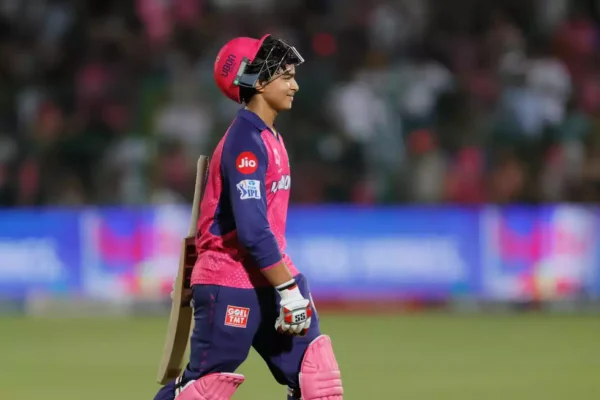
It took all of one ball in the IPL for the 14-year-old Vaibhav Suryavanshi to reveal something essential about him. His lofted drive inside-out for a six was not only an announcement of his arrival in the big league but also a testament to his unfazed and fearless approach to batting, leaving no respect for the bowler irrespective of their reputation. The audacity under the lights was visible. But it was the question of who Suryavanshi was beyond the spectacle: in training sessions, around big, established cricketers who know their drills, habituated to the pressures and limelight, aware of what’s expected of them and what the opposition has to offer? Despite scoring a record century, the ‘too-young’ Suryavanshi wasn’t sent to explain his side of the story. On Monday, following the win against Gujarat Giants, Vikram Rathore, the batting coach of Rajasthan Royals, turned up to present his version instead. “He’s been exactly like what you’ve seen him on the pitch,” confessed Rathore. “He isn’t intimidated by anyone in the nets. He takes on Jofra, who is one of the toughest bowlers to face in the nets; awkward and quick. “But he really takes him on. Again.” Just as Rathore was completing his explanation, the lights and sound went off. Call it cosmic intervention if you must, but no one was, by design at least, taking the spotlight away from Suryavanshi on April 28, 2025. Ask Sai Sudarshan who bagged the Orange Cap. Ask Shubman Gill, who stroked another majestic half-century. Ask Jos Buttler, who sent a reminder about what Rajasthan Royals lost. Ask Yashasvi Jaiswal, who himself dazzled with an unbeaten half-century in a successful run chase. Under Jaipur’s floodlights, Suryavanshi, the boy from the “clan of the sun” lived up to the name, shining the brightest among all the stars. In pursuit of a target, which opponents Gujarat Titans believed was above par, Suryavanshi took little time to dictate the terms of the play, getting off the mark by despatching Mohammed Siraj for a 90-meter six over long on. He was unafraid to hit over the in-field even when obvious traps were laid out. Even though the blueprint to thrive on the Jaipur surface was already provided by Shubman Gill and Jos Buttler earlier in the game, en route their respective brisk half-centuries, Suryavanshi designed one of his own. As he unleashed his big bat-swing, not everything hit the middle of his bat. In fact by the time he had touched the half-century mark in the fifth over, 38 percent of his attempted shots were false strokes. Much of it didn’t matter. In the over preceding that, bowled by Ishant Sharma, two edges ran past the ropes and one over it. The edges that delivered those boundaries for Vaibhav were merely salt added to the wounds of the experienced pacer. Just a ball before he was lured to slash outside off, a delivery on his pads was nonchalantly flicked into the roof of the stands, with a no-look follow-up. Ishant went for 28 in that over. Washington went for 21 in the next. A couple of overs later, Prasidh was blasted for 17 and Karim Janat for 30. His record-breaking innings was replete with ample luck as it was with emphatic strokeplay. If we were to borrow Albert Greenfield’s theory, luck happens to the competent. While there were ample cuts and pulls that took the top edge, there were also many more unfazed pulls, thunderous drives, powerful flicks and audacious chips over the in-field which forced bowlers to alter their lines. Suryavanshi has the range, and the skills – both tested, and now displayed. To explain it in technical language, Sachin Tendulkar put down Suryavanshi’s success to his ‘fearless approach, bat speed, picking the length early, and the energy behind the ball.’ Rathore summed it up in two words: great downswing. Rathore testified that the Royals coaching staff wasn’t surprised by what Suryavanshi produced on Monday. They had seen enough evidence of that over the last four months. What impressed them was that he could do that at the biggest stage, against the best bowling attack of the tournament this season. On the surface, all of this seems like any other high-scoring IPL game of the Impact Player era, where the bowlers are hapless spectators to surfaces made for boundary fests, the kind of which has subdued the fascination of fast-scoring centuries. On the surface, Suryavanshi could be just another talented young cricketer joining the already long beeline of youngsters who continue to show the rich wealth of talent that resides in the near obscurity of Indian domestic cricket and deeper. Like Ayush Mhatre. Like Priyansh Arya. What makes this innings exceptional, though, according to Rathore, is that Suryavanshi is only 14 years old. That age indeed becomes significant to understand the magnitude of what played out on Monday evening at the Sawai Mansingh Stadium. To offer perspective, Ishant had started playing international cricket nearly four years before Suryavanshi was born. The context of age remains also critical in understanding why unlike many other blazing knocks played in the IPL, this one would especially be remembered. Not just because it’s the fastest IPL century by an Indian, and the second fastest ever in the history of the tournament, but because no one in any part of the world has registered a T20 century at an age younger than Suryavanshi’s 14 years and 32 days. That Suryavanshi has achieved something that no one his age anywhere in the world could, deepens the wonder. Turn age-agnostic and the story takes a different turn. Rathore, in his limited vocabulary, ran out of adjectives to explain Suryavanshi’s performance. Exceptional. Spectacular. Special. But in all extreme expressions offered to the innings, he was mindful to caution against going overboard with comparisons and expectations. “He’s just starting out,” Rathore warned. “He’s a special kid and a special talent. If he keeps working hard, he’ll go a long way.” As Mahendra Singh Dhoni, the…

Read More

A quiet return for Mayank Yadav

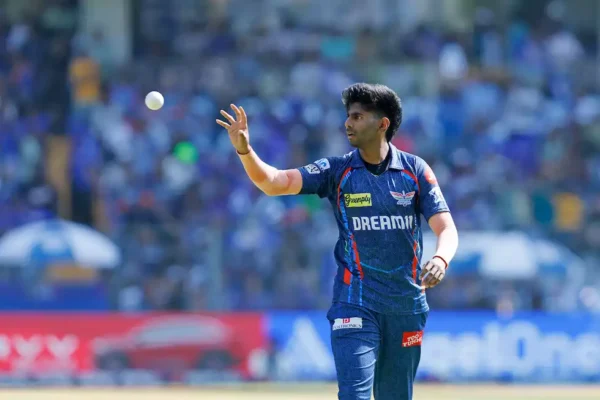
It’s nothing special – he’s bowling, I’m batting. It’s just another bowler for me to face. I wouldn’t say I’ve done any special preparation against him. Yes, I’ve watched his videos to understand what he bowls and what shots I can play, but I would say he’s just another bowler.” Mumbai Indians’ Naman Dhir was rather nonchalant about Mayank Yadav, once hailed as the next big star in Indian cricket. Naman faced four deliveries and managed just two runs. Weighing that factor in, whether Naman’s dismissive indifference towards Mayank’s bowling was justified is open to debate. But the much-anticipated comeback for the fast bowler turned out to be rather uneventful. Figures of 2 for 40 in a high-scoring game are, for sure, respectable, but his bowling lacked the spark, pace, whip, zip, nip, fire and intensity that one would have expected of him. In short, there were no thunderbolts – he did not look dangerous. Credit to him that he got rid of two key MI batters – Rohit Sharma and Hardik Pandya – but those scalps were more with deception rather than intimidation. Both came off slower ones – Rohit guiding a 120 kmph delivery to short third man and the ball that got Hardik bowled (through the gate) was delivered 134.2 kmph speed. When Mayank opened the attack for LSG, all eyes were on the speed gun. The fastest he clocked was around 142 kmph. It was different when he arrived on the horizon last season. Consistently clocking over 150 on the speed gun – with his quickest delivery ever being 156.7 kmph (against RCB), the second-fastest by an Indian after Umran Malik (157 kmph) – Mayank featured in four games last season before a back injury rendered him hors de combat. Remarkably, LSG won all four of those matches. He was the player of the match in two of those games. There was no midas touch this time around, however – LSG lost by 54 runs, to hand MI their first win over the SuperGiants in seven meetings in the league stage. Mayank’s numbers for the last season were stellar: seven wickets in 12.1 overs, at an average of 12.14 and an economy rate of 6.98 – the third-best economy rate among bowlers who had bowled more than 10 overs. All the hype around him appeared justified and soon he earned the India cap and a special fast bowler’s contract from the BCCI. He featured in the three-match T20 series against Bangladesh before being consigned to the BCCI centre of excellence (CoE) in Bengaluru for back injury. His last game before Sunday’s contest was more than six months ago, on October 12, 2024, and LSG are consciously going slow on him. The SuperGiants, though, are gung-ho about Mayank’s comeback. “He got through the game, stayed on the field for 20 overs and bowled four overs. The execution is going to get better, the speeds are going to get better as he plays more. I’m happy that he’s gotten through the game. That is what my instinct tells me.” Zaheer Khan, the LSG mentor, is totally pleased. “The wait was long and for anyone who is playing after so many months to get back into the game is always that one hurdle which needs to be crossed. So that’s how I’m looking at it. I know that fast bowling is never easy, especially in this format when the batters are coming so hard at you. So that was the thought process.” It’s evident that the franchise is treating the 22-year-old pacer with extreme caution, wrapping his fragile frame in cotton wool. Although he was available a couple of weeks ago, they carefully monitored his workload. They have been in constant touch with the Sports Science wing at the Centre of Excellence. There were even plans to use him as an Impact Player in a couple of games before this. But finally, they unleashed him on Sunday. “We were taking our time just to create that comfort around him. There is a plan in place about how he should be approaching, what kind of programmes he should be following. We are just creating that environment for him to just flourish. You’ve seen him in the last one and a half years, when he had been coming in, bowling and then having these kinds of setbacks. It can play on one’s mind. So you’ve got to comfort that side of things as well. And with Mayank, we’ve taken that kind of approach,” Zaheer explained. As they say, there’s a world of difference between bowling in a match situation and in the nets. The lack of game-time was evident, with his bowling lacking in rhythm. He appeared more innocuous than pernicious, unable to hit the deck the way he once did. Given his history of injuries, it could also be a case of a psychological block holding him back from going full throttle. That said, the positive takeaway from his return is that he can only improve from here – and that can be counted as a positive development for LSG as well as India.

Read More

Pandya answers RCB’s call as tables turn in Delhi

“We’ll feel right at home,” RCB’s spin bowling coach Malolan Rangarajan said, when asked about the dimensions of the Arun Jaitley Stadium ahead of the DC vs RCB clash. With its short boundaries, it was little surprise that the Kotla recorded the highest average first-innings total (235) among all venues last season, while RCB’s home ground, the M. Chinnaswamy Stadium, ranked fourth with an average of 197 among venues that hosted at least five matches. This season, though, batting hasn’t been just about all-out aggression, and the return fixtures between DC and RCB are a testament to that. The DC-RCB clash at the Arun Jaitley Stadium was effectively a role reversal of what had transpired in Bengaluru earlier this month. Back then, it wasn’t an easy wicket, with Kuldeep Yadav and Vipraj Nigam combining to restrict RCB to 163. DC stumbled to 30/3 in the chase, but a composed 93* off 53 balls from KL Rahul, along with his 111-run partnership with Tristan Stubbs (38* off 23), steered them home comfortably. On Sunday (April 27), it was RCB’s turn to return the favour, holding DC to 162 courtesy of frugal spells from Krunal Pandya and Suyash Sharma, while the pacers chipped away regularly. RCB also slipped to 26/3 in their chase, but Pandya, playing a role similar to Rahul’s earlier, crafted a superb 73 off 47 balls. His 119-run stand with Virat Kohli (51 off 47) sealed an eight-wicket win in 18.3 overs, extending RCB’s flawless away record in 2025. Batting against spin proved especially difficult on a dry wicket, with batters from both sides having to show application, pace their innings and pick the bowlers to target. Looking at the combined numbers of both teams against spin in this game, only 107 runs were scored off the 103 deliveries bowled by the slow bowlers. There were only five fours and two sixes scored off the spinners, but the effective take-down of pace is where RCB excelled while the majority of the DC batters failed to do so. Both teams posted similar numbers against spin – RCB scored 57 off 55 balls at a strike rate of 103.64, while DC managed 50 off 48 at 104.16. The difference, however, came against pace. DC collected 108 runs off 73 balls at a strike rate of 147.94, but RCB were far more dominant, hammering 104 runs off just 58 balls at an impressive strike rate of 179.31. And it was Pandya’s batting – both against pace and spin – that made life easier for RCB despite their early struggles. The left-hander got as many as 44 runs off 24 balls against the quick bowlers, striking at 183.33. But he was also busy against the spinners, scoring 29 off 23 at 126.08, even hitting two fours and a six off them.

Read More

India-Pakistan ties: What lies ahead in ICC, ACC events?

Since the Pahalgam attacks, there has been intense speculation that the Board of Control for Cricket in India (BCCI) has written to the International Cricket Council (ICC), requesting that India and Pakistan not be clubbed in the same group in the future global events. As with many such matters, there are facts – and then there are alternative facts. For the record, BCCI vice-president Rajeev Shukla has already clarified that the Board will follow the government’s advice on the matter. A top BCCI office-bearer also told Cricbuzz that such a development is news to him. The BCCI authorities are sensitive to the prevailing national mood but as things stand, there is no truth to the speculation. There is no immediate ICC event on the horizon, with the earliest one being the Women’s ODI World Cup scheduled for September-October in India. Pakistan have qualified for it and the eight-team tournament is held in an all-play-all round-robin format, with no groupings involved. As per the pre-tournament arrangement, Pakistan’s matches will be held in a neutral venue. Being the designated host, the BCCI will need to determine that venue – but there is still time before a final decision is made. For the record, Australia, England, New Zealand, South Africa, Sri Lanka and Bangladesh besides India and Pakistan are the eight teams. But before the ODI Women’s World Cup, there is the men’s Asia Cup, again, for which the BCCI is the designated host. As first reported by Cricbuzz, it has been decided that it will be held in a neutral country and September is the allotted window. Whether that continental championship will be held in Dubai or Sri Lanka is of academic interest; the more significant aspect is the tournament grouping. The Asian Cricket Council (ACC) has sold the media rights for the Asia Cup – valued at $170 million for four editions – based on an unofficial understanding that each edition will feature at least two India-Pakistan matches, with the possibility of a third if the teams meet in the final. The media rights deal is middle-heavy than front-or back-loaded, which means the 2025 edition would cost around $ 38 million, instead of the average value of $ 42.5 million. In the last edition of the Asia Cup in 2023, held in a hybrid model, India and Pakistan were placed in the same group. The two teams faced off twice – once in the league stage and again in the Super Four. The second encounter was washed out, and Pakistan, incidentally, failed to reach the final. India then lifted the trophy by defeating Sri Lanka in the final. The venue for the upcoming edition has yet to be announced, but Cricbuzz understands that the draw was initially expected to take place sometime in May. However, with sufficient time remaining, it may now be deferred. The general impression is that any final decision will hinge on the escalation or de-escalation of prevailing tensions between India and Pakistan.

Read More

Spin choke at Chinnaswamy: RCB’s newest chapter in defying the norm

The Royal Challengers Bengaluru fielders scattered into separate huddles during the strategic time-out, a visual metaphor for how the first eight overs had unraveled. Rajasthan Royals had blazed their way to 99 for 2 in a chase of 205, reducing the required rate to a manageable 8.33. The biggest cluster featured the brains trust: Andy Flower, Dinesh Karthik, Rajat Patidar, Virat Kohli, and Jitesh Sharma. Bowling coach Omkar Salvi stood a little further away with Yash Dayal and Romario Shepherd, hashing out ideas. And then, on the edge of these two meetings, stood Krunal Pandya and Suyash Sharma. Just the two of them, in quiet conference. Being an IPL spinner at the Chinnaswamy Stadium has never been a promising career path. It takes a certain defiance to persist here: Yuzvendra Chahal, the league’s most prolific wicket-taker, being a rare and celebrated exception. Now, under lights and mounting pressure of a home record that threatened to upend what’s been a promising IPL 2025 campaign so far, Krunal and Suyash were entrusted with wresting some semblance of control with a dewy ball at a venue that seldom spares their kind. RCB’s 11-run win will rightly be remembered for Josh Hazlewood’s four-wicket haul, delivered with cold, calculated precision. But the soul of the victory also lay in the quiet strangulation applied by their two spinners, the kind of bowlers you don’t expect to thrive on this trampoline of a surface. Especially not this season where good-length deliveries from high release points have reared up with tennis-ball spite, and where spinners have often seemed ornamental, a fact underscored by the visitors’ decision to drop Maheesh Theekshana for an extra seamer in Fazalhaq Farooqi. RCB were under siege and needed a break when Krunal was handed the ball for the 10th over. There was some hold and turn for the spinner, but even so the three post-PowerPlay overs had gone for 38. The break, when it arrived, came courtesy an unlikely source, the other spinner Suyash. Just as Krunal readied himself at the top of his mark, the umpires intervened, asking him to wait. They wanted to revisit a seemingly innocuous incident from the final delivery of the previous over, when Suyash appeared to have used his cap to field, a technical breach that might have cost RCB five penalty runs. The umpires ultimately deemed that ‘over’ had been called during the said transgression and allowed play to resume. Only this time, RR’s momentum had inadvertently been robbed. On the very first ball post this delay, skipper Riyan Parag attempted an ambitious slog. It produced only a swirling top-edge and was safely pouched. It was the kind of dismissal that won’t show up in countdown loops at the end of the week, but flips the atmosphere inside a stadium. Krunal’s breakthrough, his first wicket in 37 balls in Bengaluru this season, was the first big crack in Rajasthan’s chase that quickly unraveled like a poorly-folded origami. For the next seven overs, Patidar had Krunal and Suyash operating in tandem and the pair obliged by conceding just 50 runs and four boundaries between overs 10 and 16. Fittingly, they both finished by giving away an identical 31 runs from their four overs although Krunal also had two wickets to show for his efforts on the night. There were no magic balls in Kurnal’s spell, just subtle pace variations and a veteran’s instinct for angles. Suyash, operating with a sweeper and two men in the ring for the cut , also bowled to his field, even if did drop the occasional delivery short. Crucially, though he didn’t let the pressure slip. But the Royals did. Their middle-order, so often hesitant once the PowerPlay fades, slipped into a familiar pattern of passivity. Jurel, mindful of recent last-over heartbreaks, tried to bat deep and ended up consuming dot balls. Rana, meanwhile, was boxed in by matchups that he has, counter-intuitively, under-performed against: left-arm orthodox spin and legspin. Nitish Rana vs spin types Bowling Type Average Strike-Rate Left-arm Orthodox + Leg spin 25.6 130 Left-arm wristspin + Off spin 37.38 161 It wasn’t dominance, but a denial of space. No release shots, no easy twos. The innings, so electric early on, began to stall. And with every dot, every scuffed single, the required rate crept up, from under nine to over twelve by the time the pair were done. And through it all, something else began to shift. The Chinnaswamy crowd, subdued and wary after Yashasvi Jaiswal’s early blitz, found its voice again. What began as a cautious murmur rose, slowly, steadily, into a familiar, ferocious wall of sound. It wasn’t just a noise; it was belief returning. And yet, even after the squeeze, the game still seemed to be slipping away. Jurel, playing the long game, brought it down to 18 off 12. But Hazlewood returned and bowled as if the pressure didn’t exist. A nerveless penultimate over gave away just one run and brought two wickets, including that of Jurel, sealing a win that seemed unlikely at many points of the defence. It’s been that kind of a season for RCB. They’ve won five on the bounce away from home, including at Chepauk and Wankhede. They lost the first three at home without the Chinnaswamy Stadium seeing a score of 200 until this fourth game. But maybe that’s the point. In a season that has defied convention, RCB are learning to win in unfamiliar ways. To defend a target at this ground, on a night when 99 came in the first eight overs, through a spin choke and a fast bowler’s cold-blooded finish? That’s not just a result. That’s an injection of belief. And in doing so, RCB may have stumbled upon something more valuable than just two points, a method unbound by conditions or convention. If the road to the playoffs is paved with moments that shift belief, then this night, under Bengaluru’s bright lights and loud sounds, might just be the turn where their push…

Read More

Butter fingers: Catching efficiency on decline in IPL 2025

A recurring sight in IPL 2025, other than the usual big hits, has been the dropped catches. The first 40 matches in the season have seen 111 dropped catches so far, the most in an edition since 2020 till that point. The 40th match of the season was no different: there were three dropped catches in the first half itself. While the first two were arguably tough, Tristan Stubbs shelled a relatively straightforward one to give Ayush Badoni a reprieve in the 16th over, after which the latter added another 33 runs before being dismissed in the 20th. That was Stubbs’ fourth dropped catch of the season, the joint-most this year alongside Khaleel Ahmed. It didn’t cost the visitors much, as they eased past the 160-run target with eight wickets and 13 balls to spare. There was a simple chance shelled down in the second half too, by Prince Yadav, but that came when DC were at a striking distance. One out of every four chances has been shelled in IPL 2025, the catching efficiency of 75.2% being the lowest after the first 40 matches in the IPL since 2020. Furthermore, there have been 247 misfields and 172 run-outs missed via inaccurate throw – both those counts being more than double than what it was at a similar stage in 2024. Fielding numbers after first 40 matches in the IPL since 2020 Edition Catches Dropped Catching % Stumpings Stumpings missed Run-outs missed Run out % Misfields 2020 306 95 76.3 4 1 1 64.5 213 2021 328 93 77.9 9 0 30 37.9 198 2022 393 104 79 8 3 36 38.6 200 2023 351 78 81.8 9 3 79 26.7 152 2024 367 110 76.9 10 0 69 17.9 116 2025 337 111 75.2 18 2 172 11 247 Mumbai Indians have been the best fielding side so far, with a catching efficiency of 83.6% and the least misfields (14). Their run-out efficiency is only bettered by Delhi Capitals, but they hit the target when it mattered, effecting three run-outs in the same over to close out a thrilling win in Delhi which has, to a great extent, revived their campaign. Team-wise fielding in IPL 2025 Team Matches Catches Dropped Catching % Run-outs missed RO% Misfields MI 8 41 8 83.6 24 18.7 14 RCB 8 35 7 83.3 19 5 31 KKR 8 35 7 83.3 12 7.1 18 GT 8 41 11 78.8 18 0 21 SRH 7 28 9 75.6 13 7.1 25 RR 8 31 11 73.8 17 10.5 26 LSG 9 37 14 72.5 22 7.6 35 PBKS 8 29 13 69 20 4.7 23 DC 8 33 15 68.7 14 26.3 28 CSK 8 27 16 62.7 13 18.7 26 The idea of “catches win matches” might seem to take a backseat while looking at the overall numbers. The catching efficiency in IPL 2025 has been 77.8% in wins (56 drops) and 73.3% in defeats (49 drops). The tied finish between DC and RR featured six dropped catches, four by DC, who eventually secured two points in the Super Over. However, there is more context when looked at closely. The first dropped in that tied finish in Delhi was that of Stubbs, Riyan Parag being the culprit. DC added 58 in the last four overs thereafter, Stubbs going unbeaten at 34* off 18. Yashasvi Jaiswal, Nitish Rana and Sanju Samson were given reprieves in the run-chase, and that would’ve hurt the hosts if not for Mitchell Starc’s brilliance at the back end. CSK have been worst-hit by fielding inefficiency, with 16 dropped chances. Rajat Patidar rode his luck thrice during his 32-ball 51 on a day RCB breached the Chepauk fortress for the first time post 2008. Nitish Rana and Priyansh Arya were given early reprieves in their match-winning efforts in Guwahati and Mullanpur respectively. Elsewhere, Abhishek Sharma was dropped twice during his scintillating 55-ball 141 against Punjab Kings, not to mention the non-dismissal off a no-ball. RR, the other team in the bottom half of the table, dropped both Virat Kohli and Phil Salt in their first game in Jaipur, and the pair duly capitalised. There have only been two stumpings missed in the IPL since 2024, one of them was by Rishabh Pant in the last-over finish against DC at Visakhapatnam, which deprived his side of crucial two points. Pant, in fact, has already dropped three catches so far, the most by a keeper. The IPL – a two-month long tournament – has historically seen little moments making a decisive difference, with fine net run-rate margins reviving hopes and shattering dreams at the business end. For all the big hits, searing yorkers and the magic of spin, the fielding too, could have as much of a say.

Read More

Can Hyderabad deliver the run-fest Wankhede didn’t?

In the lead-up to the 2019 ODI World Cup in England and Wales, the fan scorecards were quietly redesigned to accommodate team totals up to 500. It was a reaction to England’s dizzying new approach of fearless hitting on pancake-flat, tailor-made pitches that threatened to upend batting conventions. But as it turned out, the revision was an overcorrection. Across 48 matches in the tournament, no total crossed even 400. And only four went past 350. Nearly six years later, we tuned into this IPL season with a similar sense of anticipation. The stars seemed aligned: the subtleties of the Impact Player rule had taken hold, a generation of Indian batters had been unshackled, and the science of pitch preparation had quietly evolved into an art form. Hype, too, had its moment. At a Sunrisers Hyderabad fan event before the tournament, Pat Cummins smiled, held up three fingers and said the magic number: t-h-r-e-e h-u-n-d-r-e-d. Cummins might have been playing to the crowd that day, but the 300 dream didn’t seem misplaced when SRH opened their season with 286 for 6, the second-highest total in IPL history. It was a batting performance that sent the hype train into overdrive. Dale Steyn, picking up on the early season mood, playfully predicted that 300 runs could be scored when SRH faced Mumbai Indians on April 17 at the Wankhede. And to be fair, it hardly felt far-fetched; the venue seemed built for it. But when the day arrived, it was a different story altogether. Wankhede, almost impishly, dished out its slowest pitch on the square, a surface so sluggish it felt like a betrayal. SRH, seemingly happy to be sent in first, spent their innings looking less like the blazing force of opening night and more like travelers stranded on alien land. The Wankhede match was, in many ways, a reflection of the season itself, which like the 2019 ODI World Cup promised a revolution in run-making but has so far unfolded in stops and starts, with power and intent from batters checked this time by reverse swing and searing yorkers. Now comes the rematch. SRH host Mumbai in Hyderabad. A truer surface, perhaps even the notorious Pitch No. 2 at Uppal, could offer the stage that Wankhede denied. And three hundred in an innings? April 23 might be the night the magic number comes alive. But then again, given how this season has unfolded, who’s to say. When: Match 41, IPL 2025, on April 23, 07:30 PM LOCAL Where: Rajiv Gandhi International Stadium, Hyderabad What to expect: Everything SRH searched for at Wankhede and at other away venues, and never found. So a flat pitch, true bounce and a sea of orange in the stands. Three out of four games at this venue this season have been won by the chasing side. The weather is set to be hot but no rain is expected. Head to head:MI 14 – 10 SRH Team Watch Sunrisers Hyderabad Injury/availability: There are no reported injuries in the squad. Tactics & Matchups: Rohit Sharma dazzled in MI’s last game with an unbeaten 76 but before that game he had not batted past the PowerPlay. Rohit will be up against two bowlers from the Sunrisers who have a favourable record against him. Pat Cummins and Mohammed Shami have dismissed Rohit five and three times respectively in the IPL. Probable XII: Abhishek Sharma, Travis Head, Ishan Kishan, Nitish Kumar Reddy, Heinrich Klaasen (wk), Aniket Verma, Abhinav Manohar, Pat Cummins (c), Harshal Patel, Zeeshan Ansari, Mohammed Shami, Eshan Malinga Mumbai Indians Injury/availability: Karn Sharma missed the last match against CSK because of stitches on his right thumb. He could be available again for this match. Tactics & Matchups: It’s no secret that SRH’s wins lately have been built on their opening partnerships. In fact, the pair of Travis Head and Abhishek Sharma averages over 81 in victories but only 18 in defeats, so it’s a partnership MI would want to break early but it might not be so straightforward. Trent Boult has just two PowerPlay wickets so far. The good news, though, is that he enjoys favourable match-ups against two of SRH’s top-three. Abhishek strikes at around 100 against Boult (30 off 29 balls, 2 dismissals) whereas Ishan Kishan, who bats one-down, fares even worse (43 runs off 46 balls, 3 dismissals). Probable XII: Rohit Sharma, Ryan Rickelton (wk), Will Jacks, Suryakumar Yadav, Tilak Varma, Hardik Pandya (c), Naman Dhir, Mitchell Santner, Deepak Chahar, Trent Boult, Jasprit Bumrah, Ashwani Kumar Did you know – Abhishek Sharma has seven centuries in T20 cricket, and he’s scored six of those since January 2023. – Since scoring a 47-ball hundred on his SRH debut, Ishan Kishan’s form has tapered off and he’s made just 32 runs in six innings. – Sunrisers’ spinners have picked up only 7 wickets across 7 games, the worst amongst all the other IPL teams. Punjab, who are the second-worst, have picked up 16 wickets in eight games with their spin-attack.

Read More

Bravo backs Russell, admits KKR batters have ‘lost confidence’

Dwayne Bravo, the Mentor of Kolkata Knight Riders, admitted that the batters failed to assess the conditions well and apply themselves better following the loss against Gujarat Titans at the Eden Gardens on Monday. Chasing 199 for victory, KKR were restricted to 159 for 8. “I think the bowlers, first of all, did a fantastic job restricting them under 200,” Bravo admitted following the loss. “Shubhman Gill and Sai batted very well, but credit to our bowling group, they really brought it back and gave us a chance at the halfway stage. I think we were the happier team. “Unfortunately, we didn’t get the start we wanted in the powerplay. And then, they slowed us down through the middle and obviously we faulted in the end.” Kolkata Knight Riders struggled to find momentum in the powerplay, where they scored only 45 runs and lost both their openers. Gujarat Titans too had a similar score on the board at that stage of their innings, but with both their openers still in the middle. However, unlike Titans, who managed to pick up their scoring rate as the innings went along, KKR were kept on a leash. In the four overs after the powerplay, Ajnkya Rahane and Venkatesh Iyer managed to score only 23 runs. While Rahane hit a few boundaries, Iyer continued to struggle, and mid-way through the 13th over, both the batters were dismissed in quick succession, leaving KKR tottering at 91 for 4. Even as the hosts had amle firepower in the death, with Rinku Singh, Andre Russell, Ramandeep Singh, Moeen Ali and Impact Substitute Angkrish Raghuvanshi to follow, the task was too steep. For brief while, Russell’s flurry of sixes offered hopes, but he was soon controlled by R Sai Kishore and Prasidh Krishna. And yet again, he fell to Rashid Khan. Russell’s 15-ball 21 on the night happens to be his highest score this season, a year in which his destructive powers haven’t been of much use for KKR, and yet again, was dismissed by a legspinner. However, Bravo continued to back the West Indian and dimssed concerns of his game against legspin. “Russell is an experienced player. He’s a successful player. Just a couple of games the leg spinners have got him out. But I don’t think we actually had the team batting properly. So that is the reality. Russell is not the only one who is struggling at the moment. But as a group, we have to make sure that the players keep putting in their work and practise, keep preparing well, try to keep them mentally focused. “IPL is a tough tournament. And when you don’t start well, batsmen go into a period where they lose confidence. And that’s what’s happening at the moment. We just have to keep backing them and hopefully they come good” He insisted that if the top order bats well, it will allow the finishers to play their role better. Bravo admitted that following a string of underwhelming performances, the KKR batters are going through a period where they are low on confidence. “Not every team has leg spinners. And then today, obviously, Rashid Khan, one of the quality players. But, you know, when Russell walks into bat every time, the run rate is at 14-15. So the work needs to be done on top so that we give him a chance to finish off games like he accustomed to doing over the years for KKR. So, yeah, he has leg spinners getting him out a few times. But I don’t think that is a big concern. I just figured that, we need to bat better to allow our finishers to finish cricket games.” For all the requests of wanting tracks friendly for spinners in Kolkata, yet again the team batting first posted a total in excess of 190. However, Bravo didn’t want to entertain the issue of pitch as the reason for the loss. “Nothing is wrong with the wicket,” he said. “I wouldn’t come here to talk about the wicket. I think both teams play on the wicket and, you know, we didn’t play a good game of cricket. So definitely if we don’t play in the three facets of the game, good, and the other team play better, more likely they will win. So I’m not having anything, nothing is wrong with the wicket. “So I just felt that they play better than us. They win key moments and their batsmen bat in the, the guys who bat in the first three, you know, they both score half centuries. So I think that was the difference.”

Read More

Gill, Rashid star as table-toppers GT crush KKR

Table-toppers Gujarat Titans underscored why they have been the dominant force of the IPL 2025 season so far with an all-round show that trumped Kolkata Knight Riders by 39 runs on their own turf. Gujarat’s firing top-order got into the act once again with Shubman Gill top-scoring with 90 while his opening partner Sai Sudharsan got to another fifty. Adding a layer of cream was Jos Buttler’s cameo that powered them to a total of 198. In the defense, Gujarat’s spin-attack strangled KKR’s middle-order with the pacers also providing timely strikes offering no respite. Their dominant performance gave them their sixth win in eight games in IPL 2025. What was the difference? Soon after the powerplay and until the 15th over, Gujarat scored at over 10 an over while KKR could muster only a run-rate of 7.6. Gill and Sudharsan provided the perfect acceleration for Gujarat after identical scores in the powerplay, albeit with KKR losing two more wickets in comparison. While Gill brought out the slog-sweeps to counter KKR’s strong spin-attack, the home team was left searching for answers against Gujarat’s equally skilful spin attack. Having dug themselves into a hole, it proved too deep for them to sping back up from. Gujarat’s well-executed plans doubly ensured that they stayed grounded. GUJARAT TITANS PowerPlay – Gujarat make a cautious start Phase Score – 45/0 (RR: 7.5 ; 4s/6s: 6/0) Both Gill and Sudharsan were largely untroubled but they remained watchful despite Gujarat not losing any wickets. They registered Gujarat’s second-lowest Powerplay score of the season, getting only 45. A slightly slow surface meant that KKR used three overs of spin – two from Moeen Ali and one from Varun Chakravarthy. Only two boundaries were possible in these three overs with the pacers copping more of the punishment. Harshit Rana was sliced and cut for back-to-back boundaries as Gill caught up with Sudharsan, who had been the early mover in the period. However, it didn’t take Gill long to get ahead. Middle overs – Gill, Sudharsan take control Phase Score – 94/1 (RR: 10.4 ; 4s/6s: 12 /1) Gill raced to a 34-ball fifty, ploughing boundaries against the spinners. It started off with a sequence of 6,4, 4 against Moeen Ali with delectable sweeps sandwiching a late cut. Sudharsan too picked the right balls to go after, getting to his fifty in just 33 balls – his eighth in the last 12 innings in the IPL. Their 114-run opening stand was a study in old-school thoughts of assessing before exploding. It provided the Titans with a great foundation after being put in to bat, and underlined their strength of having a fully firing top-order. In 26 innings together, the duo had now put on 50-plus stands half the number of times. That rosy period for Gujarat Titans came to an end in the 13th over when Andre Russell got some extra bounce that produced an edge with Sudharsan attempting to cut. The other member of the Titans’ in-form top-order, Jos Buttler wasted no time in reversing the pressure. He struck three boundaries off Russell in the same over to race away to a quick start. Continuing in the same tempo, Buttler offered a chance which was spilled by Vaibhav Arora, but the Englishman nevertheless ensured that Gujarat’s momentum did not dip. Death overs – Gujarat finish with 198 despite a stutter Phase Score – 47/2 (RR: 9.4 ; 4s/6s: 4/4) Gill provided the initial momentum scoring his last 29 runs in just 12 balls. Touching 90, he finally fell to a full toss in the same over after carting Vaibhav Arora for a four and a six. Rahul Tewatia too was done in by a slower one from Rana soon after. This threatened to give KKR a sniff back in the game in the end overs but they tripped up in the final over. Arora missed his yorkers and was hit for two fours and a six in an 18-run final over that pushed Gujarat close to 200 with Buttler unbeaten on 41. KOLKATA KNIGHT RIDERS PowerPlay – KKR kept on a leash Phase Score – 45/2 (RR: 7.5; 4s/6s: 6/1) Rahmanullah Gurbaz, replacing Quinton de Kock, failed to offset KKR’s opening woes this season as he was trapped LBW by an incoming delivery from Mohammed Siraj in the very first over of the chase. Ajinkya Rahane tried to offset that with some neat boundaries clearing the infield in the PowerPlay while Sunil Narine’s three boundaries were more sporadic. The latter, however, was done in with the first over of spin bowled by Rashid Khan. He pulled a delivery that skidded on straight into the hands of backward square leg giving Gujarat the bragging rights inside the PowerPlay. Middle overs – Gujarat’s spinners get a chokehold Phase Score – 69/2 (RR: 7.66 ; 4s/6s: 3/2) Unlike Gujarat, who managed to accelerate at this stage, both Rahane and Venkatesh Iyer were tied up with both Prasidh Krishna and Rashid being on the money. Iyer also survived an LBW on review against the Afghan spinner as no boundaries came for 34 balls on the trot. Rahane finally broke that streak with a loft over cover off Washington Sundar and then slog-swept him for a six in the same over. His partner, Iyer, had a torrid time creeping to 14 off 18 before sweeping Sai Kishore to deep midwicket. The partnership that lasted 36 balls yielded only 41 runs and left KKR with a steep uphill task of needing 13.5 an over for the rest of the innings. Rahane got to a 36-ball fifty soon after but was dismissed when Sundar threw one wide seeing him step down to have him stumped. Rinku Singh and Andre Russell were entrusted with the task of dragging KKR up. While the latter was able to muscle a six and a four early, they too found the going tough against some accurate bowling according to well-set fields. Death overs – Chained KKR fail to break free Phase Score…

Read More